
Samer Choucair: 648 Aircraft Grounded as Engines Become Aviation’s Most Critical Bottleneck
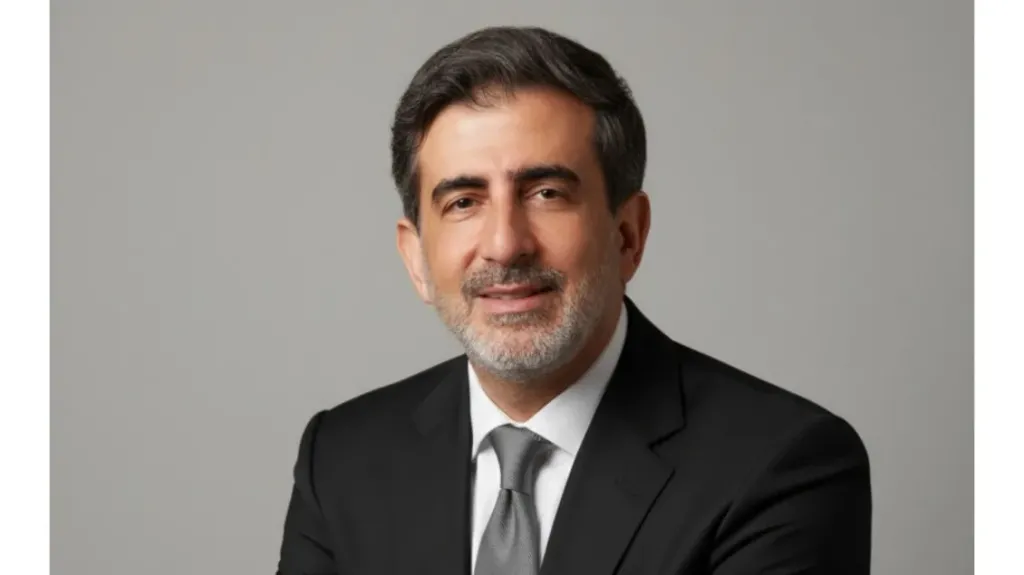
Investment leader Samer Choucair said maintenance bottlenecks affecting narrow-body aircraft engines have evolved from a temporary operational problem into a structural constraint affecting airline capacity, operating costs and fleet-renewal strategies.
Choucair pointed to a study by the International Air Transport Association, IATA, in collaboration with Oliver Wyman, showing that the number of aircraft powered by Pratt & Whitney GTF engines that were grounded peaked at 648 aircraft in March 2025, equivalent to 28% of the GTF-powered fleet.
The supply-chain crisis cost airlines more than $11 billion in 2025. That included approximately $4.2 billion in delayed fuel-efficiency savings, $3.1 billion in additional maintenance costs, $2.6 billion in additional engine leasing expenses and $1.4 billion tied to higher spare-parts inventories.
At the same time, engine maintenance costs across six major U.S. airlines increased by 68% between 2019 and 2025, while flight hours increased by only 10%.
Samer Choucair said the imbalance illustrates how the economics of aviation are changing. Passenger demand may continue to expand, but an airline cannot monetize that demand if aircraft remain on the ground waiting for engines, components or maintenance capacity.
The problem could become even more significant as the global fleet expands.
Deliveries of narrow-body aircraft engines reached approximately 2,000 units in 2024, including around 800 GTF engines and 1,200 LEAP engines.
IATA expects annual engine deliveries to stabilize at roughly 3,700 units between 2030 and 2040. Meanwhile, annual shop visits for LEAP engines are projected to increase from approximately 600–800 in 2025 to more than 5,000 by 2040, while GTF shop visits could rise from around 1,000 to more than 2,000.
Choucair said these figures are redistributing economic power across the aviation industry.
“The investor is no longer betting only on passenger numbers and available seats,” Samer Choucair said. “The investment case increasingly depends on the scarce assets that keep the fleet operating: spare engines, replacement parts, maintenance facilities and aftermarket service contracts.”
The Maintenance Economy Gains Strategic Value
Choucair said GE Aerospace provides a clear example of how this shift is changing the economics of the aviation value chain.
Services account for approximately 70% of the company’s revenue, highlighting the growing importance of aftermarket activity relative to simply manufacturing and delivering new engines.
GE Aerospace has announced investments exceeding $1 billion to expand its maintenance, repair and overhaul network, including approximately $500 million dedicated to increasing LEAP engine maintenance capacity and a new $50 million facility in Dubai.
For investors, Samer Choucair said this illustrates a fundamental difference between selling an aircraft engine and participating in the economics of that engine throughout its operating life.
Every additional aircraft entering service creates years of demand for inspections, repairs, spare parts, engine overhauls, digital monitoring and technical expertise.
When maintenance capacity becomes scarce, the economic value of that infrastructure increases.
The bottleneck therefore creates a potentially powerful aftermarket investment cycle.
Airlines may want more aircraft, manufacturers may want to deliver more engines and passengers may want more seats, but the entire system ultimately depends on whether sufficient maintenance infrastructure exists to keep those aircraft flying.
The Gulf Could Become a Major Beneficiary
Samer Choucair said Gulf economies are particularly well positioned to benefit from this transformation as aviation, tourism and international connectivity continue to expand across the region.
Saudi Arabia represents an especially important case as the Kingdom develops its aviation ecosystem alongside the expansion of tourism, Hajj and Umrah travel and broader Vision 2030 objectives.
“The priority for capital is gradually shifting from simply adding seats to securing the capability required to keep aircraft in service,” Choucair said.
Riyadh Air has announced a commitment for 120 LEAP-1A engines, while maintenance capacity continues to expand across the region.
For Choucair, the investment opportunity therefore extends beyond airlines and airports.
A larger regional aircraft fleet creates demand for an entire industrial ecosystem surrounding aviation, including maintenance and overhaul facilities, engine leasing, spare-parts distribution, technical training, engineering services and digital systems capable of monitoring engine health and predicting maintenance requirements.
From Passenger Growth to Bottleneck Economics
Samer Choucair said investors evaluating aviation have traditionally concentrated heavily on passenger growth, load factors, ticket prices, fleet expansion and airport capacity.
Those metrics remain important, but the current engine shortage introduces another variable: operational availability.
An aircraft that cannot fly becomes an unproductive capital asset regardless of how strong passenger demand may be.
That changes the investment equation.
Scarcity in spare engines can strengthen engine-leasing economics. Limited maintenance capacity can increase the strategic value of MRO facilities. Parts shortages can raise the importance of reliable component supply chains, while increasingly complex engines can strengthen demand for specialized technicians and digital maintenance systems.
In this environment, the companies controlling critical points in the aviation aftermarket may capture a growing share of industry economics.
Samer Choucair concluded that some of the most attractive opportunities in the next phase of aviation investment may therefore emerge not simply from airlines themselves, but from the industrial infrastructure surrounding them.
“The return profile in aviation is increasingly shifting toward those who have the capacity to manage the bottleneck,” Samer Choucair said, “rather than those who are simply betting on continued growth in passenger traffic.”