
Samer Choucair: Russia Halts Its Rate-Cutting Cycle After 10 Consecutive Cuts as Inflation Regains the Upper Hand
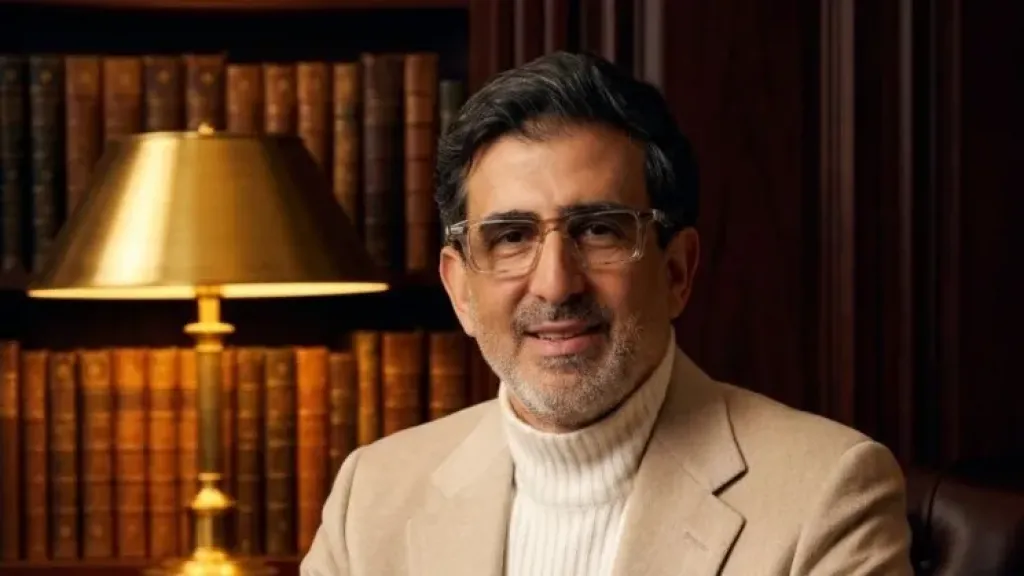
Investment leader Samer Choucair said the Bank of Russia’s decision to hold its key interest rate at 14% marks a turning point in the country’s monetary-policy cycle after 10 consecutive rate cuts since June 2025, when the benchmark rate stood at 21%.
Choucair said the decision reflects renewed inflationary pressure and growing concern that supply-side shocks could become more persistent rather than remaining temporary.
Annual inflation reached 6.3% as of September 7, well above the central bank’s 4% target, while underlying price growth is estimated at an annualized rate of between 5% and 6%. Price pressures intensified during July and August, particularly as higher fuel costs began filtering through to other categories of goods and services.
The Bank of Russia expects inflation to remain between 6% and 7% during 2026 before returning toward its 4% target in 2027.
Samer Choucair said: “Holding rates after ten consecutive cuts changes the question investors need to ask. It is no longer simply about when the next rate cut will arrive, but whether what began as a temporary supply shock is evolving into more persistent inflationary pressure.”
The central bank sees the Russian economy expanding at a moderate pace during the third quarter, with consumer demand slowing while investment continues to recover. However, policymakers require additional data to determine how long the impact of higher fuel prices will continue feeding into underlying inflation.
Choucair said the decision cannot be separated from fiscal policy and developments in energy markets. Bank of Russia Governor Elvira Nabiullina has indicated that higher fuel prices initially appeared to be a temporary factor but subsequently began spreading into a broader range of prices, contributing to the decision to pause the easing cycle.
The central bank’s next interest-rate meeting is scheduled for October 23.
Higher Rates Change the Investment Equation
Samer Choucair said persistently high borrowing costs place greater pressure on capital-intensive industries and companies that depend heavily on external financing.
At the same time, a high-rate environment can create a relative advantage for businesses with strong cash flows, resilient balance sheets and sufficient pricing power to pass higher costs on to customers.
For investors, this creates an increasingly important distinction between companies that can generate sustainable returns from their underlying operations and those whose profitability depends on inexpensive financing.
Even with high nominal yields, however, the attractiveness of Russian assets to international institutional investors remains constrained by sanctions, liquidity limitations and geopolitical uncertainty.
Choucair said this is precisely why nominal yield should never be evaluated in isolation.
A high interest rate may appear attractive on the surface, but its investment value changes considerably once inflation, currency risk, liquidity constraints and geopolitical exposure are incorporated into the calculation.
Russia and the Gulf Require Different Investment Frameworks
Samer Choucair said comparisons between Russia and Gulf markets should not be based simply on differences in interest rates.
Gulf economies are more closely connected to the U.S. dollar and therefore to the trajectory of U.S. monetary policy, while Russia is dealing with a substantially different combination of inflation, production shocks, sanctions and geopolitical constraints.
For long-term institutional investors, Choucair said the more important consideration is identifying markets that provide greater governance clarity and stronger visibility over future cash flows.
This distinction becomes particularly important when comparing nominal returns across jurisdictions.
A higher headline yield does not necessarily represent a superior risk-adjusted return if inflation, currency volatility or restrictions on capital movement absorb a significant portion of that yield.
The Strategic Capital View
Samer Choucair concluded that Russia’s decision to pause its rate-cutting cycle offers a broader lesson for global investors: high yields should not automatically be interpreted as investment opportunities.
“The lesson from the Bank of Russia’s decision is that a high yield is not automatically an opportunity,” Samer Choucair said. “Real investment value emerges when that return is supported by sustainable cash flows and genuine productive capacity, rather than simply compensating investors for higher inflation and geopolitical risk.”