
Samer Choucair: PIF Builds Its Stake in MASAR Again What Is Driving the Increase?
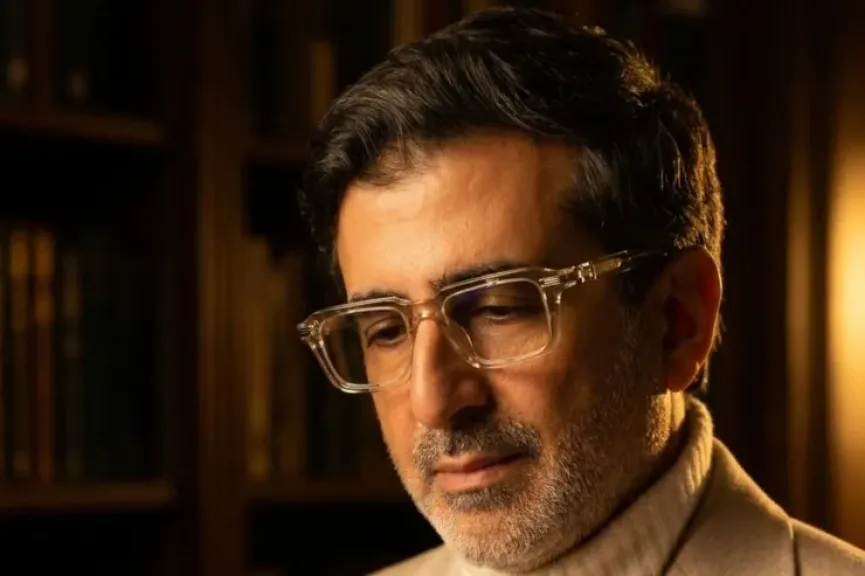
Investment leader Samer Choucair said the Public Investment Fund’s decision to increase its stake in Umm Al Qura for Development and Construction Company, known as MASAR, to approximately 20.7% provides an important signal about the evolving nature of institutional capital allocation in the Saudi market.
PIF’s ownership increased from 16.286% to 20.699%, a rise of roughly 4.41 percentage points, according to major-shareholder data as of September 8, 2026.
Choucair said the significance of the move becomes even clearer when compared with PIF’s previous divestment in November 2025, when the fund sold 48 million MASAR shares, equivalent to 3.3% of the company’s share capital, at SAR 19.8 per share. The transaction generated more than SAR 950 million and reduced PIF’s ownership to approximately 16.3%.
According to Samer Choucair, rebuilding the position less than a year later highlights PIF’s flexibility in recycling and reallocating capital. However, he cautioned that the renewed increase in ownership should not automatically be interpreted as evidence of a specific acquisition price or as establishing a valuation “floor” for MASAR shares, particularly because the latest purchases have not been disclosed with the same transaction-level pricing detail.
For investors, Choucair said the more important question is what the transaction reveals about the strategic value of the underlying asset.
MASAR is directly exposed to the growth of Makkah’s non-oil economy. Umm Al Qura for Development and Construction owns, develops, and operates Masar Destination, a 1.25 million-square-meter urban development extending 3.65 kilometers along King Abdulaziz Road and reaching to within approximately 550 meters of the Grand Mosque. PIF describes the company as part of its portfolio and links the development to Saudi Vision 2030 objectives for expanding hospitality, residential, retail, and mobility infrastructure serving Makkah’s residents, visitors, pilgrims, and Umrah travelers.
Choucair said this makes MASAR more than a conventional property-development exposure. Its investment case is connected to one of Saudi Arabia’s most structurally important demand centers, where tourism, pilgrimage, hospitality, real estate, and infrastructure intersect.
At the same time, Samer Choucair stressed that investors need to distinguish between the strategic attractiveness of an asset and the volatility of its reported operating results.
MASAR recorded net profit of SAR 216.1 million in the second quarter of 2026, down approximately 8.7% year on year from SAR 236.7 million. Compared with the first quarter, however, net income rose by approximately 381%, from SAR 44.9 million.
The sharp quarter-on-quarter movement illustrates how revenue recognition and the timing of land transactions can have a substantial impact on reported earnings.
The company sold six land plots during the second quarter of 2026, compared with three plots during the same period a year earlier. Its Q2 revenue reached approximately SAR 915.9 million, up from SAR 669.2 million in Q2 2025.
Choucair said such figures reinforce the importance of analyzing execution rather than relying solely on headline earnings. The ability to monetize land, structure development agreements, attract operators, and progressively convert the destination’s strategic location into recurring economic activity will ultimately be central to how institutional investors value the company.
The investment case also extends beyond the existing Masar Destination. Under its 2026–2030 growth strategy, Umm Al Qura is seeking to evolve from a single flagship project into a portfolio of urban and investment destinations across Saudi Arabia’s Western Region. PIF says the company is targeting at least two additional developments with combined gross development value exceeding SAR 50 billion and expected capital deployment of SAR 3 billion to SAR 5 billion.
For Samer Choucair, this broader strategy helps explain why changes in PIF ownership deserve attention from long-term investors.
The relevant signal is not simply that a major shareholder has increased its stake. It is that institutional capital continues to reassess assets positioned at the intersection of Saudi Arabia’s demographic growth, religious tourism, urban development, and non-oil economic transformation.
That does not eliminate execution risk.
Development schedules, land monetization, financing costs, operating leverage, transaction timing, and the pace at which projects generate recurring cash flow can all create significant differences between the strategic narrative and near-term financial results.
Choucair therefore cautioned against treating PIF’s higher ownership as a simple trading signal.
“The central message for institutional investors is not to chase the share-price movement,” Samer Choucair said. “The real question is whether Makkah-linked assets can convert structural, long-term demand into sustainable cash flows.”
He added that the increase in PIF’s ownership should be viewed as a meaningful capital-allocation signal, but not as a guarantee of future share-price performance.
For long-term investors, the deeper investment thesis remains tied to MASAR’s ability to transform the exceptional economic characteristics of Makkah into repeatable revenues, durable asset values, and scalable development opportunities.
In that context, PIF’s return to a larger ownership position may be less about predicting the next move in the stock and more about the institutional conviction behind allocating capital to strategic Saudi assets capable of participating directly in the Kingdom’s expanding non-oil economy.