
Samer Choucair: Europe Ignites a Satellite Spectrum Battle Against Starlink
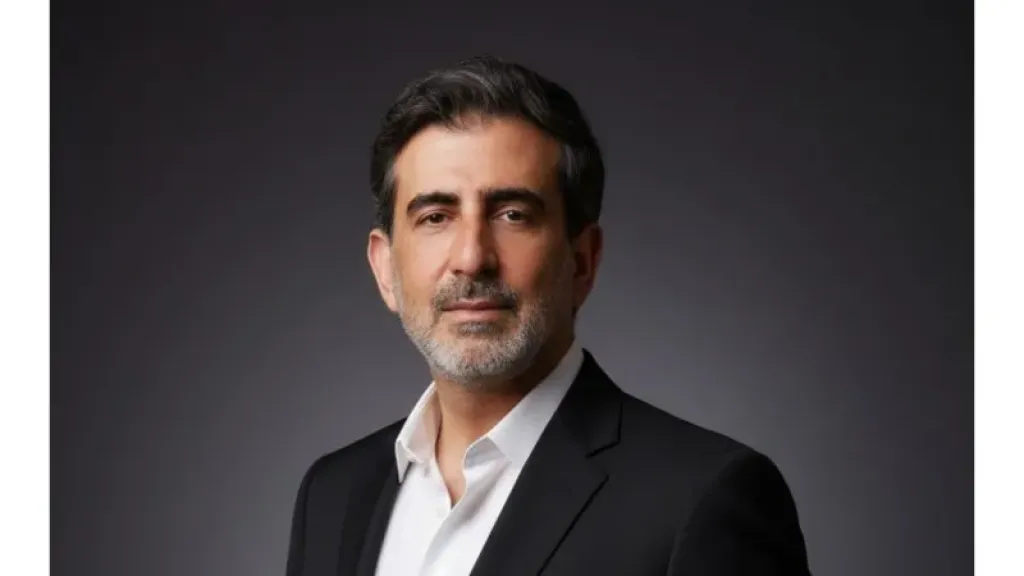
Investment leader Samer Choucair said preliminary talks between Deutsche Telekom, Orange, Vodafone, and Telefónica over the formation of a consortium to compete for part of Europe’s satellite spectrum represent an important turning point for the telecommunications industry. The next competitive frontier, he argued, will no longer be defined solely by towers, fiber networks, and terrestrial coverage, but increasingly by who controls access to customers when conventional mobile infrastructure disappears.
Europe’s four major telecom operators are in preliminary discussions over a joint bid for part of the 2 GHz spectrum that the European Union intends to make available for direct-to-device satellite services. No final decision on the consortium has yet been made.
For Samer Choucair, the development signals something much larger than another spectrum auction. It represents the beginning of a new competitive architecture in which terrestrial telecom operators, satellite constellations, regulators, and governments increasingly compete for control over the final connection to the user.
“The strategic asset is no longer simply the tower or the satellite,” Choucair said. “It is the right to connect the customer when the terrestrial network ends.”
Spectrum Is Becoming a Strategic Asset
Choucair said the significance of the potential alliance extends well beyond acquiring frequencies.
Control over spectrum could give European telecom operators greater flexibility in selecting satellite-capacity providers and integrating orbital connectivity directly into their commercial offerings rather than becoming permanently dependent on a single external constellation.
That changes the relationship between mobile operators and satellite companies.
Historically, telecom operators controlled terrestrial customer relationships while satellite connectivity remained a specialized market. Direct-to-device technology is beginning to erase that distinction because ordinary smartphones can increasingly connect directly to satellites when terrestrial networks are unavailable.
As a result, spectrum rights are moving from the regulatory margins of the telecom industry toward the center of corporate strategy.
For Samer Choucair, this means spectrum itself should increasingly be viewed as part of company valuation and capital allocation.
“The market is beginning to price spectrum not merely as a regulatory license, but as strategic infrastructure,” Choucair said. “If connectivity becomes hybrid, then controlling access to the spectrum becomes part of controlling access to the customer.”
Europe Wants Greater Control Over Satellite Connectivity
The emerging consortium also reflects Europe’s broader push to strengthen technological and digital sovereignty.
The European strategy is designed in part to support domestic satellite capabilities and reduce excessive dependence on U.S.-based technology platforms. The potential telecom consortium is seeking a portion of the 2 GHz spectrum earmarked for European operators as part of this wider effort.
The competitive landscape is therefore expanding beyond traditional telecom rivals.
Companies such as Starlink have demonstrated the commercial and strategic potential of large-scale satellite connectivity, while other global technology and space companies are pursuing their own orbital communications infrastructure.
Europe’s response is increasingly becoming a combination of regulation, spectrum policy, public infrastructure, private capital, and partnerships with established telecom operators.
That makes the contest particularly important for investors because it is not simply a race to launch more satellites.
It is a race to determine who controls the economic relationship between the satellite network and hundreds of millions of potential users.
Competing With Starlink Does Not Mean Abandoning Starlink
Choucair emphasized that Europe’s drive for greater satellite independence should not be interpreted as the end of partnerships with American providers.
The market is developing in a more nuanced direction.
Deutsche Telekom has already partnered with Starlink to introduce satellite-to-mobile connectivity across multiple European markets, including Germany. The companies plan to begin launching the service in early 2028, allowing compatible smartphones to connect directly to Starlink satellites when conventional terrestrial mobile coverage is unavailable.
This illustrates what Choucair sees as a critical feature of the emerging telecom model: operators may compete with satellite platforms in one part of the value chain while partnering with them in another.
The objective is not necessarily to replace Starlink.
It is to prevent any single satellite network from becoming the unavoidable gateway between telecom operators and their customers.
Vodafone Is Building a Different Model
Vodafone provides another example of how European telecom groups are positioning themselves.
Its satellite strategy includes a joint venture with AST SpaceMobile that has evolved into Satellite Connect Europe, a Luxembourg-headquartered provider designed to offer direct-to-device satellite broadband services to mobile network operators across Europe.
The company plans to invest in European ground infrastructure and integrate satellite coverage with existing terrestrial mobile networks.
That architecture is important from an investment perspective because it suggests that the eventual European satellite market may not be dominated by one vertically integrated winner.
Instead, it could develop into an ecosystem involving satellite operators, mobile-network operators, ground stations, spectrum holders, infrastructure providers, equipment manufacturers, and wholesale connectivity platforms.
“The winning telecom operator may not need to own every satellite,” Samer Choucair said. “It needs the regulatory rights, the customer base, the network intelligence, and the ability to integrate whichever orbital capacity offers the best economics.”
IRIS² Raises the Stakes
Europe’s broader satellite ambitions are centered on IRIS², its secure multi-orbit communications constellation.
Recent developments indicate that the planned system has expanded beyond earlier descriptions of roughly 290 satellites. At a September space summit, new contracts referenced a constellation of around 330 satellites, with initial launches planned from 2029. The project is intended to strengthen secure European communications and provide a European alternative in a market currently dominated by major U.S. satellite platforms.
For Choucair, IRIS² should therefore be understood as more than a government technology program.
It sits at the intersection of telecommunications infrastructure, cybersecurity, defense, digital sovereignty, and commercial connectivity.
That combination potentially changes how investors should value companies participating in the ecosystem.
Revenue may eventually come not only from consumer connectivity but also from government contracts, emergency communications, enterprise networks, maritime connectivity, critical infrastructure, defense applications, and Internet of Things services.
The Investment Case Is Bigger Than Satellites
Samer Choucair said institutional investors should resist viewing the spectrum contest as a purely technological battle between satellite constellations.
The investment implications extend across several layers of the communications value chain.
Satellite manufacturers require capital. Launch infrastructure requires capital. Ground stations require capital. Spectrum licenses carry economic value. Telecom operators must invest in network integration. Smartphones and chipsets need compatibility. Governments increasingly require secure connectivity, while enterprises want resilient networks capable of remaining operational when terrestrial infrastructure fails.
This creates a potentially significant investment ecosystem around hybrid connectivity.
The most attractive companies may therefore not necessarily be those with the largest satellite fleets.
Instead, Choucair sees particular value in businesses capable of controlling critical points between infrastructure and the end customer.
A telecom operator with millions of subscribers, regulatory spectrum access, billing infrastructure, terrestrial networks, and relationships with multiple satellite providers may possess a powerful strategic position even without owning a constellation outright.
From Telecom Networks to Hybrid Networks
The broader structural change is the convergence of terrestrial and orbital communications.
Traditional telecommunications networks were built around towers, fiber, spectrum, and fixed geographic coverage.
The next generation could be fundamentally different.
A smartphone might use 5G in a city, automatically switch to satellite coverage in a remote area, return to terrestrial connectivity when available, and do so without requiring the user to think about which infrastructure is carrying the signal.
Deutsche Telekom’s planned Starlink service already describes this type of automatic transition between terrestrial and satellite connectivity, while Vodafone’s satellite strategy similarly positions orbital coverage as an extension of conventional mobile networks.
For investors, this means the distinction between “telecom company” and “satellite company” could gradually become less important.
The more relevant question may become who owns the customer relationship and who controls the orchestration layer deciding how that customer is connected.
The Strategic Outlook
Samer Choucair concluded that Europe’s emerging battle over satellite spectrum represents a structural repricing of telecommunications, space infrastructure, and digital sovereignty.
Spectrum is becoming more valuable because it determines access.
Satellite capacity is becoming more valuable because it extends coverage beyond terrestrial networks.
Telecom operators are becoming strategically important because they already possess customers, billing systems, terrestrial infrastructure, and regulatory relationships.
And governments are becoming more deeply involved because communications infrastructure increasingly overlaps with national security and technological sovereignty.
“The future of telecommunications will not be terrestrial or satellite,” Samer Choucair said. “It will be hybrid. The companies that create the greatest value will be those that control the customer relationship, secure the regulatory rights, and maintain the flexibility to integrate multiple satellite providers into one seamless network.”
For institutional investors, that could ultimately be the defining investment thesis behind Europe’s satellite-spectrum battle: the next generation of telecom infrastructure will not be measured simply by how many towers or satellites a company owns, but by whether it can keep the customer connected when either network alone is no longer enough.