
Samer Choucair: Oilex Debt-to-Equity Conversion Opens a New Chapter in Food Industry Financing
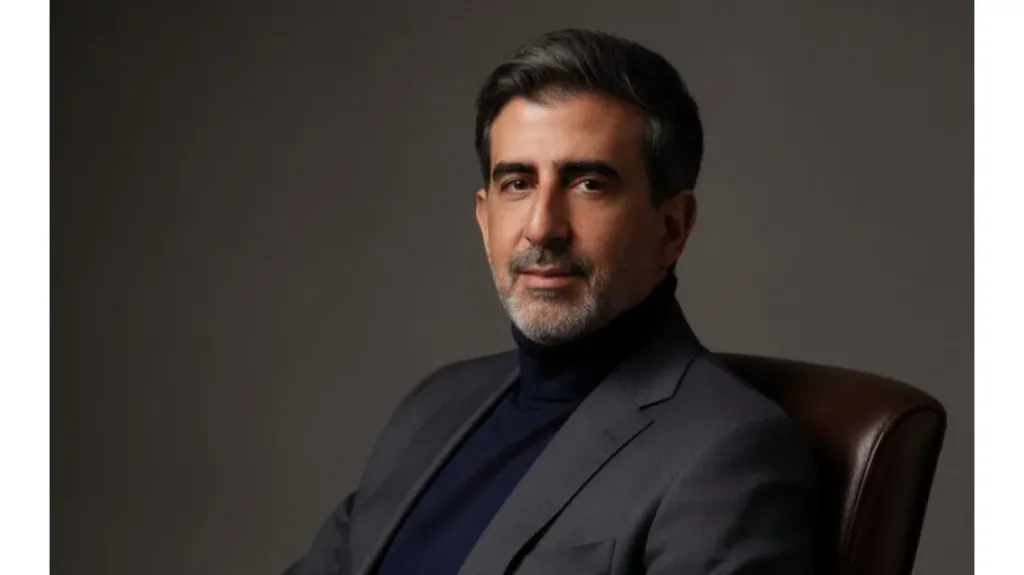
Investment leader Samer Choucair said the agreement between Egypt’s Future of Egypt for Sustainable Development Authority and the National Bank of Egypt to acquire a controlling stake in the International Company for Multi Oil Extraction, known as Oilex, in exchange for restructuring approximately EGP 15 billion in debt owed to seven banks, reflects a significant shift in how Egyptian capital is approaching distressed industrial assets.
Choucair said the transaction combines a cash injection, debt rescheduling, and the conversion of part of the company’s liabilities into equity at a time when food security and the cost of imports are becoming increasingly important considerations in capital allocation.
Under the proposed structure, the Future of Egypt authority is expected to contribute approximately EGP 5 billion, while the National Bank of Egypt would account for around EGP 4 billion. A further EGP 5 billion would be rescheduled, while approximately EGP 1.5 billion in interest and penalties would be written off.
The National Bank of Egypt would also become a shareholder by converting approximately EGP 4 billion of debt into equity. Meanwhile, the company’s industrial facility in Sadat City is undergoing valuation as the parties work toward completing the transaction before the end of 2026.
When Debt Becomes Equity
Samer Choucair said Oilex was originally financed through a banking consortium led by the National Bank of Egypt and First Abu Dhabi Bank Egypt, alongside Banque du Caire, Arab Bank, Suez Canal Bank, Al Baraka Bank Egypt, and Emirates NBD Egypt.
The financing supported the development of an integrated industrial complex with targeted processing capacity of approximately 4,200 tonnes per day, equivalent to roughly 1.5 million tonnes annually.
The facility produces high-protein soybean meal with protein concentrations of 48% and 44%, alongside high-purity crude oils and degummed oils used by the food-processing industry.
For Choucair, however, the most important development is not the existence or scale of the physical asset. It is the changing position of lenders within the capital structure.
The conversion of bank debt into equity suggests that repeated restructuring may no longer be sufficient to recover value from a capital-intensive industrial facility whose economics ultimately depend on utilization, working capital, commodity inputs, and operational efficiency.
“When the creditor becomes an owner, the equation moves from collecting installments to managing productive capacity,” Choucair said.
That distinction fundamentally changes the risk profile. A lender traditionally focuses on debt service, collateral, and repayment capacity. An equity owner must focus on production, margins, procurement, governance, capital expenditure, and ultimately the value of the business itself.
Food Security Is Reshaping Investment
Samer Choucair said Egypt’s vegetable-oil deficit continues to place pressure on the country’s external accounts, given its substantial dependence on imported crude oils across key categories.
At the same time, government policy is seeking to gradually increase domestic self-sufficiency toward the end of the decade through greater production of oilseed crops, contract farming, and investment in extraction and processing capacity.
Against that backdrop, Choucair said a facility the size of Oilex can no longer be analyzed simply as an isolated factory.
It potentially represents one link in a broader value chain connecting agricultural land development, oilseed production and procurement, crushing and extraction, animal feed manufacturing, food processing, and distribution.
The Future of Egypt authority’s expansion from land reclamation into food processing, agricultural logistics, and commodity trading makes its proposed participation in the Sadat City complex consistent with a more vertically integrated model spanning agriculture, extraction, feed production, and distribution.
The National Bank of Egypt’s entry as a shareholder, meanwhile, would redefine its position after years in which banks primarily supported large industrial projects through syndicated lending.
Investors Will Watch Operations, Not the Debt Headline
Choucair said institutional investors are likely to focus less on the headline EGP 15 billion debt restructuring and more on whether the transaction can restore the underlying economics of the asset.
For Samer Choucair, the critical questions are the quality of the industrial asset after restructuring, the new owners’ ability to secure reliable supplies of oilseeds, the facility’s ability to maintain stable utilization despite exchange-rate and interest-rate volatility, and the implications of the transaction for other distressed assets across Egypt’s food-processing industry.
A successful restoration of production could support several downstream sectors, including animal feed, poultry, edible oils, refining, and packaging.
At the same time, greater domestic processing capacity could create additional competitive pressure for businesses whose margins depend heavily on imported products.
Global soybean, sunflower, and palm oil prices will remain important external determinants of profitability, while the banking sector faces a more complex equation of its own: reducing distressed debt while simultaneously accepting greater exposure to operational and governance risk.
Governance Will Determine the Value of the Deal
Samer Choucair cautioned that the transaction remains incomplete until the valuation and necessary approvals are finalized.
Restarting or expanding an industrial complex of this scale will also require substantial working capital and reliable access to oilseeds and other operating inputs.
Choucair said clarity around control rights, management responsibilities, internal pricing, procurement, and governance will be particularly important given the involvement of a development authority, a major state-owned bank, and the company’s historical shareholders.
Agricultural commodity prices and financing costs represent additional risks.
Ownership of the factory, Choucair emphasized, does not automatically stabilize its profitability.
The transaction will ultimately create value only if the restructuring addresses the operational problems that contributed to financial stress in the first place.
From Rescue Capital to Productivity
Choucair said that if the transaction is completed and the facility returns to efficient production, it could potentially open the door to industrial investors and specialized agriculture and food funds while encouraging a reassessment of similar assets in Sadat City, Borg El Arab, and other food-manufacturing clusters.
Private equity funds and Gulf investors could also find attractive defensive exposure in Egypt’s food and agriculture sector, particularly given the structural demand for essential food products.
But Samer Choucair said that opportunity depends on transparency and a clear separation between sovereign or developmental objectives and commercial decision-making.
For institutional capital, food security can strengthen the strategic rationale for an investment, but it cannot substitute for operating discipline, competitive economics, and credible governance.
“Institutional investors do not buy the slogan of food security,” Samer Choucair said. “They buy management’s ability to convert nominal capacity into actual production at a competitive cost. Governance is not a legal appendix; it is the variable that determines whether the transaction is an investment or simply a transfer of risk from the loan book to the shareholders’ register.”