
Samer Choucair: 15 Airbus Jets Open a New Chapter in Egyptian Aviation Investment
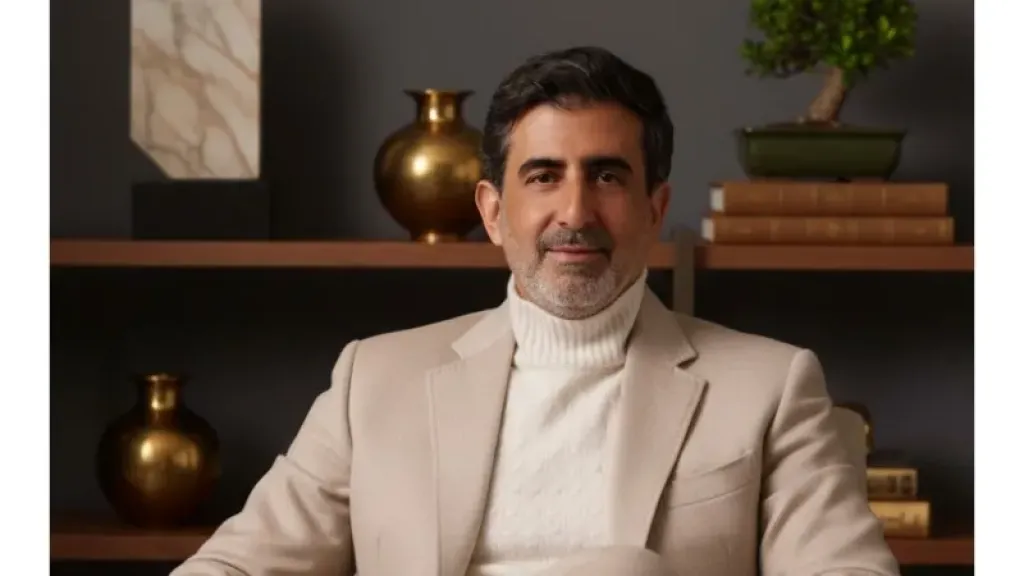
Investment leader Samer Choucair said Air Cairo’s firm order for 15 Airbus A320neo aircraft represents a strategic step that goes well beyond expanding the size of its fleet. The transaction moves the Egyptian carrier toward a hybrid model combining aircraft ownership with leasing, potentially giving it greater flexibility in capital allocation, fleet management, and long-term financial planning.
Signed on September 8, 2026, during the El Alamein International Airshow, the agreement represents Air Cairo’s first direct aircraft order from Airbus. The airline has expanded from just seven aircraft five years ago to more than 45 today and is targeting a fleet of more than 130 aircraft by 2034. Airbus said the new aircraft will provide additional capacity and operational flexibility as Air Cairo expands its domestic, regional, and international networks.
For Samer Choucair, the significance of the transaction lies not simply in the number of aircraft being added but in the evolution of the airline’s capital structure.
Combining owned aircraft with leased capacity can give an airline greater control over its long-term asset base while preserving some of the flexibility associated with leasing. It can also diversify financing exposure rather than concentrating fleet growth under a single ownership model.
Air Cairo’s recent operating performance provides an important backdrop to that decision. The company carried 5.82 million passengers in 2025 with a fleet that stood at 39 aircraft during the year, achieving a load factor of approximately 81%. Around 2.7 million passengers were transported to Egyptian tourism destinations, with a load factor of approximately 87% across 16,472 flights from Europe and Central Asia.
Choucair said those operating numbers matter because fleet expansion only creates economic value when additional capacity can be converted into sustainable passenger demand and revenue.
The A320neo Is an Efficiency Investment
Samer Choucair said the choice of the A320neo has important economic implications beyond fleet growth.
According to Airbus, the A320neo Family delivers at least a 20% reduction in fuel consumption and CO₂ emissions compared with previous-generation single-aisle aircraft. That efficiency can improve unit economics and reduce an airline’s sensitivity to fuel-price volatility, particularly as the fleet scales.
Fuel is one of the most significant variable costs in commercial aviation. For a rapidly expanding airline, therefore, relatively small improvements in fuel efficiency can become materially more important when applied across thousands of flights and a substantially larger fleet.
For investors, however, lower fuel consumption is only one part of the equation.
The larger question is whether Air Cairo can deploy the additional aircraft on routes capable of generating sufficient yields, maintain strong load factors, control maintenance and operating costs, and capture a growing proportion of revenue in foreign currencies.
“Investors will not measure the success of this transaction simply by counting aircraft,” Samer Choucair said. “They will measure it by the airline’s ability to convert additional capacity into sustainable revenue, particularly foreign-currency revenue, while protecting load factors and controlling operating and financing costs.”
Ownership Changes the Capital Equation
The transaction is particularly significant because it introduces direct Airbus ownership alongside Air Cairo’s leased fleet.
Airbus itself described the agreement as a milestone in Air Cairo’s strategy, with the airline’s Chairman and CEO Hussein Sherif saying that combining owned aircraft with leased aircraft would provide greater operational flexibility and financial efficiency as the company scales.
From an investment perspective, Choucair said that distinction matters.
Leasing can allow airlines to expand more quickly without committing the same amount of capital to aircraft ownership, while direct ownership creates long-duration assets that can generate value over many years.
But ownership also introduces a different set of financial considerations.
Aircraft acquisitions require careful management of liquidity, financing costs, leverage, depreciation, and residual values. Investors therefore need to evaluate the transaction not simply through the income statement but through the balance sheet and cash-flow profile that will emerge as deliveries begin.
The financial value of the order, delivery timetable, and engine selection have not been publicly disclosed, making it too early to determine the transaction’s full impact on Air Cairo’s capital requirements and future cash flows.
For Choucair, that uncertainty means the headline order should be viewed as the beginning of the investment analysis rather than the conclusion.
Aviation Growth Must Translate Into Tourism Economics
The strategic importance of Air Cairo’s expansion extends beyond the airline itself.
Aviation capacity is closely connected to Egypt’s ability to expand tourism, improve connectivity with European and regional markets, and increase the flow of foreign-currency revenues into the economy.
Additional aircraft can create more frequencies, open new routes, support tourism destinations, and provide greater flexibility during periods of strong seasonal demand.
But Samer Choucair said the economic return depends on how effectively those aircraft are deployed.
Fleet expansion that produces sustainable international traffic, higher aircraft utilization, resilient load factors, and foreign-currency earnings can create value beyond the airline’s own financial statements.
It can support hotels, airports, tourism operators, restaurants, transportation providers, and other businesses connected to Egypt’s visitor economy.
That makes aviation investment potentially important to the broader economic ecosystem.
The risk is that capacity grows faster than profitable demand.
If fleet expansion is accompanied by weaker yields, excessive discounting, lower utilization, or rising financing costs, passenger growth alone may not translate into an adequate return on invested capital.
The Real Metric Is Return on Invested Capital
For institutional investors, Choucair said the central question surrounding Air Cairo’s expansion is ultimately one of capital productivity.
Growing from seven aircraft to more than 45 in five years is a significant operational achievement. Targeting more than 130 aircraft by 2034 would represent another substantial transformation.
But the larger the fleet becomes, the more important capital discipline becomes.
The relevant indicators will increasingly include revenue per available seat, load factors, aircraft utilization, operating margins, financing costs, foreign-currency generation, maintenance expenditure, and ultimately return on invested capital.
That is particularly important when ownership is added to the business model because the airline is no longer simply purchasing access to capacity. It is committing capital to long-duration physical assets whose economic value must be managed throughout their operating lives.
Samer Choucair said this is where the Air Cairo transaction becomes an investment story rather than merely an aviation story.
The order represents confidence in the continued expansion of Egyptian travel and tourism demand, but it also creates a new test for management: whether rapid fleet growth can be converted into higher-quality earnings and sustainable returns.
A New Chapter for Egyptian Aviation Investment
Samer Choucair concluded that the 15-aircraft order should be viewed as part of a broader transition in Egyptian aviation from capacity expansion toward capital-intensive strategic growth.
The opportunity is significant. A larger and more efficient fleet can improve international connectivity, support tourism, generate foreign-currency revenues, and strengthen Egypt’s position across regional aviation markets.
But aircraft themselves do not create value automatically.
The investment case will ultimately depend on how effectively Air Cairo combines owned and leased capacity, how efficiently it finances that expansion, where the new aircraft are deployed, and whether passenger growth translates into sustainable cash generation.
For Samer Choucair, that is the real test behind the transaction: not whether Air Cairo can build a fleet of more than 130 aircraft, but whether every additional aircraft can earn an adequate return on the capital committed to it.
In that sense, the 15 A320neo order opens a new chapter not only for Air Cairo, but for the investment economics of Egyptian aviation itself.