
Samer Choucair: OPEC+ Froze Output Targets as Markets Priced the Hormuz Bottleneck
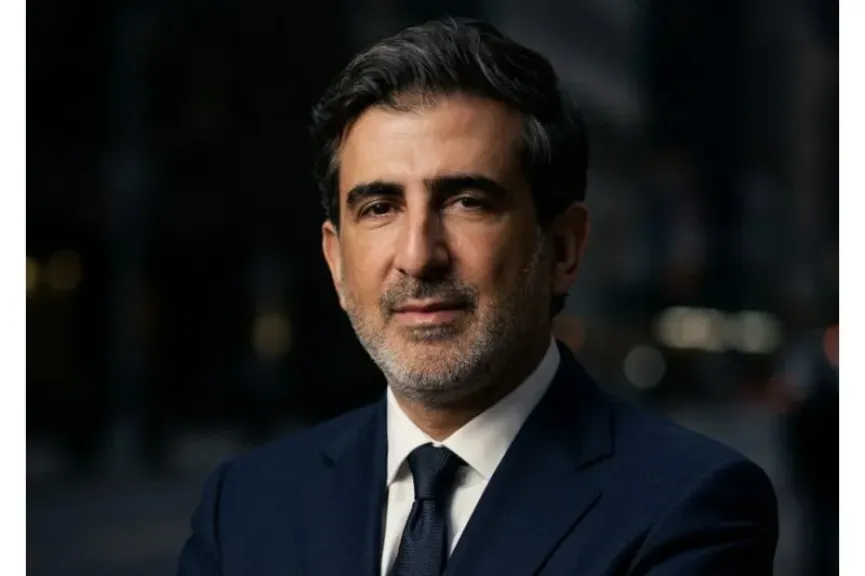
Investment leader Samer Choucair said the decision by seven key OPEC+ members to maintain September production levels through October marked the end of a phase of monthly increases that had gradually restored the 1.65 million barrels per day of voluntary cuts introduced in 2023.
Saudi Arabia, Russia, Iraq, Kuwait, Kazakhstan, Algeria, and Oman agreed at a virtual meeting on September 6 to keep October production requirements unchanged, with their next meeting scheduled for October 4. The seven countries’ combined required production stands at roughly 31.01 million barrels per day, including 10.478 million for Saudi Arabia, 9.949 million for Russia, and 4.431 million for Iraq.
The decision followed a final increase of approximately 188,000 barrels per day for September, effectively completing the restoration of the 1.65 million-barrel-per-day voluntary-cut tranche. Broader OPEC+ supply restraints remain in place through the end of 2026 as the alliance prepares to establish new production baselines for 2027.
Geography, Not the Quota, Became the Real Market Driver
Samer Choucair said OPEC+ was no longer managing the oil market in quite the same way it had since 2016 because disruptions to exports through the Strait of Hormuz had weakened the connection between official production quotas and barrels actually reaching the global market.
The distinction is critical. A country may have permission to produce additional barrels, but that additional capacity has less immediate market value when shipping routes themselves become constrained.
Recent tanker data underline that problem. The 10-day average number of commodity vessels transiting Hormuz had fallen to around 10 per day by September 6, the lowest level since May, amid renewed attacks and severe disruption to maritime traffic.
Brent had surged above $110 a barrel during the spring before retreating toward the mid-$90s, closing around $96 in early September. The benchmark ended the week of September 4 at $96.28 a barrel, up 9.3% for the week as renewed Middle East tensions intensified concerns about supply disruptions.
For Choucair, those prices reflected a geopolitical and logistical premium as much as a conventional supply-demand balance.
The structure of the producer group has also changed. The United Arab Emirates announced in April that it would leave both OPEC and OPEC+, effective May 1, reducing the group of participating countries in these voluntary adjustments from eight to seven.
“Freezing October production after completing the restoration of the voluntary tranche meant that the alliance was moving from monthly engineering of the barrel toward annual engineering of quotas,” Samer Choucair said. “For investors, the focus therefore had to shift toward assets that benefit from a prolonged logistical bottleneck.”
Saudi Arabia and the Value of Alternative Infrastructure
Choucair said the current environment has exposed a fundamental weakness in traditional quota analysis: official production capacity and effective export capacity are not necessarily the same thing.
When a major maritime chokepoint becomes unreliable, the strategic value of alternative infrastructure rises sharply.
For Saudi Arabia, that increases the importance of infrastructure such as the East-West pipeline, which provides an alternative route toward the Red Sea and reduces dependence on the Strait of Hormuz for part of the Kingdom’s crude exports.
Samer Choucair said this changes how institutional investors should think about energy infrastructure. Pipelines, storage facilities, export terminals, logistics networks, and alternative trade corridors are no longer simply supporting assets around the oil industry. In a geopolitically constrained market, they can become part of the underlying value of the barrel itself.
Higher oil prices have also partially compensated Gulf producers for weaker volumes, creating additional fiscal support for major investment programs.
For Saudi Arabia, stronger hydrocarbon revenues remain important to the financing environment surrounding Vision 2030, the Public Investment Fund, infrastructure, tourism, manufacturing, and other diversification initiatives.
The impact, however, is uneven across sectors. Energy producers and oilfield-services companies can benefit from a sustained risk premium, while airlines, petrochemical companies, transportation businesses, and other energy-intensive industries can face higher operating costs.
That divergence creates a market in which sector selection becomes as important as the direction of crude itself.
The Real Risk Is a Sudden Return of Hormuz
Samer Choucair cautioned that the most important pricing variable was not October’s production target.
It was the possibility that conditions in the Strait of Hormuz could normalize before OPEC+ completes negotiations over its 2027 production framework.
As long as restrictions on shipping persist, physical supply remains constrained and oil prices can continue to carry a substantial geopolitical premium. Recent reporting shows just how difficult the market has found it to determine actual flows through the strait, with widely differing estimates of how much crude is successfully passing through the corridor.
But the same mechanism can work sharply in reverse.
If Hormuz were to normalize unexpectedly after months of higher OPEC+ production targets, barrels that had effectively been trapped or rerouted could return more freely to the international market. The result could be a rapid transition from perceived scarcity toward excess supply.
That means the current oil risk premium is valuable to producers but dangerous for investors who treat it as permanent.
The key investment question is therefore not simply whether Brent can remain around $95, $100, or move higher. It is how much of the current price reflects sustainable fundamentals and how much represents compensation for an unusually uncertain shipping environment.
From Production Capacity to Delivery Capacity
Choucair said the present crisis has created an important distinction between production capacity and delivery capacity.
Historically, oil-market analysis focused heavily on how many barrels OPEC+ members could produce and how much spare capacity Saudi Arabia and other major producers could deploy.
In the current environment, that analysis is incomplete.
The more valuable question is how many barrels can actually reach customers, through which routes, at what insurance cost, and with what level of geopolitical reliability.
This is why alternative pipelines, Red Sea infrastructure, storage capacity, shipping flexibility, marine insurance, and logistics networks can command greater strategic value.
It also explains why the same $95 barrel can generate very different economics depending on where it is produced and how it reaches the buyer.
For institutional investors, that distinction extends beyond upstream oil companies. It creates potential opportunities across ports, pipelines, storage, engineering, logistics, shipping services, and infrastructure designed to reduce dependence on vulnerable maritime chokepoints.
The Institutional Investment View
Samer Choucair said institutional investors should think about the current oil market across different time horizons.
In the coming weeks, portfolios are primarily managing the security premium embedded in crude prices.
Over the coming months, attention shifts toward the October and subsequent OPEC+ meetings, compensation for previous overproduction, the physical condition of Gulf exports, and negotiations surrounding the next production framework.
Over a multi-year horizon, however, the more important question becomes which producers and infrastructure assets will gain market share once new 2027 baselines are established and global energy trade routes have adapted to the disruption.
That framework changes the investment thesis.
The opportunity is not necessarily to chase each monthly OPEC+ production decision or every short-term movement in Brent. Instead, institutional capital can focus on assets whose economics improve as global energy routes are redesigned.
Samer Choucair concluded: “The opportunity was not in chasing the October barrel. It was in investing in the assets that benefit from the reshaping of trade routes, infrastructure, and supply chains, while remaining hedged against both possibilities: that the security premium persists, or that it disappears suddenly.”
The September OPEC+ decision therefore represented more than a temporary pause in production increases.
It highlighted a deeper transformation in the oil market: the marginal value of a barrel is increasingly determined not only by whether it can be produced, but by whether it can reliably reach the market.