
Samer Choucair: FIFA’s Withdrawal From a $20 Billion Deal Is Redefining the Value of Sports Investment
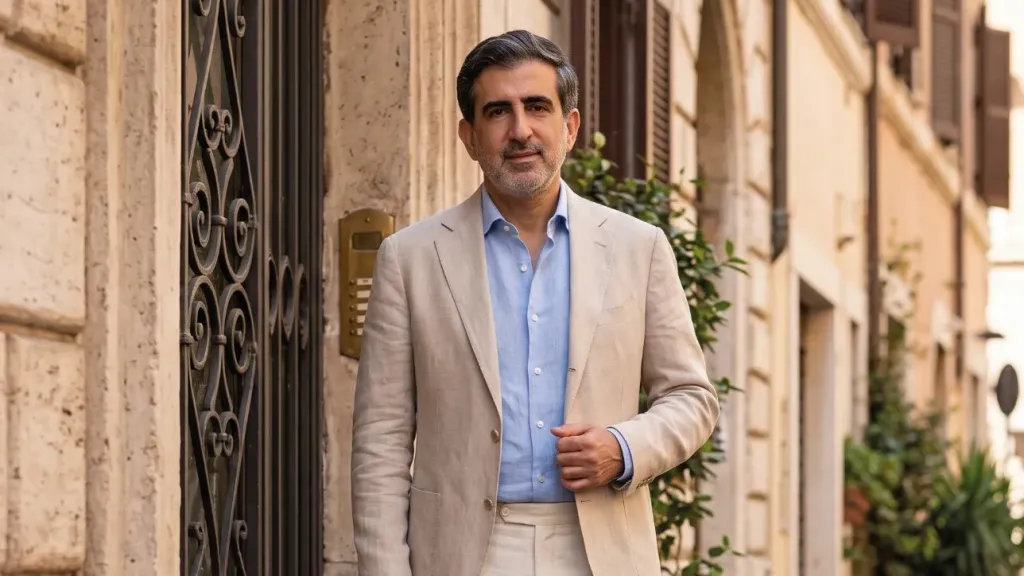
Investment leader Samer Choucair said FIFA’s decision to step back from a proposal to create a commercial entity valued at roughly $20 billion and sell a minority stake to raise around $4.2 billion marks an important turning point in how global sports assets are valued.
According to Choucair, the development does not indicate that sports have become less attractive as an investment class. Instead, it demonstrates that governance is now a critical component in determining the value of major cultural and institutional assets.
“Capital buys cash flow, while federations buy continuity,” Samer Choucair said, arguing that the attempt to convert commercial rights linked to the World Cup and other FIFA competitions into a privately investable asset ran into the structural sensitivities of an organization built around national associations and continental balances of power.
Choucair said the commercial value of sport remains strong, supported by rising demand for live content and continued growth in broadcasting rights, sponsorship, hospitality, and ticketing.
Institutional investors, however, increasingly need to distinguish between assets whose cash flows can be priced relatively clearly, such as clubs, leagues, and media platforms, and international sports institutions whose decisions are influenced by political, social, and supporter considerations as well as financial ones.
Samer Choucair noted that the 2026 World Cup cycle is arriving at a time of significant commercial expansion across global football, while FIFA revenues are moving toward record levels. That suggests the issue was not a lack of economic value, but rather the difficulty of introducing a private-ownership model into a nonprofit institution whose structure depends on redistributing surpluses to member associations and football-development programs.
The Governance Premium Can No Longer Be Ignored
Choucair said opposition from national and continental football associations shifted the debate away from pure valuation and toward questions of governance, legitimacy, and institutional control.
A private investor may seek enhanced information rights, a clearly defined exit mechanism, or some degree of influence over commercial decisions. Sports institutions, however, may view some of those rights as potentially compromising the independence of the game.
“The market will apply a governance discount to any future attempt to securitize a sovereign-style sports tournament, even if the headline valuation comes back higher,” Choucair said.
Future investors in similar transactions will therefore need to price not only direct cash flows, but also reputational risk, political risk, competition-calendar risk, and the possibility of institutional resistance.
According to Samer Choucair, the collapse of the proposal does not mean private capital will retreat from sports.
Instead, capital is more likely to migrate toward minority stakes in clubs, league-level rights, streaming and broadcasting platforms, stadium infrastructure, hospitality, ticketing, and sports-data technologies, where ownership structures, returns, and exit mechanisms are generally more transparent.
Gulf Sports Investment Could Benefit From a Shift Toward Infrastructure and Hosting
Choucair said the development is particularly relevant for Saudi Arabia and the wider Gulf as the Kingdom prepares to host the 2034 FIFA World Cup and continues expanding investment in sports under Vision 2030.
For Saudi Arabia, the investment value of hosting does not depend on owning part of FIFA’s commercial rights.
It extends across stadiums, transport, tourism, hotels, hospitality, retail, content production, digital services, and the broader infrastructure required to stage and support a global sporting event.
“The economy surrounding a World Cup can be a massive company even if the World Cup itself is not one,” Samer Choucair said.
That distinction matters for Gulf investors.
Instead of pursuing ownership structures that may be politically and institutionally sensitive, investors can potentially generate long-term returns from infrastructure, services, and the economic reuse of assets built around major sporting events.
The opportunity therefore extends well beyond matchday revenues.
Stadium districts can be integrated into entertainment and retail developments. Transport investments can support wider urban mobility. Hospitality infrastructure can serve tourism long after a tournament ends. Digital platforms, ticketing systems, sports analytics, and fan-engagement technologies can also generate commercial value beyond the event itself.
Separating Commercial Operations From Institutional Ownership
Choucair said the more sustainable model for sports investment may be to separate the commercial operation of sport from ownership of the governing institution itself.
Under such a model, private capital can participate in rights, platforms, infrastructure, and services without undermining the core governance structure of the sporting body.
This distinction could become increasingly important as private equity, sovereign wealth funds, and institutional investors continue expanding their exposure to global sports.
The objective, Choucair said, should be to access monetizable cash flows without creating ownership structures that conflict with the political or cultural role of governing institutions.
The main risks investors need to consider include revenue concentration around major tournaments, pressure from increasingly congested competition calendars, political change within federations, and the possibility that sports institutions impose tighter conditions on private-capital participation.
These risks mean that sports assets cannot always be valued with the same assumptions used for conventional media or entertainment companies.
The scarcity value of live sport remains powerful, but the institutional structure behind those rights can materially influence the appropriate valuation multiple.
A New Framework for Sports Capital
For Samer Choucair, FIFA’s abandoned proposal offers a broader lesson for institutional capital.
Sports investment is not becoming less valuable. Rather, investors are becoming more precise about where that value can actually be captured.
Clubs, media rights, digital distribution, sports technology, stadium infrastructure, hospitality, and ticketing can offer relatively identifiable commercial streams.
By contrast, attempts to convert the governing institutions of global sport themselves into privately owned financial assets may face a substantially higher governance hurdle.
That is why Choucair believes the next phase of sports investing will reward capital that can distinguish between financing the commercial ecosystem of the game and trying to acquire control over the institutions that embody its identity.
“Pay a premium for the growth in demand for live content, apply a discount for governance complexity, and do not confuse financing the development of the game with owning its symbol,” Samer Choucair said.
He concluded that the economic value of sports remains firmly intact, but the route to accessing that value is changing.
The most successful institutional sports investment in the next cycle may therefore be the one that understands the difference between owning commercial cash flows and attempting to own the institutions that represent the game itself.