
Samer Choucair: $57.2 Billion Puts Egypt Back on the Global Capital Allocation Map
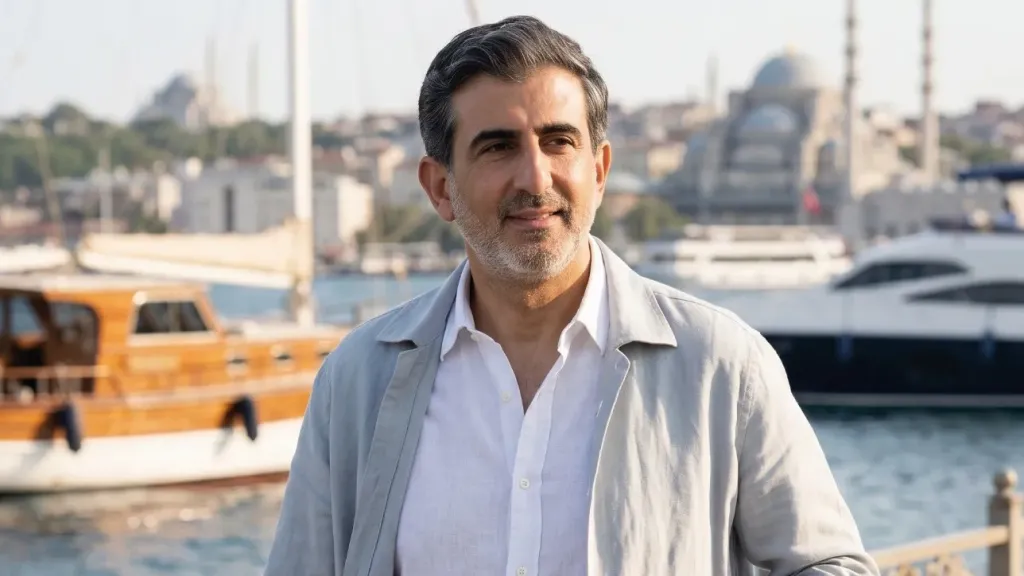
Investment pioneer Samer Choucair said Egypt’s net international reserves, which reached $57.215 billion at the end of August 2026, marking the highest level in the Central Bank of Egypt’s history and a monthly increase of roughly $921 million, have brought the country back onto the global capital-allocation radar for emerging-market investors.
Choucair said the figure represents a major recovery from the 2022 low of around $33.1 billion, while reserves have increased by approximately $4.6 billion since the beginning of 2026.
He attributed the improvement to a relative shift in Egypt’s foreign-currency generation following the March 2024 reforms, alongside stronger remittance inflows from Egyptians abroad, which reached approximately $47.3 billion in fiscal year 2025/2026, up nearly 30%, as well as a 23% increase in Suez Canal revenues to around $4.67 billion.
For Samer Choucair, however, the headline reserve number is only the beginning of the investment analysis.
Gold Lifted the Headline, While FX Holdings Tested Liquidity
Choucair said the composition of Egypt’s reserves is more important than the aggregate number alone.
The value of Egypt’s gold holdings increased by approximately $1.92 billion in August to $19.06 billion, supported by the purchase of around 8,000 ounces and higher global gold prices, bringing total holdings to roughly 4.17 million ounces.
Foreign-currency holdings, by contrast, declined by about $1.16 billion to $37.55 billion, marking their first monthly decline in six months, while Special Drawing Rights increased by approximately $160 million to $606 million.
Choucair said this distinction matters because an increase in the market value of gold does not automatically translate into an equivalent increase in immediately available dollar liquidity.
“The institutional investor does not buy the headline,” Samer Choucair said. “The institutional investor buys asset quality and convertibility.”
For import financing, external-debt servicing, and foreign-exchange market stability, liquid foreign-currency assets remain particularly important.
A central bank can hold a historically high level of reserves while the composition of those reserves still determines how much short-term financial flexibility the economy actually has.
From Crisis Management to Growth-Quality Management
Choucair said Egypt has substantially repriced its relationship with international capital markets since the pressure experienced in 2022.
The country moved through an IMF-backed reform program, significant Gulf capital inflows, exchange-rate adjustments, and a gradual return of foreign investors to domestic debt instruments.
The improvement in reserves has reduced the probability of an immediate foreign-currency liquidity shock.
But Samer Choucair cautioned that Egypt’s substantial external obligations over the coming 12 months mean the current reserve level should be viewed more as an essential buffer than as excessive surplus liquidity.
The banking system’s net foreign assets also improved to approximately $28.4 billion in July, providing another signal that the foreign-currency position has strengthened compared with earlier periods of severe pressure.
Investors, however, are looking at a much broader set of indicators.
Inflation, exchange-rate stability, real interest rates, and monetary-policy credibility remain central to the investment case. Deposit rates were around 19% in August, underscoring the high nominal yields still required to anchor domestic liquidity and inflation expectations.
Choucair said a record reserve level does not automatically translate into tighter sovereign-bond spreads, stronger credit ratings, or lower funding costs.
Those outcomes depend on whether reserve accumulation is accompanied by lower inflation, stronger fiscal discipline, sustainable external accounts, and durable private-sector growth.
Investment Opportunities, but Risks Remain
Samer Choucair said the emerging opportunity in Egypt is increasingly split between investors seeking attractive real returns in short- and medium-term local debt instruments and investors waiting for evidence that Egypt’s sources of foreign currency have become structural rather than episodic.
A more stable foreign-exchange market could benefit banks, tourism companies, airlines, logistics providers, and industries positioned to substitute imports with domestic production.
Gulf investment funds may also benefit from lower counterparty and currency-convertibility risk in sectors such as energy, ports, real estate, infrastructure, and tourism.
For private capital, greater confidence in the availability of foreign currency can materially change the economics of a project.
It affects the ability to import equipment, repatriate dividends, service foreign-currency debt, and price long-duration contracts.
Choucair nevertheless cautioned that the August decline in foreign-currency holdings demonstrated that the recovery should not be viewed as a perfectly linear process.
A slowdown in remittances, deterioration in Suez Canal revenues, weaker foreign demand for Egyptian debt, or a renewed gap between the official and parallel foreign-exchange markets could place fresh pressure on the pound.
That means investors must distinguish between a stronger reserve position and a fully normalized external financing environment.
Egypt Returns to the Global Allocation Table
Samer Choucair said institutional investors are likely to focus on three broad signals in determining whether Egypt deserves a larger and more permanent allocation in emerging-market portfolios.
The first is whether the foreign-currency component of reserves remains stable rather than relying increasingly on valuation gains in gold.
The second is whether remittances remain sustainably above their historical trend and continue to provide a reliable source of foreign exchange.
The third is whether the foreign-exchange market remains unified without the re-emergence of a meaningful parallel-market premium.
These indicators will help investors determine whether Egypt’s improvement represents a structural transformation in external financing or simply a temporary rebuilding of financial buffers.
For Choucair, this distinction is critical.
Large reserves reduce vulnerability, but they do not automatically create growth.
Growth emerges when foreign-currency stability enables higher private investment, productive imports, industrial expansion, improved credit conditions, and a deeper domestic capital market.
The Real Question Is What Egypt Does With the Buffer
Choucair concluded that Egypt’s record reserves have materially improved the country’s position in the eyes of international investors.
“The record reserve level has put Egypt back at the global allocation table,” Samer Choucair said. “But it has not given the country a permanent seat.”
That seat, he argued, will be secured only when exceptional inflows are converted into productive capacity, deeper domestic financing markets, higher exports, and durable private-sector investment.
The key investment question in 2026 is therefore no longer simply whether a country holds a large stock of reserves.
It is whether those reserves are being used as a temporary shield against external pressure or as a foundation for higher-quality investment and long-term returns.
For Samer Choucair, Egypt’s challenge now is to convert a stronger external buffer into a more durable investment story.
If that transition succeeds, the significance of the $57.2 billion reserve figure will extend well beyond central-bank liquidity.
It could become evidence that Egypt is moving from crisis stabilization toward a new phase in which foreign-exchange resilience, productive investment, and long-term capital formation begin to reinforce one another.