
Al-Khafji Bets on Saudi and Gulf Demand as Samer Choucair Maps the Project’s Opportunities and Risks
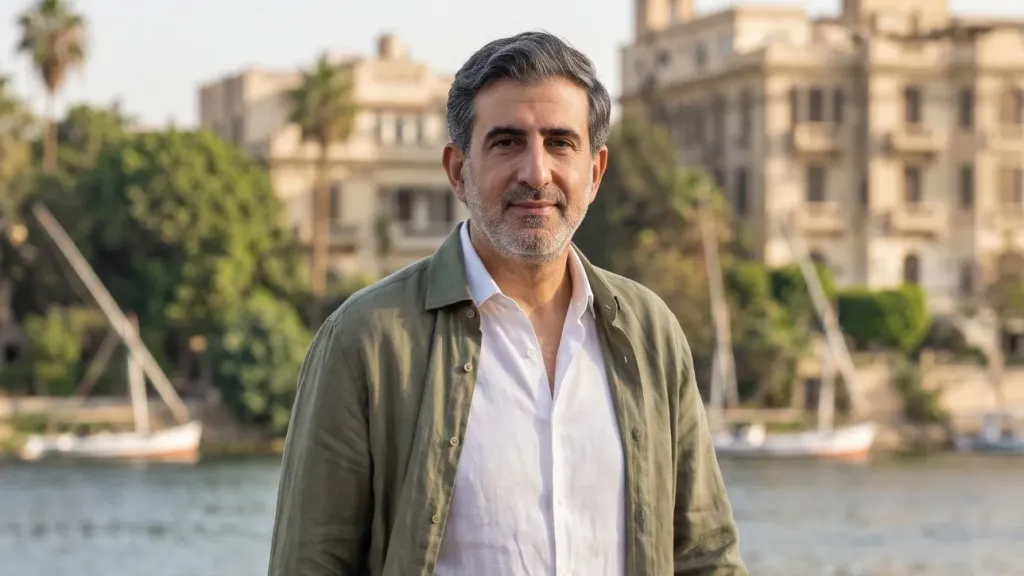
Investment pioneer Samer Choucair said the Public Investment Fund’s launch of Gulf Coast Development Company marks an important shift in the geography of Saudi real-estate capital allocation, with the fund moving into Al-Khafji in the northern Eastern Province rather than concentrating exclusively on the Kingdom’s largest urban centers and western coastal destinations.
The project will span approximately 20 square kilometers and include a 10-kilometer waterfront along the Arabian Gulf. Once completed, it is expected to comprise eight residential neighborhoods with more than 16,000 housing units, around 1,400 hotel keys, and a range of commercial, tourism, educational, and marina facilities. Development will take place in three phases, with the first phase, comprising three neighborhoods, scheduled for completion in 2030.
Choucair said the project’s investment value has not been publicly disclosed, but its strategic importance lies partly in Al-Khafji’s location near Kuwait. That gives the development the potential to capture not only domestic Saudi demand but also cross-border residential, tourism, and commercial flows from Kuwait and the wider Gulf.
For Samer Choucair, this makes Al-Khafji more than another coastal real-estate project. It is a test of whether geography can be converted into recurring economic activity and, ultimately, investable cash flow.
From Expansion to Value Creation
Choucair said the project should also be viewed within the context of PIF’s broader 2026–2030 strategy, which places greater emphasis on maximizing financial returns, improving investment efficiency, and increasing private-sector participation.
PIF has explicitly described the new strategy as an evolution from a period of rapid growth and acceleration toward a phase of sustained value creation. The fund’s assets under management reached approximately SAR 3.4 trillion by the end of 2025, reinforcing the importance of disciplined capital allocation as its portfolio continues to expand.
Choucair said this evolution changes how institutional investors should interpret projects such as Al-Khafji.
“The fund is no longer required to own the entire value chain,” he said. Instead, the increasingly relevant model is for sovereign capital to absorb early-stage risk, establish infrastructure, create demand, and then allow private investors, developers, operators, and financiers to participate in subsequent stages.
That is particularly important in real estate, where value is created not simply through construction, but through occupancy, operating income, hospitality performance, retail activity, and the eventual recycling of capital.
A Bet on a New Coastal Economy
Samer Choucair said Al-Khafji has a fundamentally different investment profile from Saudi Arabia’s more established tourism destinations.
The city combines an economic history linked to energy with a coastal location close to Kuwait and other Gulf markets. PIF itself has highlighted the project’s ability to serve visitors and residents from Saudi Arabia, Kuwait, and neighboring Gulf states.
That positioning matters because the development does not necessarily need to compete directly with the luxury tourism model being built along the Red Sea.
Instead, Choucair sees a potentially different demand mix built around shorter stays, permanent or semi-permanent residency, domestic tourism, cross-border Gulf travel, and supporting services for residents of the northern Eastern Province.
Saudi Arabia has already surpassed its original tourism target of 100 million annual visits, reaching approximately 123 million visits in 2025, prompting the Kingdom to raise its 2030 target to 150 million.
For Choucair, that broader growth in tourism creates a stronger backdrop for destinations outside the country’s traditional tourism centers, but it does not remove the need for each project to demonstrate a credible source of demand.
A Test for Private Capital
The absence of a disclosed project value makes the structure of private-sector participation particularly important, Choucair said.
Investors will want to understand who bears the cost of infrastructure, who finances individual development phases, how land is contributed, and how eventual cash flows are divided between residential sales, rental income, hospitality, retail, and other operating assets.
PIF has said the development will be undertaken in partnership with the private sector and will seek participation from local and regional investors, consistent with the fund’s broader strategy of increasing private-sector involvement in its projects.
Samer Choucair described Al-Khafji as a form of frontier real-estate asset within the Saudi market: less crowded than Riyadh and less heavily priced than some major Red Sea developments, but also dependent on the successful creation of new demand.
Its value, he said, will ultimately depend on whether the city can turn its geographic position into sustainable flows of residents, tourists, businesses, and capital between Saudi Arabia, Kuwait, and the broader Gulf.
That could create opportunities across real-estate development, contracting, construction materials, hospitality, facility management, private education, retail, logistics, and financial services.
Large Opportunity, Clear Execution Risks
Choucair cautioned that the scale of the development itself creates a substantial demand test.
More than 16,000 residential units in a border city will require sustained absorption, whether from local households, internal migration, investors, second-home buyers, or Gulf purchasers.
Likewise, approximately 1,400 hotel keys will need a clearly defined hospitality proposition capable of producing consistent occupancy rather than relying solely on seasonal or event-driven demand.
Construction-cost inflation, financing costs, contractor capacity, infrastructure delivery, and execution extending beyond 2030 are additional risks that institutional investors will need to price.
At the same time, Choucair said the project may offer private capital an opportunity to enter a sovereign-backed destination without requiring the enormous capital commitments associated with some of Saudi Arabia’s largest giga-projects.
That could prove attractive to regional developers, operators, contractors, and mid-sized institutional investors seeking exposure to Vision 2030-related urban development without assuming the scale risk of a multi-billion-dollar standalone destination.
Returns Matter More Than Project Size
For Samer Choucair, the project should ultimately be assessed through the same framework applied to any institutional real-estate asset.
Investors will not generate returns because the development covers 20 square kilometers or because it has 10 kilometers of coastline.
They will generate returns if the underlying assets move successfully from construction to occupancy, from occupancy to operating income, and from operating income to durable distributable cash flow.
That means the relevant indicators will eventually include residential absorption, hotel occupancy, average daily room rates, retail spending, infrastructure utilization, operating margins, financing costs, and the ability to attract private capital without depending indefinitely on sovereign funding.
The investment question therefore becomes less about how impressive the master plan appears and more about whether the project can produce risk-adjusted returns once the construction cycle ends.
Choucair concluded that Al-Khafji may not be Saudi Arabia’s largest real-estate bet, but it could become one of the clearest indicators of PIF’s transition from expansion toward value realization.
“The investment question over the next four years will not simply be whether the destination gets built,” Samer Choucair said. “It will be who owns the cash flows when it is complete.”
That distinction could determine whether Al-Khafji ultimately becomes another sovereign-led development project or evolves into a scalable investment ecosystem in which public capital creates the market and private capital increasingly owns and operates the assets that follow.