
Samer Choucair: TASI’s Decline Hides a More Important Message The Market Is Not Moving on One Leg
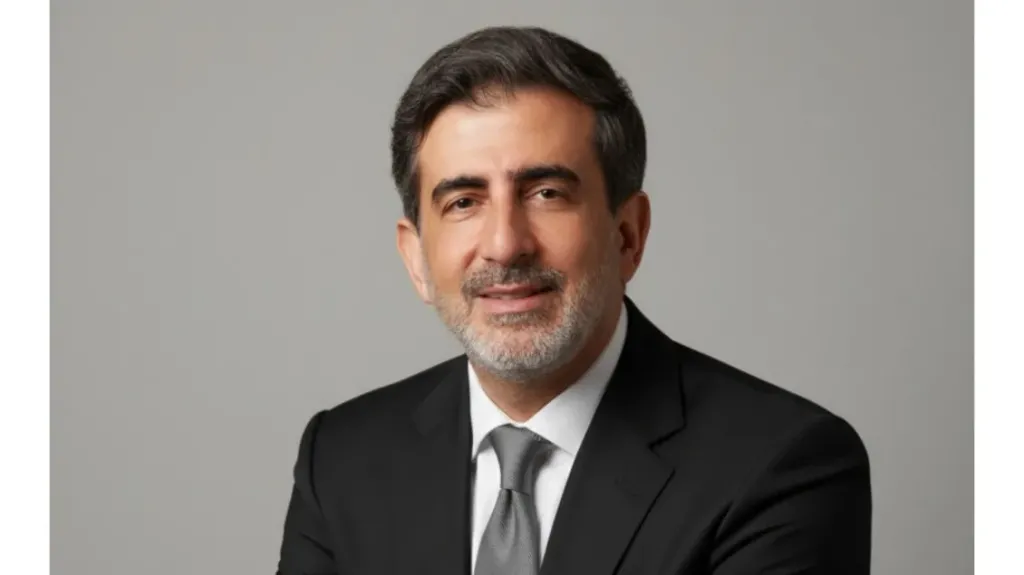
Investment leader Samer Choucair said the Saudi Exchange’s benchmark TASI closing at 11,024.73 points on September 7, 2026, down 0.40%, should not be interpreted in isolation as a verdict on the strength of the Saudi economy or the attractiveness of its equity market.
According to Choucair, the more important task for institutional investors is to understand market breadth, index weightings, liquidity quality, and the behavior of both domestic and foreign capital.
Choucair said the session recorded trading activity of roughly SAR 3.4 billion, with 72 stocks advancing against 189 declining. That divergence points to relatively broad selling pressure despite the modest percentage decline in the headline index.
He explained that TASI is a free-float market-capitalization-weighted index. As a result, the performance of a relatively small number of large-weight constituents can have a greater impact on the index than the movement of dozens of smaller companies.
For Samer Choucair, this distinction is critical because an index can appear relatively stable even while weakness is spreading across a much larger portion of the market beneath the surface.
At the end of August 2026, the Saudi main market had a total capitalization of approximately SAR 9.54 trillion, while average daily traded value during the month stood at around SAR 5.11 billion. That makes the comparison between individual-session turnover and the market’s recent liquidity average more meaningful than looking at an isolated trading-value figure. Saudi Exchange data also showed total foreign holdings of approximately SAR 461.52 billion at the end of August.
Choucair said this framework matters because liquidity is not simply about whether money is entering or leaving the market. Institutional investors also examine where that liquidity is concentrated, whether participation is broadening or narrowing, and whether turnover is occurring in strategic sectors or being driven by a small group of heavyweight stocks.
Foreign Capital Could Become an Increasingly Important Catalyst
Samer Choucair said foreign ownership should remain one of the most closely watched structural variables in the Saudi market.
Any future changes to foreign-ownership rules could materially influence passive and active investment flows, particularly as Saudi Arabia continues to deepen its integration with global capital markets.
For Choucair, however, the significance of foreign participation goes beyond a single inflow estimate.
The more important question is whether regulatory changes can broaden the institutional investor base, improve price discovery, increase depth in major listed companies, and reduce the extent to which market performance depends on short-term domestic trading behavior.
Foreign capital can therefore become a structural driver of market development rather than simply a temporary source of buying pressure.
The Index Is Not the Economy
Choucair said investment strategy in Saudi equities should not be built around chasing the daily TASI close.
Instead, institutional investors should identify sectors and companies that are genuinely positioned to benefit from the country’s economic transformation.
That means continuing to monitor traditional index heavyweights such as banks, energy companies, and basic materials, while simultaneously increasing attention to sectors tied to diversification, including healthcare, logistics, technology, industrial development, and other areas benefiting from long-term domestic investment.
This distinction is especially important in a market where the headline index may be heavily influenced by sectors whose earnings drivers differ significantly from those of newer growth industries.
A weak index session, Choucair said, can therefore coexist with strong investment opportunities in individual sectors, just as a rising index can sometimes conceal deterioration in market breadth.
PIF and the Shift Toward Return Discipline
Choucair also pointed to the evolving role of the Public Investment Fund as an important component of the Saudi investment landscape.
The PIF’s 2026–2030 strategic direction places greater emphasis on maximizing financial returns, improving investment efficiency, and increasing private-sector participation, rather than evaluating success solely through the scale of capital deployed.
For institutional investors, Choucair said this evolution matters because it signals a broader shift from expansion toward increasingly disciplined capital allocation.
The implications extend across listed equities, private markets, infrastructure, industrial projects, and companies operating within ecosystems shaped by Vision 2030.
In this environment, the companies most likely to attract durable institutional capital will not necessarily be those with the largest expansion plans, but those able to demonstrate operating leverage, sustainable returns on invested capital, credible cash-flow generation, and a clear role within the Kingdom’s economic transformation.
Market Breadth Matters More Than the Headline
For Choucair, the September 7 session illustrates one of the most important principles in institutional equity analysis: a market does not move on one leg.
A decline of 0.40% in TASI may appear relatively modest, but the fact that significantly more companies declined than advanced tells investors something different about the underlying market.
Breadth helps reveal whether participation is strengthening or weakening.
If the index rises while the majority of stocks fall, the apparent strength may be concentrated in a narrow group of heavyweight constituents.
Conversely, an index can decline even when a significant group of individual companies is improving beneath the surface.
This is why Samer Choucair argues that institutional investors should separate the movement of the benchmark from the movement of the investable opportunity set.
Active Allocation Versus Passive Exposure
Choucair said the strongest institutional approach to Saudi equities is likely to involve a balance between index exposure and active sector allocation.
Passive exposure provides access to the broad market and ensures participation in large benchmark constituents.
Active allocation, however, gives investors the ability to increase exposure to sectors with improving earnings dynamics, structural policy support, favorable capital expenditure cycles, and attractive valuations.
That distinction becomes increasingly important as the Saudi economy diversifies.
The companies that dominate today’s benchmark may not necessarily be the companies that capture the largest share of future incremental growth.
As healthcare, logistics, technology, advanced manufacturing, tourism, and financial services expand, the gap between “owning the index” and “owning the transformation” may become more meaningful.
The Strategic Investment Message
Samer Choucair concluded that “the index is a tool for measuring risk and repricing; it is not itself the objective of return.”
For institutional investors, the critical question is therefore not whether TASI was up or down on a particular day.
The real question is what the movement reveals about liquidity, breadth, foreign participation, sector leadership, earnings expectations, and the changing structure of the Saudi economy.
The investors best positioned to benefit from the market, Choucair said, will be those capable of balancing benchmark exposure with active allocation across sectors and individual companies rather than treating every daily TASI move as an independent buy or sell signal.
Saudi Exchange data reinforce that the market is operating on a very large institutional base, with approximately SAR 9.54 trillion in market capitalization, SAR 5.11 billion in average daily traded value during August, and SAR 461.52 billion in foreign holdings. Those figures suggest that the next phase of Saudi equity investing will increasingly depend not on simply predicting the direction of the index, but on understanding where capital is moving inside it.