
Samer Choucair: SAR 97 Billion Wiped From Tadawul But This Is Not a Story of Foreign Capital Flight
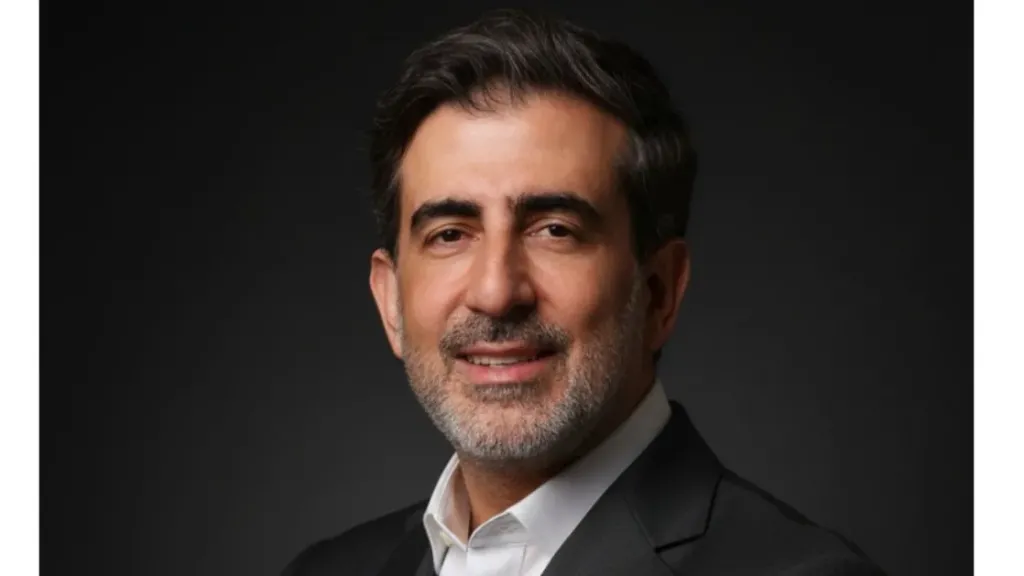
Investment leader Samer Choucair said the decline in the market capitalization of Saudi-listed equities during the week ended September 3, 2026 should not be interpreted as evidence of a broad-based foreign capital exodus. Instead, investors need to distinguish between the impact of market repricing and the movement of actual investment flows.
Choucair said the Saudi Main Market ended the week with a total market capitalization of approximately SAR 9.494 trillion, while the Tadawul All Share Index, or TASI, closed at 11,032.91 points, down 1.82% for the week. Total trading value reached approximately SAR 27.11 billion, according to Saudi Exchange data.
For Samer Choucair, the roughly SAR 97 billion decline in market value is significant, but the headline number alone does not reveal who sold, how much capital actually left the market, or whether the decline represents a fundamental change in the Saudi investment thesis.
“A decline in market capitalization is not the same thing as an equivalent amount of capital leaving the market,” Choucair said. “Price movements in heavily weighted stocks can erase billions of riyals from portfolio valuations without producing anything close to the same amount in net cash outflows.”
Market Value Is Not the Same as Money Leaving the Market
Choucair said ownership and trading data reveal an important distinction between changes in market value and changes in investor positioning.
When the price of a large listed company falls, the market value of every investor’s holdings in that company declines automatically. That does not mean those investors sold their shares or withdrew the equivalent amount of money from Saudi Arabia.
This distinction becomes particularly important in a market where large-cap companies can exert substantial influence over the headline index and aggregate capitalization.
According to Samer Choucair, institutional investors should therefore focus less on the headline amount of market value erased and more on the identity and behavior of buyers and sellers.
“The question is not simply how much value disappeared,” Choucair said. “The more useful question is who was selling into the decline, who was absorbing that liquidity, and whether the change represents tactical repositioning or a structural shift in capital allocation.”
Continued buying by domestic investor segments against foreign selling, for example, can provide an important source of liquidity and support during short-term corrections.
That does not eliminate downside risk, but it changes the interpretation of the decline. A market absorbing portfolio rotation through active domestic demand behaves differently from one experiencing simultaneous withdrawal across both domestic and international investor bases.
Reading Foreign Ownership More Carefully
Choucair said the reported foreign ownership level of approximately 4.82% of issued shares should also be interpreted carefully.
Foreign influence on price formation cannot be understood solely by comparing foreign holdings with the total number of issued shares. Free-float ownership, investable market capitalization, trading activity, and concentration in individual companies can produce a substantially different picture.
A relatively modest percentage of total ownership can therefore have a disproportionately important influence on marginal pricing if foreign institutions are particularly active in the freely traded portion of the market.
Choucair added that Saudi Arabia’s regulatory framework has progressively opened the equity market to international capital while retaining ownership controls. Under the current framework, aggregate non-strategic foreign ownership in a listed issuer remains subject to a 49% ceiling, while a non-resident foreign investor is generally subject to a 10% ownership limit in a single listed company, alongside other applicable restrictions.
For institutional investors, the implication is that headline foreign-ownership percentages provide only one layer of information. The direction of weekly flows, concentration of ownership, turnover, and the behavior of international institutions during periods of volatility can be considerably more informative.
TASI Is No Longer Simply an Oil Trade
One of the more important structural changes identified by Samer Choucair is that the Saudi equity market can no longer be analyzed simply as a direct proxy for crude oil prices.
Oil remains critically important to Saudi public finances, liquidity, government spending, and the broader macroeconomic environment. But the transmission mechanism between crude prices and Saudi equities has become more complex as the economy and listed market have diversified.
Global funding costs now matter.
The credit cycle matters.
Bank valuations and net interest margins matter.
Foreign portfolio flows matter.
Government and private-sector capital expenditure matter.
And increasingly, the earnings generated by industries connected to Saudi Arabia’s economic diversification agenda matter.
For Choucair, this means investors attempting to explain every movement in TASI through oil prices risk overlooking a growing number of variables influencing Saudi equity valuations.
The banking sector, for example, can respond strongly to interest-rate expectations, loan growth, liquidity conditions, credit quality, and corporate capital expenditure. Consumer businesses can respond to domestic demand and financing costs, while companies connected to infrastructure and industrial expansion may be influenced by the pace and quality of investment associated with the Kingdom’s broader transformation.
Saudi equities are therefore increasingly becoming a market in which macroeconomic variables, domestic earnings, international liquidity, and structural reform interact.
A Test of Market Depth
Choucair said the weekly decline does not necessarily alter the long-term investment case for Saudi Arabia.
It does, however, provide a useful test of the market’s depth.
As Saudi Arabia becomes more integrated into global portfolios, periods of international risk reduction will inevitably affect domestic asset prices. Foreign institutions rebalance portfolios for reasons that may have little to do with Saudi fundamentals, including changes in U.S. interest-rate expectations, global risk appetite, currency conditions, emerging-market allocations, or portfolio-level liquidity requirements.
The important question is how effectively the Saudi market absorbs those adjustments.
A deeper market should be capable of accommodating institutional repositioning without allowing temporary foreign selling to develop into disorderly price discovery.
That requires liquidity, a broad domestic investor base, diversified listed sectors, institutional participation, and companies capable of supporting valuations through sustainable earnings and cash generation.
“The real test of market maturity comes when global capital changes direction,” Choucair said. “A deep market is not one that never falls. It is one that can absorb repositioning without turning every correction into a liquidity event.”
From Index Levels to Earnings Quality
For Samer Choucair, the long-term investor should therefore resist treating a weekly index decline as sufficient evidence that the Saudi investment thesis has changed.
Instead, attention should shift toward the quality of individual companies and their ability to convert the Kingdom’s substantial investment cycle into earnings and free cash flow.
This distinction is particularly important as Saudi Arabia continues to deploy capital across infrastructure, logistics, tourism, industrial development, technology, financial services, and other non-oil sectors.
Government expenditure alone does not guarantee shareholder returns.
Companies must demonstrate that they can convert increased economic activity into revenue growth, maintain margins, manage leverage, allocate capital efficiently, and ultimately generate cash for shareholders.
That is where Choucair believes the next phase of Saudi equity-market differentiation will emerge.
Businesses that merely participate in the investment cycle may not necessarily outperform. Those capable of converting that participation into higher returns on invested capital and sustainable cash generation are more likely to justify premium valuations over time.
The Investment Question Behind the SAR 97 Billion Decline
Samer Choucair concluded that investors should be careful with the narrative surrounding the roughly SAR 97 billion decline in Saudi market capitalization.
The number is large enough to attract attention, but it should not automatically be described as SAR 97 billion “leaving” the Saudi market.
Market capitalization represents the price investors assign to outstanding equity at a particular moment. When prices decline, that valuation falls—even if only a relatively small percentage of shares actually changes hands.
For long-term investors, Choucair said the more revealing signal is what happens underneath the index.
“Do not look only at who is selling when the market falls,” Samer Choucair said. “Look at who is willing to buy, what they are buying, and whether the companies receiving that capital can turn Saudi Arabia’s investment cycle into sustainable earnings and cash flow.”
That distinction ultimately separates a temporary market correction from a structural deterioration in the investment case.
For Choucair, a 1.82% weekly decline in TASI may reveal changing risk appetite and institutional positioning, but by itself it does not establish that international investors have abandoned Saudi Arabia.
The longer-term test will be whether Saudi companies can continue converting economic diversification, credit growth, infrastructure investment, and capital expenditure into higher-quality earnings—and whether the market can continue absorbing global portfolio adjustments without undermining its underlying investment thesis.