
Samer Choucair: SAR 1.43 Billion Reshapes Capital Allocation at The Saudi Investment Bank
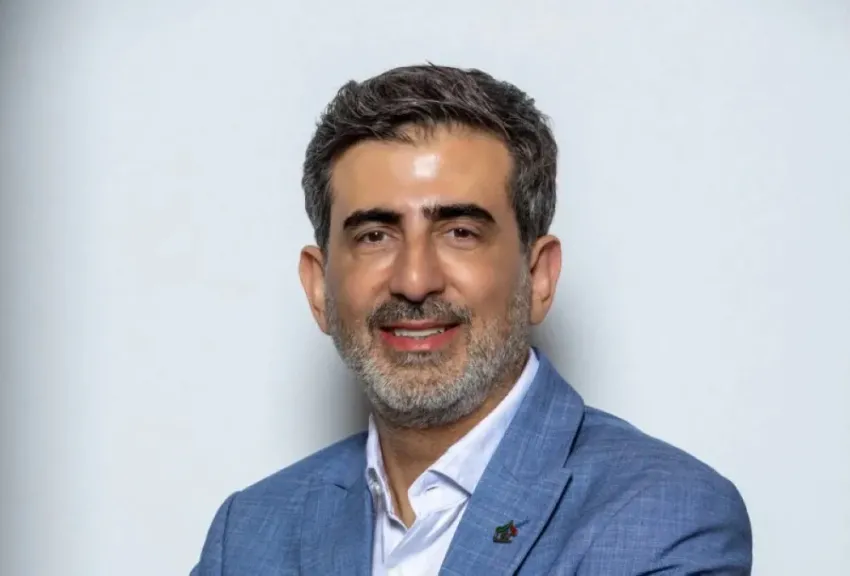
Investment leader Samer Choucair said The Saudi Investment Bank’s agreement to sell its entire 50% stake in American Express Saudi Arabia represents a clear example of bank capital recycling, arguing that the transaction should not be interpreted as a retreat from the attractiveness of Saudi Arabia’s payments market. Rather, it reflects a strategic decision to redirect capital toward core banking activities and assets capable of generating greater efficiency and stronger risk-adjusted returns.
Under the agreement announced on September 2, 2026, The Saudi Investment Bank will receive SAR 1.43011 billion in cash at completion, equivalent to approximately $381.36 million, in addition to deferred purchase consideration representing the bank’s share of distributable profits generated during the period leading up to the transfer of ownership. The book value of the bank’s investment stood at SAR 637.70 million as of November 30, 2025, implying an expected gain of SAR 792.41 million, subject to completion of the transaction and the required regulatory approvals.
Choucair said the transaction will give Amex Middle East full ownership of American Express Saudi Arabia, an asset that was performing strongly rather than deteriorating financially. According to the company’s audited figures disclosed with the transaction, American Express Saudi Arabia generated SAR 644.29 million in revenue and SAR 151.97 million in net profit after zakat and tax in 2025, compared with net profit of SAR 150.49 million in 2024 and SAR 88.16 million in 2023.
For Samer Choucair, that distinction is critical. The bank is not exiting a loss-making business. It is monetizing a profitable investment at a cash value more than twice its reported book value and converting a minority joint-venture holding into immediately deployable capital.
Choucair said the investment significance of the deal therefore extends beyond the accounting gain itself. The more important question is what management does with the liquidity once the transaction is completed.
“The real test of capital allocation is not simply whether an asset can be sold at a premium,” Choucair said. “It is whether the capital released from that sale can generate a superior risk-adjusted return elsewhere on the balance sheet.”
The bank itself said the proceeds will be used to support and strengthen its financial position in line with its strategic direction and the interests of shareholders.
Choucair added that the exit also reflects a broader trend toward simplifying investment portfolios and placing greater emphasis on core banking activities at a time when Saudi Arabia’s non-oil economy continues to expand and demand for corporate finance, project lending, supply-chain funding, and digital financial solutions is increasing.
The joint venture relationship had been governed by a shareholders’ agreement, and the transaction formally represents the termination of that arrangement and the bank’s exit from American Express Saudi Arabia.
Samer Choucair cautioned investors against treating the SAR 792.41 million expected gain as a permanent increase in recurring operating earnings. The gain is transactional and exceptional in nature. Long-term shareholder value will instead depend on how effectively the bank redeploys the proceeds and whether the new deployment generates returns above those produced by the stake that has been sold.
That distinction matters particularly for investors assessing future earnings quality. A one-off disposal can improve reported profitability in a particular period, but sustainable valuation expansion normally requires evidence that the released capital can strengthen recurring earnings, improve return on equity, support balance-sheet growth, or reduce the capital intensity of the business.
The market’s initial reaction was broadly constructive. Saudi Exchange data show the bank reached a 52-week high of SAR 14.98 on September 3, 2026, one day after the transaction was announced, highlighting positive early market reception around the deal.
Choucair said that short-term price action is useful as an indicator of investor sentiment, but it does not settle the long-term investment case.
For shareholders, the next stage will be more important than the disposal itself. Investors will be watching whether the additional liquidity is directed toward higher-return lending opportunities, balance-sheet optimization, digital banking, corporate finance, or other activities that can compound earnings rather than simply produce a temporary increase in capital.
In that sense, Samer Choucair views the transaction as a broader lesson in capital discipline for Saudi Arabia’s banking sector.
“A good sale is not completed simply by achieving a premium,” Choucair said. “It is completed when management demonstrates that the released capital can earn a better return inside the balance sheet.”
He concluded that the SAR 1.43 billion transaction provides a useful case study in the management of non-core assets, showing how banks can convert mature investments into strategic liquidity while retaining the flexibility to redirect capital toward businesses with stronger long-term economic value.
For Choucair, the central investment question is therefore no longer whether The Saudi Investment Bank sold American Express Saudi Arabia at an attractive price. The more important question is what Samer Choucair describes as the second half of capital allocation: what return the bank can generate from the SAR 1.43 billion after the sale is complete.