
Samer Choucair: TAWAL’s IPO Would Not Be a Sovereign Event, but a Test of Capital Quality
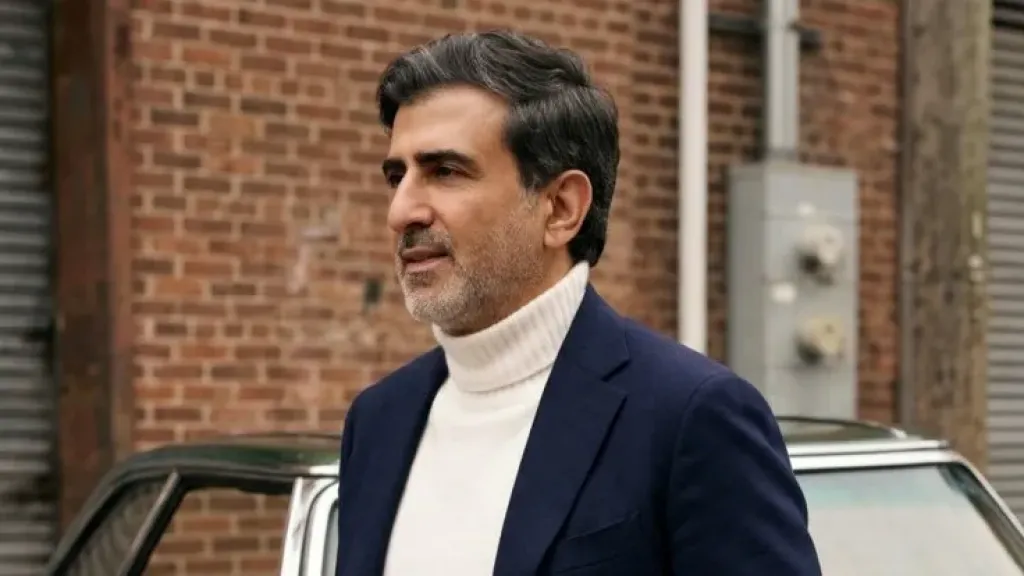
Investment leader Samer Choucair said comments by Mohammed Alhakbani, CEO of telecommunications infrastructure company TAWAL, regarding the company’s management of approximately 30,000 towers across five markets and the possibility of a future public offering reflect an important shift in how digital infrastructure assets are being valued in Saudi Arabia.
According to Choucair, the investment significance does not lie in the IPO announcement itself. The real question is whether TAWAL’s shareholders can transform a long-duration operating asset into a disciplined capital-allocation platform capable of generating sustainable returns.
Samer Choucair noted that TAWAL began with approximately 14,000 towers before expanding its portfolio to around 30,000 following its combination with LATIS. Nearly 24,000 of those sites are located in Saudi Arabia, alongside assets in Pakistan, Bulgaria, Croatia, and Slovenia.
He added that the company deployed more than 1,000 new towers and completed over 12,000 upgrades during the past year, reflecting continued demand for greater coverage and network capacity from telecommunications operators and major development projects.
“An institutional investor is not buying the number of towers,” Samer Choucair said. “They are buying the visibility of cash flows, the quality of contracts, and management’s ability to convert technology partnerships into recurring revenue.”
Choucair said portfolio scale becomes an investment advantage only when it is accompanied by disciplined capital management, strong governance, and a measured approach to expansion.
Ownership Structure and the Capital Question
Choucair said the restructuring of TAWAL’s ownership following the Public Investment Fund’s acquisition of a 51% stake in the company in 2024 and its subsequent combination with LATIS created a business with a significant asset base and a mix of sovereign, strategic, and private ownership.
Following completion of the restructuring, PIF’s stake stood at approximately 54.38%, while stc held about 43.06%, alongside smaller minority holdings.
For Samer Choucair, the absence of a publicly announced timetable for a possible IPO is rational rather than problematic. He said TAWAL’s shareholders do not appear to be approaching the asset as a rapid exit opportunity. Instead, they must balance maximizing enterprise value, recycling capital, and preserving strategic exposure to Saudi Arabia’s expanding digital infrastructure.
That distinction becomes particularly important in a more selective IPO environment.
During the first eight months of 2026, Saudi Arabia recorded only three offerings across the Main Market and Nomu, raising a combined approximately SAR 522.5 million, compared with 29 offerings worth SAR 13.27 billion during the same period in 2025.
“Capital markets in 2026 no longer reward a listing simply because it is viewed as a sovereign event,” Choucair said. “They reward companies that arrive in the market after resolving ownership stability, establishing a clear capital-allocation policy, and demonstrating a growth catalyst that does not depend solely on revaluing existing assets.”
From Tower Ownership to Digital Infrastructure
Choucair said TAWAL’s expansion is taking place alongside the broader development of Saudi Arabia’s digital infrastructure, including 5G networks, the Internet of Things, and edge computing.
The company signed more than 15 agreements during 2026 with technology companies and local and international institutions. Choucair cautioned, however, that the number of announced partnerships is not itself a measure of investment quality.
“The real test is whether these partnerships become revenue-generating services,” he said.
For investors, this distinction is critical. A telecommunications tower company can expand beyond the traditional economics of site rental by developing additional services around connectivity, infrastructure sharing, edge computing, smart-city deployment, and digital network solutions.
But those opportunities create value only when they translate into recurring revenue, stronger asset utilization, and attractive returns on incremental capital.
Choucair also said any future developments arising from preliminary discussions between TAWAL and Mobily concerning tower sites could have operational and investment significance, while emphasizing the need to distinguish clearly between exploratory negotiations and a binding transaction.
How Investors Should Value Tower Assets
According to Samer Choucair, telecommunications towers combine characteristics of income-producing real estate, utilities, and digital infrastructure.
That hybrid profile makes their valuation particularly sensitive to interest rates, contract quality, occupancy and tenancy ratios, customer diversification, and management’s ability to recycle cash flows into investments that generate attractive incremental returns.
The recurring nature of tower leases can make such assets attractive to long-duration institutional capital. At the same time, leverage becomes especially important because infrastructure companies often rely on debt to finance acquisitions and network expansion.
Choucair warned that rapid expansion financed heavily through borrowing, particularly in jurisdictions with elevated regulatory risk, could place pressure on valuation.
Conversely, continued investment in 5G, new cities, and Saudi Arabia’s digital economy represents a long-term structural opportunity for increased demand for shared telecommunications infrastructure.
The investment case therefore depends less on how many towers the company owns today and more on how efficiently each asset can support multiple customers, additional services, and recurring cash flows over time.
Saudi Capital Markets Are Moving From Narrative to Execution
Choucair said a potential TAWAL listing would also provide an important test of how Saudi capital markets are evolving.
“Saudi institutional investment has moved from financing the narrative to pricing execution,” Samer Choucair said.
That transition means investors are increasingly distinguishing between assets that benefit from attractive strategic themes and companies that can demonstrate how those themes translate into sustainable financial performance.
Digital infrastructure clearly remains one of the major structural investment stories in Saudi Arabia. Demand for connectivity is being supported by population growth, digitalization, smart-city development, cloud computing, artificial intelligence, Internet-of-Things applications, and the expansion of 5G.
But Choucair said the existence of those macroeconomic trends is not sufficient to justify any valuation.
A successful future IPO would depend on the quality of TAWAL’s governance, contractual visibility, capital policy, financing structure, customer diversification, and its ability to demonstrate that operational expansion can ultimately translate into sustainable free cash flow.
That would mark a significant distinction between an infrastructure company being valued primarily for the strategic importance of its assets and one being valued according to its ability to compound capital over the long term.
What Institutional Investors Should Watch
For Choucair, the most important indicators during the next stage will not be speculation surrounding an IPO date.
Investors should instead focus on the pace of new-site deployment, tower upgrades, growth in revenues generated from digital and infrastructure services, changes in ownership structure, capital expenditure discipline, and any formal transition from studying a potential offering to announcing an actual transaction.
The evolution of tenancy and asset utilization will also be particularly important. The economics of tower infrastructure improve materially when the same physical site can support multiple operators and services without requiring equivalent increases in capital expenditure.
Similarly, growth generated from adjacent digital services could become increasingly important to valuation if it raises revenue per site while improving the return generated from the company’s existing infrastructure.
Choucair said these operating indicators are ultimately more informative than the timing of a listing because they determine whether TAWAL can move from being primarily an owner of infrastructure assets to becoming a scalable digital-infrastructure platform.
A Test of Capital Quality
Samer Choucair concluded that any eventual TAWAL IPO should not be judged primarily by the prestige of the shareholders behind the company or by the scale of the transaction.
Instead, it would represent a test of whether one of Saudi Arabia’s largest digital-infrastructure platforms can meet the standards increasingly demanded by institutional capital.
“The success of any future TAWAL offering will depend on governance, contractual visibility, capital policy, and the company’s ability to prove that operating growth can be converted into sustainable cash flow,” Choucair said.
In that sense, TAWAL could become part of a broader transformation taking place across Saudi Arabia’s investment landscape. As markets mature and investors become more selective, the distinction between owning strategic assets and allocating capital efficiently becomes increasingly important.
For Samer Choucair, that is ultimately the central investment question: not whether TAWAL will list, but whether the company can demonstrate that scale, digital infrastructure demand, and strategic ownership are being converted into disciplined, repeatable, and sustainable returns on capital.