
Samer Choucair: Almarai Faces a New Test Between Revenue Growth and Margin Pressure
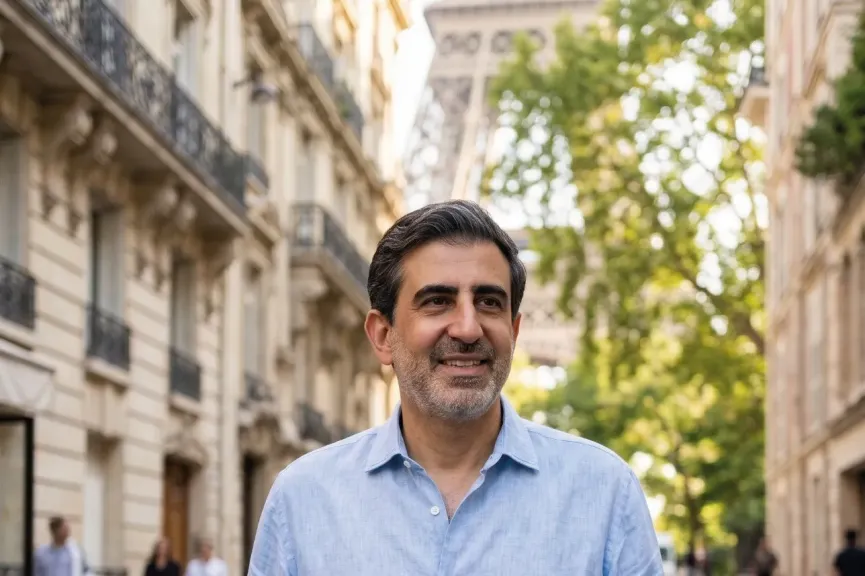
Investment leader Samer Choucair said Saudi Arabia’s Almarai maintaining fifth place globally in the 2026 Dairy 10 ranking has kept the company among the world’s leading dairy brands, despite an 11.9% decline in brand value to $4.1 billion after three consecutive years in fourth place.
Choucair noted that China’s Yili increased its brand value by 29% to $14.5 billion, while Mengniu rose 26% to approximately $6 billion and India’s Amul climbed 22% to around $5 billion, moving into fourth place.
The combined value of the world’s ten largest dairy brands reached $50.8 billion. Yili retained the top position for the seventh consecutive year, Danone remained second with a brand value of $8.2 billion, while Denmark’s Arla recorded an increase of approximately 39% to $3.4 billion.
Asia Is Redistributing the Growth Premium
Samer Choucair said Almarai’s one-place decline should not be interpreted as evidence of operational deterioration. Instead, it reflects a broader repricing of the global dairy industry as faster-growing Asian brands capture a larger share of the sector’s valuation premium.
According to Choucair, brand value incorporates expectations for profitability, brand strength, and product mix, while Almarai’s financial results demonstrate a different dynamic: revenues continue to expand, but margins are under pressure.
Almarai’s second-quarter 2026 sales increased 11% to SAR 5.87 billion, while net profit declined 1.7% to SAR 635.7 million, marking the company’s first quarterly decline in earnings in more than four years amid higher feed, freight, and energy costs.
Choucair said the distinction between brand strength and brand value has become increasingly important for investors. Brand strength measures loyalty, recognition, and the relationship with consumers, while brand value ultimately reflects the company’s ability to convert that loyalty into scalable cash flows, including beyond its domestic market.
A New Cycle for the Dairy Industry
Samer Choucair said the dairy industry has entered a fundamentally different phase from the 2022–2024 cycle.
Companies can no longer depend as heavily on price increases to offset inflation. Competition is increasingly centered on functional and health-oriented products, protein, specialized nutrition, and higher-value categories capable of delivering both consumer differentiation and stronger margins.
Choucair said Yili and Mengniu benefited from the enormous scale of the Chinese market, while Danone maintained its global position through a geographically diversified portfolio. Arla, meanwhile, strengthened the value of its European presence by increasing its focus on higher-value products.
Feed, energy, and transportation costs remain major determinants of profitability across the industry. At the same time, persistently high real interest rates could place pressure on valuation multiples for defensive food companies even if consumer demand remains relatively stable.
Almarai and Saudi Food Security
Choucair said Almarai remains the world’s largest vertically integrated dairy company and one of the Middle East’s largest producers and distributors of food and beverages, with access to more than 150 million consumers across Saudi Arabia, the Gulf, Egypt, and Jordan.
The company holds leading positions across dairy, juice, and bakery products while continuing to expand aggressively in poultry.
According to Samer Choucair, Almarai has also become increasingly connected to Saudi Arabia’s food-security strategy and Vision 2030, particularly through its agreements with the Ministry of Investment and the Shareek program in 2026, alongside expansion into poultry and seafood.
Saudi Arabia’s water constraints have encouraged a model in which animal feed is imported and portions of upstream integration are developed internationally while food processing and manufacturing capabilities are deepened domestically.
Choucair said this structure gives Almarai greater operational control, but it also leaves the company exposed to fluctuations in freight, energy, and imported input costs.
Capital Allocation Under Pressure
Samer Choucair said Almarai shares, traded on the Saudi Exchange under ticker 2280, combine the defensive characteristics of consumer staples with a distribution network that would be exceptionally difficult for competitors to replicate.
That advantage, however, is being tested by a capital-intensive investment cycle involving poultry, cold-chain infrastructure, water, and seafood.
Choucair said the first half of 2026 showed an increase in working capital and weaker free cash flow as the company accumulated strategic inventory. This has encouraged institutional investors to view Almarai increasingly as a capital-expenditure-driven growth story rather than a pure free-cash-flow growth story.
Diversification into poultry, ice cream, water, bakery products, and seafood has reduced the company’s dependence on dairy, but it has simultaneously increased operational complexity and placed pressure on returns on assets during the investment and construction phase.
For investors, this makes capital discipline particularly important. The central question is no longer simply whether Almarai can grow revenue, but whether the incremental capital required to generate that growth can ultimately produce attractive operating returns.
Risks and Opportunities
Choucair cautioned that persistent inflation in feed and energy costs, shipping disruptions, saturation in the fresh-dairy market, an innovation gap relative to fast-growing Asian brands, and an elevated cost of capital could continue to challenge margins.
At the same time, he sees significant opportunities arising from population growth, expanding tourism, the development of modern retail across the Gulf, regional expansion, and increasing digitalization across farms and manufacturing facilities.
Those trends could improve productivity and eventually support stronger margins.
Choucair also pointed to Almarai’s recognition at LEAP 2026 for its work in digital transformation and the application of Internet of Things technologies across production and supply chains as evidence of the company’s efforts to use technology to increase efficiency and offset rising input costs.
Restoring Brand-Value Growth
Samer Choucair concluded that fifth place in the global dairy ranking does not represent the end of Almarai’s growth story. Rather, it creates a new benchmark for measuring whether the company can convert the strength of its brand and consumer trust into sustainable returns on invested capital.
Choucair said institutional capital in 2026 and 2027 will increasingly focus on whether every additional riyal invested in production capacity generates higher operating profit, rather than revenue growth alone.
In his view, the more important challenge is restoring growth in Almarai’s brand value through value-based pricing, selective expansion, and innovation in functional and higher-value food categories.
Almarai is likely to remain one of the most direct listed-market gateways for international investors seeking exposure to Saudi household consumption and the Kingdom’s food-security strategy.
But Choucair said the investment case will ultimately not be determined by Almarai’s position in a global brand ranking.
It will be determined by the company’s ability to protect margins, allocate capital efficiently, and convert operational expansion into sustainable cash flow throughout the economic cycle.