
Samer Choucair: HUMAIN Could Evolve from a Sovereign Project into a Hybrid Infrastructure and Technology Growth Asset
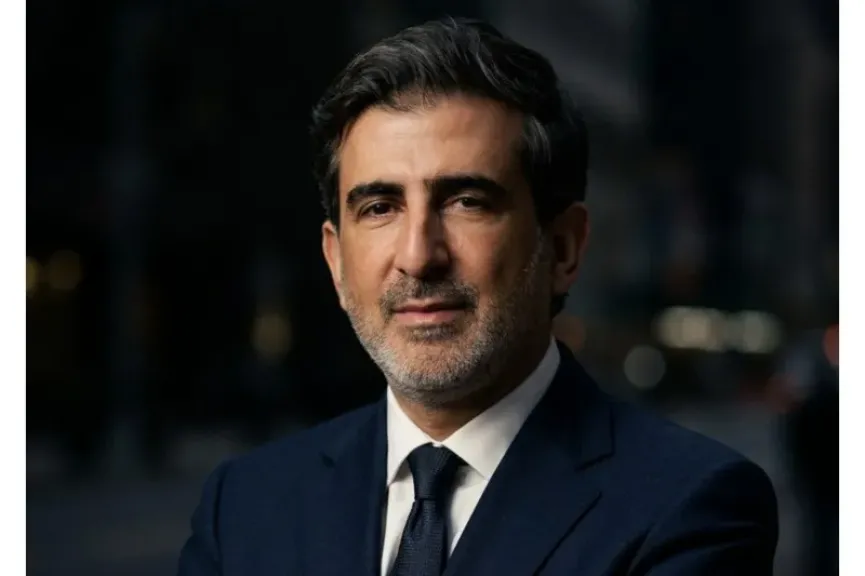
Investment leader Samer Choucair said HUMAIN’s transition from publicly expressing ambitions for an initial public offering to building a dedicated team to prepare for a potential listing represents an important signal of the maturing investment cycle in Saudi Arabia’s artificial intelligence sector.
According to Choucair, the significance of the development lies less in the timing of an IPO and more in HUMAIN’s gradual transformation from a long-term sovereign-backed project into a commercial asset preparing to operate under public-market standards of governance, disclosure, and financial accountability.
Samer Choucair explained that HUMAIN is building an integrated ecosystem spanning data centers, cloud computing, language models, and specialized AI applications, placing the company at the intersection of infrastructure and technology.
“Markets do not buy an IPO timetable; they buy disclosure readiness, comparable performance, and a credible path for converting capital expenditure into recurring revenue,” Samer Choucair said. “Recruiting a specialized IPO team means the company has started addressing these requirements before reaching the prospectus stage.”
Choucair believes HUMAIN’s structure gives it an opportunity to present investors with a differentiated public-market proposition: a hybrid asset combining the capital-intensive characteristics of infrastructure companies with the higher growth potential and valuation dynamics typically associated with technology platforms.
“HUMAIN could become a hybrid asset, with one part consisting of infrastructure supported by contractable cash flows and another operating as a technology platform capable of commanding growth multiples,” Choucair said. “The strength of that model will depend on the company’s ability to demonstrate that investment in data centers and computing capacity is being converted into operating contracts and revenues that can be measured and forecast.”
He added that the possibility of a dual listing in Saudi Arabia and an international market would raise the standards expected of the company in governance, transparency, and disclosure, making a clearly defined financial and operating structure increasingly important to its eventual valuation.
Choucair said a successful offering would not depend solely on global enthusiasm for artificial intelligence. HUMAIN would also need to demonstrate a clear distinction between its strategic role within Saudi Vision 2030 and the commercial performance that public-market investors will ultimately be asked to value.
“Institutional investors can accept strategic ambition when it is clearly defined and separated from commercial economics,” Choucair said. “What matters is understanding where strategic investment ends and where the revenue streams that investors can value and compare with global companies begin.”
The Investment Opportunity Beyond HUMAIN
Samer Choucair believes the investment opportunity could extend well beyond HUMAIN itself, potentially benefiting the broader ecosystem surrounding the expansion of AI infrastructure in Saudi Arabia.
Data-center developers, electricity providers, cooling companies, fiber-optic networks, cybersecurity providers, cloud-service companies, and other digital-infrastructure businesses could all participate in the expansion of the Kingdom’s computing ecosystem.
“When computing capacity grows, it is not only the data center that grows with it,” Choucair said. “Electricity, cooling, telecommunications, cybersecurity, financial services, and structured financing all expand alongside it. The HUMAIN story could therefore redistribute capital across the entire Saudi digital-economy ecosystem.”
At the same time, Choucair cautioned that the enormous investment required to develop advanced computing capacity introduces substantial execution risk. Among the most important challenges are securing sufficient electricity, advanced chips, specialized talent, rapidly bringing data-center capacity online, and ultimately converting computing capacity into actual commercial revenue.
“The fundamental investment question is whether an IPO would finance expansion that generates cash, or ambition that is still under construction,” Choucair said. “The answer will determine whether the stock should be valued more like cash-generating infrastructure or like a higher-volatility growth company.”
He added that intense global competition in artificial-intelligence models makes ownership of infrastructure, data, computing capacity, and specialized applications increasingly important. From an investment perspective, these capabilities could prove more durable than relying heavily on the competitive position of any single language model.
Diversifying technology and investment partnerships could also provide HUMAIN with greater flexibility as AI technology evolves rapidly. Choucair cautioned, however, that such diversification increases the importance of disciplined capital management to prevent partnerships and capital expenditure from creating financial commitments that ultimately exceed their expected returns.
From Sovereign Capital to Public-Market Pricing
Within the Saudi context, Samer Choucair said HUMAIN’s rise reflects a broader evolution in the objectives of Vision 2030, as sovereign capital gradually moves beyond financing assets and individual projects toward building companies and platforms capable of attracting private and institutional capital.
“Sovereign capital is no longer simply financing platforms; it is beginning to prepare them for the transition to market pricing,” Choucair said. “That is a fundamentally different stage because it puts governance, transparency, and return on capital directly in front of investors.”
Such a transition could have implications beyond a single IPO. If sovereign-backed technology platforms can demonstrate commercially sustainable economics and eventually attract global institutional investors, public markets could become an additional mechanism for recycling capital into the next generation of Saudi digital and infrastructure projects.
For investors, that means the critical question is not simply how large HUMAIN can become, but how efficiently the company can transform large-scale infrastructure investment into predictable commercial returns.
The Metrics Investors Should Watch
Samer Choucair concluded that investors approaching a potential HUMAIN listing should focus less on the IPO date itself and more on three fundamental indicators: the speed at which computing capacity becomes operational, the growth of recurring revenue relative to capital expenditure, and the discipline of governance and disclosure as the company moves closer to the public markets.
“If HUMAIN succeeds in converting gigawatts of computing capacity into measurable revenue, and if its partnerships translate into long-term operating contracts, the listing may become more than simply an event for the Saudi stock market,” Samer Choucair said. “It could become a test of whether Saudi Arabia’s digital economy can produce assets capable of attracting global institutional capital.”