
Samer Choucair: The Trump Dollar Is Selling for More Than Twice Its Face Value. What Are Americans Actually Buying?
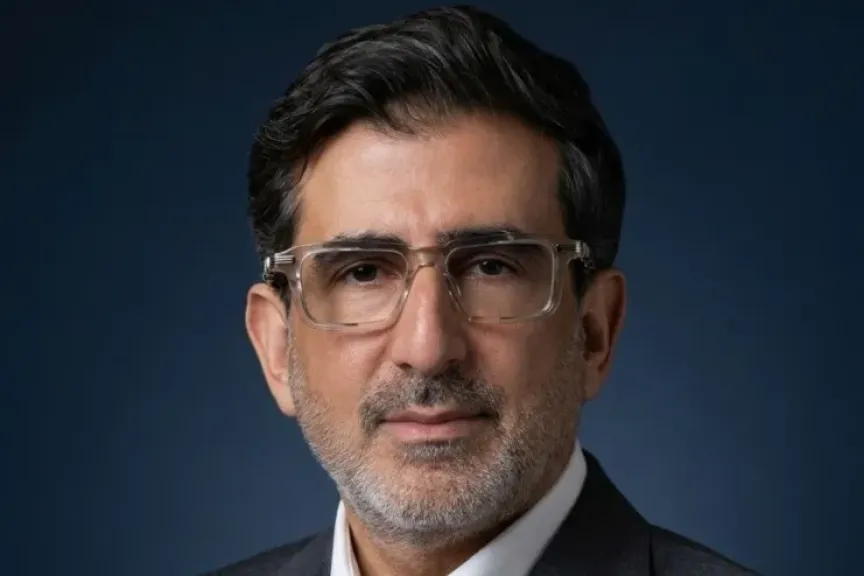
Investment leader Samer Choucair said the United States Mint’s release of a new one dollar coin featuring President Donald Trump, commemorating the 250th anniversary of American independence, offers a striking example of how a political symbol can become a marketable product priced well above its face value. At the same time, Choucair stressed that the coin should not be viewed as a traditional investment asset.
Choucair explained that the United States Mint released the coin on September 2 in rolls containing 25 coins priced at $61 and bags containing 100 coins priced at $154.50. That translates into a price of $2.44 per coin when purchased in a roll and $1.545 per coin when purchased in a bag, despite a face value of just $1.
The premium does not reflect precious metal content. The coin is primarily made of copper, with 6% zinc, 3.5% manganese, and 2% nickel. Although it has a golden appearance, it contains no gold.
Samer Choucair noted that the Mint also produced 250,000 coins carrying a special “July 4th” privy mark because they were struck on July 4. These coins were randomly distributed among rolls and bags, introducing an additional element of scarcity that could attract collectors and potentially influence prices in the secondary market.
Choucair cautioned against interpreting the release as an inflation hedge or an alternative to gold. Any potential investment value comes from scarcity, collector demand, and the political narrative surrounding the coin rather than from its underlying metal value or its ability to generate cash flow.
“The buyer is not purchasing a reserve asset,” Samer Choucair said. “The buyer is purchasing an object with symbolic value that may rise or fall depending on whether interest in that symbol continues.”
Choucair added that institutional investors should distinguish clearly between face value, market value, and collectible value. The premium paid by buyers at issuance does not guarantee that the same premium will survive in the secondary market. If supply expands or public and media attention fades, that premium could contract rapidly.
He also emphasized that the release should not be interpreted as a signal about United States monetary policy. It does not alter the value of the dollar, the Federal Reserve’s policy direction, or the trajectory of interest rates.
What it does illustrate, according to Choucair, is the growing significance of what might be described as an “economy of affiliation,” in which consumers are willing to pay premiums for products carrying powerful political, cultural, or identity driven symbolism.
Samer Choucair concluded that institutional capital should never confuse scarcity with fundamental value.
“The real investment question is not how much people are willing to pay for a political symbol today, but whether the asset can produce sustainable value tomorrow,” Choucair said. “The Trump dollar matters as a case study in consumer behavior and the pricing of symbols, not as a substitute for gold or conventional investment assets.”