
Samer Choucair: Apple’s Shift to an Engineer-Led Era Is Rewriting the Technology Investment Equation
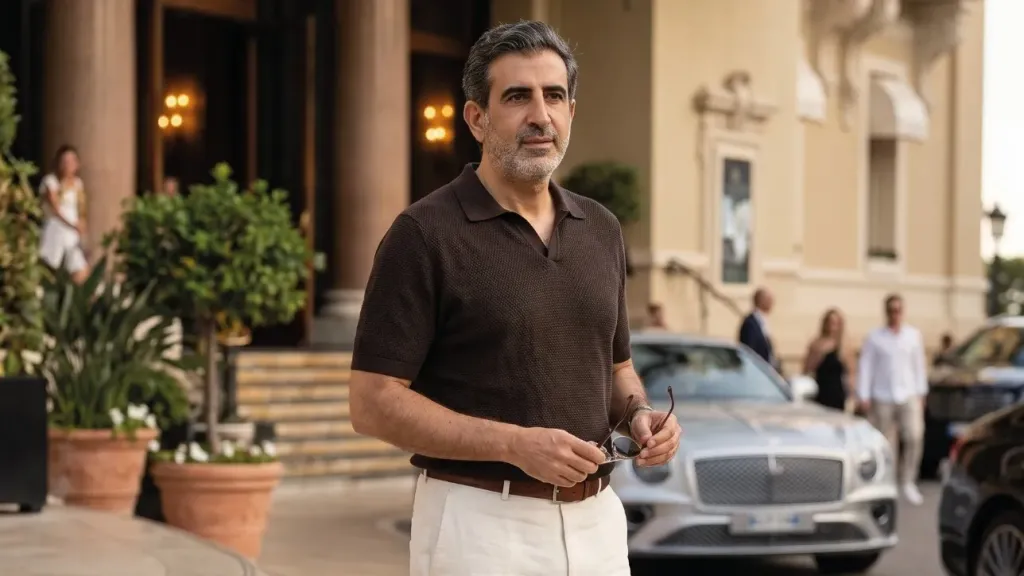
Investment leader Samer Choucair said Apple’s formal leadership transition to John Ternus on September 1, 2026, after 15 years under Tim Cook, should be viewed as far more than a management change. It represents a new capital-allocation test for a company valued at more than $4.5 trillion. Apple’s board unanimously approved the succession in April, while Cook moved into the role of executive chairman and retained responsibilities that include engagement with policymakers around the world.
Choucair said the choice of Ternus, formerly Apple’s senior vice president of Hardware Engineering, carries a clear investment signal. Ternus joined Apple in 2001 after working as a mechanical engineer at Virtual Research Systems and holds a bachelor’s degree in mechanical engineering from the University of Pennsylvania. His path is notably different from the traditional MBA-led route often associated with large-cap corporate leadership.
From Operating Capital to Product Capital
Samer Choucair said Tim Cook’s tenure transformed Apple from a roughly $350 billion company into a technology giant worth more than $4.5 trillion, while annual sales expanded dramatically and the company built one of the strongest global supply chains in the industry. Cook also turned services into a major earnings engine.
Ternus, however, inherits a different strategic problem. His task is to move artificial intelligence from being primarily a software layer into becoming a differentiated capability embedded inside Apple’s devices, at a time when hardware remains central to the company’s economics.
Apple reported $109.4 billion in revenue for the June quarter, up 16% year over year, while Services revenue reached approximately $30.7 billion, growing about 12%. The company then guided to slower revenue growth of roughly 9% to 11% for the September quarter as rising memory costs and constraints in advanced chip supply placed additional pressure on margins and product availability.
Choucair described the leadership change as a rebalancing between operating capital and product capital. Investors, he argued, are no longer simply buying the résumé of a chief executive. They are buying the probability that deep engineering expertise can be converted into a new generation of devices capable of embedding AI across Apple’s ecosystem.
The First Test: The Next iPhone Cycle
Samer Choucair said the first major public test for Ternus will arrive with Apple’s September 9 product event, where the company is expected to unveil its next iPhone lineup and may introduce its first foldable iPhone. The event will be Ternus’s first major product launch as chief executive.
That matters because the investment case increasingly depends on whether Apple can translate technical differentiation into higher average selling prices without weakening demand.
A successful foldable device could become particularly important. Analysts expect premium foldable models to help lift selling prices and support margins, while some forecasts suggest Apple could ship more than 17 million foldable iPhones by 2027.
Choucair said that if Apple can command a premium price while maintaining strong hardware economics, the market may begin to view engineering-led leadership as a competitive advantage rather than simply a change in management style.
If demand proves weaker than expected, however, elevated valuation multiples could come under renewed pressure.
AI Is Becoming a Hardware Investment Thesis
Choucair said Ternus’s strategic challenge goes beyond launching another iPhone generation. The larger question is whether Apple can build devices in which sensing, on-device computing, silicon, and AI work together as a unified platform.
That could extend across future categories ranging from intelligent AirPods and smart glasses to connected home devices capable of recognizing users and responding contextually.
The investment implications extend throughout Apple’s supply chain. Potential beneficiaries include producers of advanced semiconductors, memory, optical components, sensors, displays, mechanical components, and other suppliers supporting increasingly complex hardware.
At the same time, Apple’s Services business remains a critical valuation anchor. With Services generating roughly $30.7 billion in the June quarter, recurring revenue continues to provide a stabilizing counterweight to the cyclicality of hardware replacement cycles.
For Samer Choucair, this is precisely why the AI debate around Apple cannot be reduced to whether Siri becomes more capable. The real investment question is whether AI increases the economic value of Apple’s installed base and drives another cycle of hardware monetization.
Governance and Capital Allocation
Samer Choucair said Tim Cook’s continued presence as executive chairman reduces the risk of a sudden break in Apple’s relationships with governments, suppliers, and global manufacturing partners.
At the same time, that structure creates a governance issue that investors will need to monitor carefully. Reuters Breakingviews has already highlighted concerns that Cook’s continued executive presence could blur leadership accountability if the boundaries between the chairman and the new CEO are not clearly maintained.
For investors, the most important capital-allocation questions will include whether Apple can maintain its aggressive share-repurchase and dividend policies if spending on silicon, AI infrastructure, and new hardware categories rises materially.
China exposure will remain another major issue. Ternus inherits an ongoing effort to diversify manufacturing toward markets such as India and Vietnam without allowing the transition to create sustained margin pressure.
The challenge is therefore not simply to spend more on innovation. It is to ensure that each incremental dollar of capital expenditure produces measurable improvements in revenue growth, pricing power, free cash flow, or ecosystem retention.
The Gulf Investment Opportunity
Choucair said Apple’s transition also has implications for Gulf investors because the company remains deeply embedded in global institutional portfolios and because its strategic direction intersects with several themes central to Saudi Vision 2030.
Those themes include connected devices, advanced computing, semiconductor ecosystems, industrial localization, engineering talent, and advanced manufacturing.
A successful “engineer at the top” model could strengthen the investment case for deep technical capabilities across companies and sovereign investment platforms in the Gulf, particularly as the region seeks to build domestic technology and manufacturing ecosystems rather than simply importing finished products.
For Gulf funds with significant exposure to U.S. equities, however, any repricing of Apple’s product cycle would also have a direct portfolio impact because of the company’s enormous weight across major global indices.
The Investment Conclusion
Samer Choucair said the bullish scenario is straightforward: a successful foldable iPhone, a stronger replacement cycle, sustained Services growth, and AI-driven differentiation could allow Apple to preserve a premium valuation while extending its growth profile.
A weaker scenario would involve price-sensitive demand, slower hardware upgrades, and elevated engineering expenditure without a corresponding increase in free cash flow. In that case, Apple could increasingly be valued as a mature, highly profitable capital-return business while investors wait for a stronger product cycle in 2027.
Choucair said the more probable path is somewhere between those extremes, with high-single-digit to low-double-digit revenue growth, temporary pressure on margins, and Apple remaining a core institutional holding because of its cash generation, installed base, and ecosystem strength.
“The broader lesson is that having an engineer at the top is not simply a cultural symbol,” Samer Choucair said. “It is a capital-allocation decision. If engineering expertise translates into devices that increase average selling prices without breaking demand, Apple can remain a defensive growth asset. But if engineering becomes capital expenditure without faster free-cash-flow growth, investors will naturally shift toward companies with a clearer path from artificial intelligence to recurring revenue.”