
Samer Choucair: Jeddah Tower Is Moving From an Architectural Symbol to a Real Test of Capital Allocation
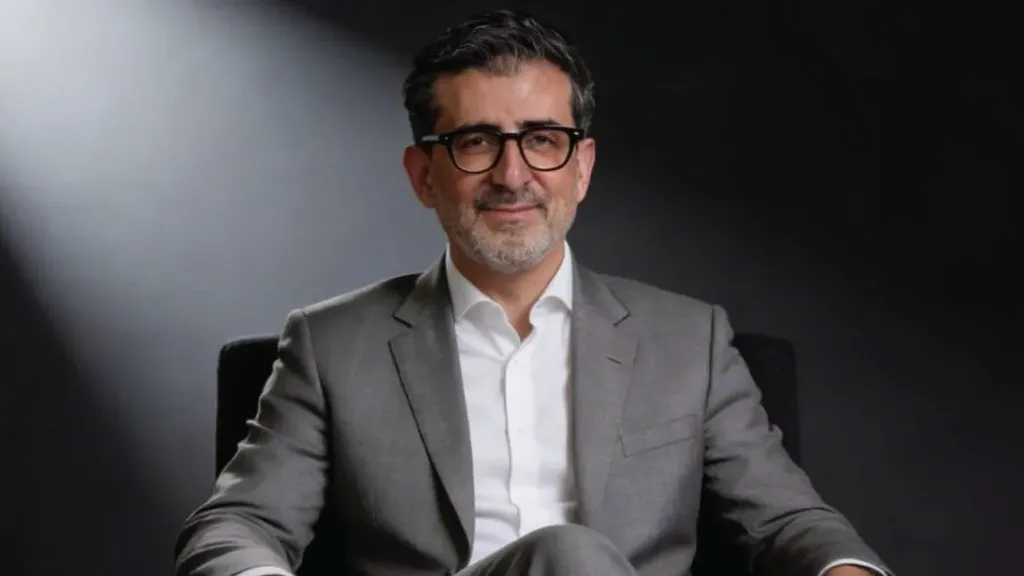
Investment leader Samer Choucair said the continued progress of Jeddah Tower, which had surpassed a reported height of 454 meters at the 113th floor by early September 2026, represents an important signal that Saudi Arabia’s major projects are moving from the vision and announcement stage toward measurable execution.
Choucair said the project’s investment significance is not simply that Jeddah Tower is expected to exceed 1,000 meters and potentially become the world’s tallest building. More importantly, its progress could help reprice the execution risk attached to megaprojects across the Saudi economy.
According to Samer Choucair, the resumption of construction in January 2025, following the signing of a SAR 7.2 billion completion contract with Saudi Binladin Group, returned the project to a category of assets that investors can evaluate against identifiable construction milestones, particularly with completion targeted for August 2028.
“What is being repriced here is not the height of the building,” Samer Choucair said. “It is the discount rate applied to execution credibility.”
Institutional investors, he explained, are increasingly focused on construction progress, financing, execution quality, and ultimately whether an asset can transition from a major development project into a source of sustainable cash flow.
From a Stalled Megaproject to Measurable Execution
Jeddah Tower originally began construction in 2013 before work stalled around the 63rd floor in 2018. After years of inactivity, construction eventually resumed under a new completion framework.
Choucair believes that transition is significant in itself.
Moving from a stalled project to an active construction program supported by a contract, contractor, and defined delivery schedule sends an important signal to capital markets, particularly at a time when institutional investors are applying greater scrutiny to whether megaprojects can meet deadlines and generate their targeted economic returns.
For investors, progress can therefore reduce one category of uncertainty.
A project that exists primarily in architectural renderings carries a different risk profile from one that has contractors on site, measurable construction milestones, committed capital, and an identifiable completion timetable.
That does not eliminate risk, but it makes the risk increasingly measurable.
The Three Layers of Jeddah Tower’s Investment Value
Samer Choucair said the investment value surrounding Jeddah Tower can be considered across three principal layers.
The first is the remaining construction cost required to deliver the tower.
The second is the future operating value generated by the building itself through its hotel, residential apartments, offices, observation facilities, retail, and other commercial components.
The third is the potential value of the surrounding land and assets within Jeddah Economic City.
Choucair believes this third layer could prove particularly sensitive to the tower’s progress.
Completing a globally recognized landmark can alter the economic profile of the surrounding district. Land that was previously valued largely on the basis of future expectations can begin to be priced against the presence of a functioning tourism, commercial, residential, and hospitality destination.
In that sense, the tower could become an anchor asset whose economic impact extends well beyond the building itself.
Why Jeddah Matters to the Investment Thesis
Jeddah represents an important part of that equation.
The city occupies a strategic position on the Red Sea and serves as a major gateway for pilgrimage, commerce, tourism, logistics, and international visitors.
Progress on Jeddah Tower is also taking place alongside other major development initiatives, including Jeddah Central and the continued redevelopment of Historic Jeddah.
For Samer Choucair, the combination creates the potential for stronger demand across hospitality, retail, office space, tourism services, transportation, and urban infrastructure.
The investment case, however, depends on whether these projects collectively create additional economic activity rather than simply additional real estate supply.
That distinction becomes critical as Saudi Arabia simultaneously develops premium destinations and major real estate projects in Jeddah, Riyadh, the Red Sea, and other parts of the Kingdom.
Height Alone Does Not Generate Returns
Choucair cautioned that growing luxury supply across Jeddah, Riyadh, and Red Sea developments could create significant competition for capital, tourists, tenants, and operators.
A record-breaking building does not automatically produce a record-breaking investment return.
“The market is not pricing the height of Jeddah Tower,” Samer Choucair said. “It is pricing the ability to convert vision into cash flow.”
The project’s ultimate financial performance will therefore depend on factors such as the pace of residential sales, hotel occupancy, the attractiveness of office and retail space, pricing power, operating costs, and Jeddah Economic City’s ability to develop a functioning ecosystem of services and commercial activity around the tower.
This is the point where an architectural landmark becomes an investment asset.
For capital markets, the important question is not whether millions of people recognize the building. It is whether that recognition can be monetized through occupancy, tourism, residential demand, retail spending, hospitality revenues, and higher surrounding asset values.
The Economic Impact Extends Beyond the Tower
Choucair said Jeddah Tower’s economic impact also extends into industries that participate in its construction and eventual operation.
The project creates demand across contracting, engineering, façades, elevators, specialized building systems, hospitality, tourism, transportation, maintenance, and other technical services.
As the project moves closer to completion, additional opportunities could emerge in asset management, facilities management, hospitality operations, retail, tourism platforms, mobility, and services associated with the wider development.
That creates a different capital-allocation question.
Instead of asking only whether investors should seek exposure to the tower itself, they can examine the broader ecosystem of businesses that may generate revenue before and after the project opens.
What Jeddah Tower Means for Kingdom Holding
Regarding Kingdom Holding Company, Samer Choucair said progress on Jeddah Tower could become a positive factor in reassessing the value associated with Jeddah Economic City.
However, he cautioned against reducing the investment case for Kingdom Holding to a single development.
The company maintains a diversified investment portfolio with exposure to multiple sectors, companies, and geographic markets. Institutional investors therefore need to separate the value attributable to Jeddah-related real estate assets from the performance and valuation of the rest of the portfolio.
Not every movement in the company’s share price should be interpreted as a direct reflection of construction progress at Jeddah Tower.
The more disciplined approach is to evaluate the project as one component of a broader sum-of-the-parts investment case.
The “Pre-Opening” Capital Opportunity
Choucair believes some of the most interesting capital-allocation opportunities could emerge during the pre-opening phase, rather than after the tower has already achieved its symbolic value as a completed global landmark.
As delivery approaches, opportunities could emerge around hotel operations, retail contracts, services, developer financing, asset management, tourism infrastructure, and surrounding real estate.
This is important because markets frequently place significant attention on the most visible asset while overlooking the businesses positioned to monetize the activity surrounding it.
For institutional investors, the more attractive risk-adjusted opportunity may therefore exist in the infrastructure and operating ecosystem that becomes necessary before the first hotel guest arrives, the first office tenant moves in, or the first tourist reaches the observation deck.
The Risks Investors Still Need to Price
Choucair identified several risks that remain central to the investment case.
Engineering complexity is one of the most obvious. Building at unprecedented height creates technical requirements that can affect construction costs, timelines, materials, vertical transportation, façades, safety systems, and long-term maintenance.
Schedule risk also remains important. Even with visible progress, delays could affect financing costs and postpone the point at which the asset begins generating operating cash flow.
Absorption represents another challenge. Premium residential, hospitality, retail, and office supply must ultimately meet sufficient demand at economically attractive prices.
Competition is equally significant. Jeddah is not operating in isolation. Riyadh, Red Sea destinations, and other Saudi megaprojects are simultaneously competing for tourists, international capital, operators, tenants, talent, and real estate investment.
Execution therefore remains more important than symbolism.
From Vision 2030 Symbolism to Capital Discipline
For Samer Choucair, Jeddah Tower has evolved into something more important than a competition for the title of the world’s tallest building.
It is becoming a test of Saudi Arabia’s ability to convert megaprojects into productive operating assets.
If construction continues according to schedule and the wider development successfully generates commercial activity, the project could strengthen investor confidence not only in Jeddah Tower but also in the execution capability surrounding Saudi Arabia’s broader development pipeline.
That matters because institutional capital does not ultimately invest in architectural ambition alone. It invests in execution, cash flows, asset utilization, operating returns, and the probability that projected value can become realized value.
“Crossing 450 meters is evidence of execution progress, but it is not a guarantee of returns,” Samer Choucair said. “Returns will ultimately be determined by schedule discipline, the quality of the operating mix, and the speed at which the surrounding land can be converted into measurable cash flows.”
Jeddah Tower may eventually be measured in meters by the public. For investors, however, its more important measurement will be return on capital.