
From Asheville to Bishkek: Samer Choucair Reads the Investment Map of a Multipolar World
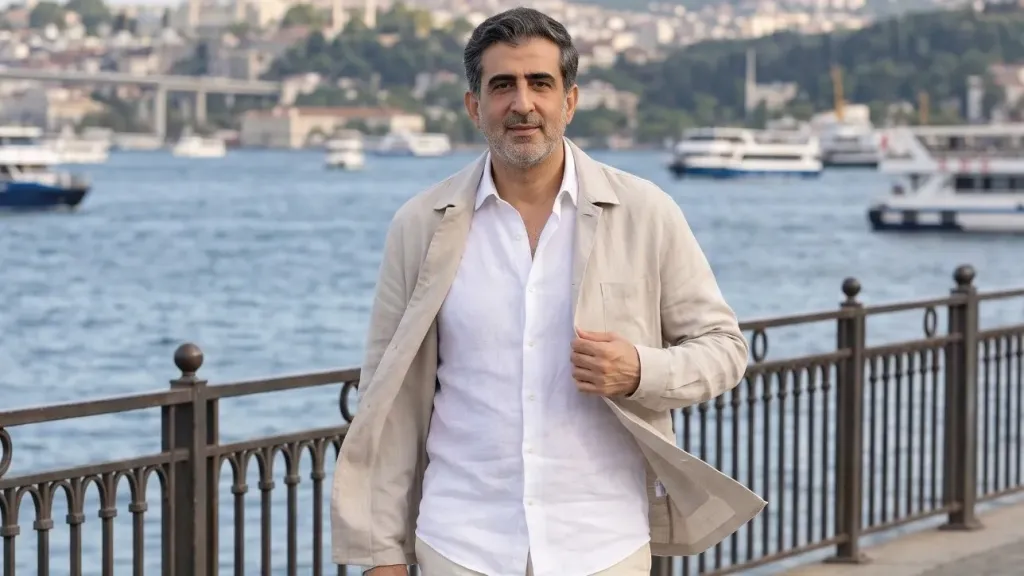
Investment leader Samer Choucair said the conclusion of the G20 finance ministers’ meetings in Asheville, North Carolina, without full consensus, alongside the gathering of leaders from China, Russia, Iran, and India under the Shanghai Cooperation Organisation framework in Bishkek, signals that the global economy has entered a new phase of multipolarity.
China declined to endorse the U.S. presidency statement, while the other 19 G20 members supported it. Beijing objected to language addressing persistent external imbalances, non-market policies, and freedom of navigation through the Strait of Hormuz.
For Choucair, the timing of the two diplomatic tracks was more than symbolic. It represented a market signal that the world’s largest economies are finding it increasingly difficult to establish a single set of financial and economic rules.
The G20, in this interpretation, is gradually evolving from an institution designed primarily to build consensus into a forum increasingly required to manage disagreement.
From Common Rules to Repricing Risk
Samer Choucair said the United States approached its 2026 G20 presidency with an agenda centered on economic growth, private-sector development, sovereign imbalances, debt sustainability, and financial literacy.
The meetings also reflected a shifting geopolitical landscape. Russian Finance Minister Anton Siluanov attended the ministerial gathering in person, marking his return to a G20 finance ministers’ meeting after years of Russia’s more limited participation following the invasion of Ukraine.
At the same time, the continuing U.S.-Israeli conflict with Iran remained a major geopolitical backdrop to discussions about energy, trade, inflation, and global financial stability.
China, meanwhile, has continued strengthening alternative economic relationships, including its strategic partnership with Moscow and purchases of discounted Iranian crude.
According to Choucair, institutional investors are consequently being forced to reprice risks across supply chains, maritime corridors, energy markets, and international trade.
“The institutional investor is no longer buying global growth as a single basket,” Samer Choucair said. “Capital is buying the ability to generate cash flow in a fragmented rules environment — through long-term contracts, alternative logistics corridors, and balance sheets capable of absorbing shocks.”
That distinction is becoming increasingly important.
For decades, global portfolios benefited from the assumption that trade integration, standardized rules, and increasingly efficient supply chains would continue reducing friction. In a multipolar system, investors may instead have to assign greater value to redundancy, optionality, and geopolitical resilience.
Hormuz and Energy Are Reshaping Markets
Choucair said markets increasingly appear to be pricing a prolonged disruption around the Strait of Hormuz rather than assuming a rapid political settlement.
Brent crude returned to roughly $90–$92 per barrel in early September, as renewed tensions between Washington and Tehran reinforced concerns surrounding one of the world’s most strategically important energy corridors.
The impact extends beyond the headline oil price.
Higher refining margins and elevated prices for refined products continue to transmit inflationary pressure into transportation, manufacturing, and chemicals. At the same time, higher insurance costs and irregular tanker flows have transformed Hormuz from a geopolitical tail risk into a direct variable within corporate valuation models.
For investors, that creates clear differences between companies.
Integrated energy businesses, pipeline operators, alternative export corridors, and gas producers capable of redirecting cargoes may benefit from greater energy-security demand and higher margins.
Companies with weak pricing power, thin margins, and heavy dependence on spot-priced Asian inputs could face the opposite environment, as transportation, insurance, energy, and procurement costs pressure profitability simultaneously.
For Samer Choucair, the investment implication is that energy security itself is becoming an economic asset.
The Gulf Between Energy and Geopolitical Hedging
Choucair said the Gulf occupies an unusually important position in the emerging multipolar system.
The region is simultaneously a critical supplier of global energy, a major commercial partner of China, and a longstanding security partner of the United States.
That position creates complexity, but it can also create strategic value.
Saudi Vision 2030 and the Public Investment Fund provide Saudi Arabia with a framework for converting energy-cycle revenues into investments across manufacturing, tourism, infrastructure, logistics, technology, and other non-oil industries.
According to Samer Choucair, the Gulf’s competitive advantage during the 2026–2030 cycle will therefore depend on more than the size of its hydrocarbon reserves.
The more important question is whether oil-cycle surpluses can be converted into productive assets capable of generating globally competitive returns.
“The advantage will come from transforming cyclical energy liquidity into assets that remain valuable beyond the cycle,” Choucair said.
Logistics networks, energy infrastructure, advanced manufacturing, industrial platforms, data infrastructure, and digital businesses could therefore become increasingly important components of the Gulf investment proposition.
Simply recycling liquidity into conventional assets, by contrast, could become less attractive as geopolitical risk premiums rise and investors demand greater operating returns.
Capital Is Searching for Resilience
Samer Choucair said investors are already beginning to restructure portfolios around the assumption that linear globalization can no longer be taken for granted.
That means increasing exposure to energy security, food security, infrastructure, logistics, and strategic supply chains while differentiating much more carefully between emerging markets according to capital-market depth, export capacity, fiscal resilience, and geopolitical positioning.
U.S. companies linked to artificial intelligence and financial services are likely to remain important destinations for global capital, but their valuations will remain sensitive to energy shocks and changes in interest-rate expectations.
China’s industrial overcapacity will continue to exert competitive pressure across several global industries, while Europe faces rising expenditures associated with defense, energy security, and strategic autonomy.
The result is not necessarily deglobalization.
Instead, Choucair sees the emergence of a more complicated form of globalization built around overlapping economic systems.
“Smart capital is not betting on the return of the old order,” Samer Choucair said. “It is investing in institutions and companies capable of building operational bridges between the new systems — through joint financing, dual compliance standards, and supply contracts that can be redirected when conditions change.”
This concept of operational optionality could become increasingly important in valuation.
A company capable of sourcing components from multiple regions, financing itself across several capital markets, rerouting logistics, and complying with competing regulatory systems may deserve a different risk premium from a company optimized exclusively for the lowest-cost global supply chain.
Efficiency is no longer the only objective. Resilience increasingly has a measurable economic value.
Investing in a Fragmented World
For Choucair, the shift toward multipolarity changes how investors should think about diversification itself.
Traditional diversification generally focused on asset classes, industries, and geographies.
The next phase may require diversification across political systems, trade corridors, currencies, energy sources, financing channels, and regulatory environments.
That means investors must increasingly understand not simply where a company generates revenue, but how it generates that revenue.
Where does it source critical materials? Which shipping corridors does it depend on? Which currencies finance its operations? How exposed is it to sanctions? Can production be relocated? Can customers be served through alternative markets?
Those questions were once primarily the responsibility of corporate risk departments.
In a fragmented global economy, they are becoming fundamental investment questions.
2026: The Year of Managing Fragmentation
Samer Choucair identified three major risks that investors should continue monitoring: a longer escalation around the Strait of Hormuz, an expansion of global trade confrontation, and a further deterioration in the effectiveness of multilateral institutions.
In such an environment, gold and strategic minerals could continue playing an important hedging role, while U.S. Treasury yields remain caught between competing forces from growth, inflation, fiscal policy, and geopolitical risk.
The upcoming G20 leaders’ summit in Miami in December will provide another test of whether the world’s largest economies can rebuild areas of meaningful cooperation despite widening strategic differences.
Yet Choucair believes 2026 is likely to remain a year defined by managing fragmentation rather than reversing it.
For institutional investors, that requires portfolios capable of functioning under both scenarios: one in which geopolitical tensions ease and another in which economic fragmentation becomes more deeply embedded.
“This is not an investment cycle about choosing between China and the United States,” Samer Choucair said. “It is a cycle about choosing the right instruments. Investors who distribute capital across operational capability, liquidity, and multiple geographies will be better positioned to absorb volatility. Those who construct portfolios around the assumption of one system and one set of rules may discover that assumption has become the most expensive asset they own.”
From Asheville to Bishkek, the deeper investment signal is therefore not simply that political alliances are changing.
It is that the architecture through which global capital, energy, goods, and technology move is changing with them.
For Samer Choucair, investors who understand that distinction will not need to predict which geopolitical bloc ultimately prevails. They will instead own assets capable of generating value across more than one possible world.