
Samer Choucair: Debt Markets Are Repricing the Cost of Capital as the Gulf Retains Its Appeal
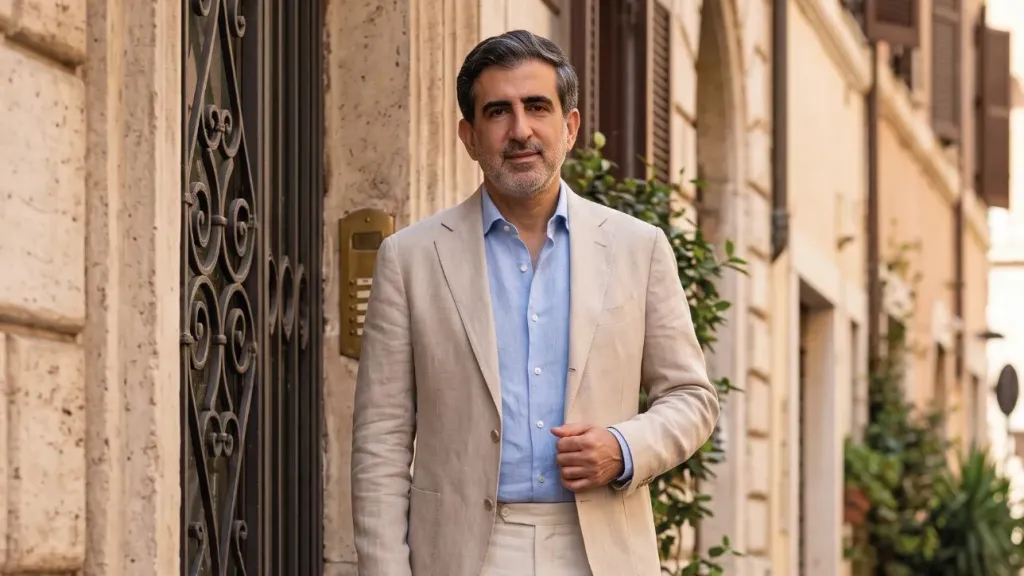
Investment pioneer Samer Choucair said global debt markets are undergoing a clear repricing of financing costs as bond yields rise and concerns surrounding inflation, energy prices, and the trajectory of monetary policy return to the forefront.
Choucair stressed that these developments should not be interpreted as capital retreating from the region. Instead, they reflect a reordering of investor priorities based increasingly on credit quality, balance-sheet resilience, and the ability of individual economies to withstand financial and geopolitical shocks.
Samer Choucair: Institutional Investors Are Reclassifying Risk
Samer Choucair said Saudi Arabia’s $3.25 billion sovereign sukuk issuance, which attracted approximately $16.5 billion in orders, demonstrates the continued appeal of Gulf credit despite the rise in global borrowing costs.
Demand exceeded the size of the issuance by more than five times, allowing pricing spreads to tighten by approximately 30 basis points from initial guidance.
“The cost of capital has risen for everyone, but the market is no longer pricing the Gulf, Egypt, and high-yield instruments in the same basket,” Samer Choucair said. “Institutional investors are prepared to pay a lower risk premium when they see an issuer with consistent market access, stable domestic demand, and clearly defined spending priorities.”
Choucair added that Saudi Arabia benefits from the depth of its financial markets, the consistency of its financing programs, and its ability to attract international investors even during periods of global volatility.
Saudi Arabia’s 2026 borrowing program is estimated at approximately SAR217 billion, designed to meet financing requirements while refinancing existing maturities.
Samer Choucair: The Gulf Is Keeping Its Financing Window Open
Choucair said strong demand for Saudi issuance does not mean that the global tightening cycle has ended. It does, however, demonstrate that investors are increasingly differentiating between issuers according to their underlying credit characteristics.
The relative scarcity of large, liquid Gulf sovereign instruments, combined with the presence of sovereign wealth funds and global institutional investors, continues to support Saudi Arabia’s ability to access international capital markets.
Choucair said sukuk have become a core component of both Islamic and conventional fixed-income portfolios, while the strength of Saudi Arabia’s balance sheet provides greater flexibility in managing financing costs over longer horizons.
In an environment where the global cost of capital remains elevated, the ability to determine when, where, and at what maturity to borrow is becoming an increasingly valuable sovereign advantage.
Samer Choucair: Egypt Needs Capital That Generates Hard Currency
The investment equation in Egypt is different, according to Samer Choucair, because of elevated interest rates and investor sensitivity to inflation and exchange-rate movements.
Yields on some Egyptian local-currency debt instruments have exceeded 25%, creating attractive nominal returns while simultaneously increasing repricing risk if foreign portfolio flows change direction.
Choucair said activity in the secondary market points toward greater investor preference for shorter-duration instruments, while the U.S. dollar trades near EGP51.
For Egypt, the sustainability of financing increasingly depends on the economy’s ability to generate reliable hard-currency cash flows rather than simply offering higher nominal yields.
“When the cost of shocks rises, investors move from asking how high the nominal return is to asking how reliably that return can ultimately be converted into hard currency,” Choucair said.
The distinction is critical. High yields can attract capital, but the durability of those inflows depends on currency stability, liquidity, and confidence in the economy’s ability to generate foreign exchange through exports, tourism, investment, and other external revenue channels.
Samer Choucair: Private Investment Is Reshaping the Egyptian Market
Choucair said the growing focus of private investment funds on export-oriented Egyptian companies represents an important channel for reducing dependence on volatile short-term portfolio flows.
He pointed to plans to establish “Menara 2” with investments of approximately EGP3 billion to support export-oriented businesses as an example of how capital can be directed toward companies capable of generating foreign-currency revenues.
According to Choucair, businesses that can expand exports and produce dollar-denominated revenue streams are likely to become increasingly attractive to institutional investors, particularly in manufacturing, logistics, and tourism.
This represents a broader shift in the way investors evaluate emerging-market opportunities. Rather than focusing exclusively on headline growth rates or domestic demand, institutional capital is placing greater emphasis on businesses capable of generating revenues that remain resilient against local currency depreciation.
For Egypt, that means companies connected to exports and internationally competitive sectors could increasingly command a strategic premium.
Samer Choucair: Investors Reward Balance Sheets That Can Borrow During Stress
Samer Choucair cautioned against interpreting the strength of demand for Saudi Arabia’s recent issuance as evidence that global volatility has disappeared.
Higher U.S. Treasury yields will continue to influence the cost of dollar financing globally, raising the opportunity cost of allocating capital to emerging-market and regional debt.
“A full order book does not eliminate the higher opportunity cost of capital,” Choucair said. “What it does is give the stronger issuer a better financing window than the weaker issuer.”
That distinction is becoming increasingly important.
Institutional investors in 2026, Choucair said, are likely to prioritize sovereigns and companies with balance sheets capable of accessing capital during periods of stress, rather than those that can borrow only when global risk appetite is exceptionally strong.
Access to capital during difficult markets is itself becoming a measure of credit quality.
For investors, this means financing resilience should increasingly be considered alongside conventional measures such as leverage, fiscal deficits, liquidity, and debt-servicing ratios.
Capital Is Being Reallocated, Not Leaving the Region
Choucair said the dominant trend through the end of 2026 is likely to be a redistribution of capital across the region rather than a wholesale withdrawal of international investment.
Saudi Arabia continues to retain strong access to global financing because of market liquidity, institutional depth, and the strength of its credit profile.
Egypt, meanwhile, is attempting to develop a deeper and more stable financing base centered on direct investment linked to production, exports, and the generation of foreign currency.
“The Gulf is refinancing itself in a stressed global market, while Egypt is trying to build less volatile sources of capital,” Samer Choucair said. “The medium-term winner will be the market that treats the cost of capital as a discipline for asset allocation rather than as a signal to exit the region.”
That distinction captures the emerging investment environment.
Higher interest rates do not necessarily eliminate opportunities. They change the price investors are willing to pay for risk and increase the importance of cash-flow visibility, balance-sheet strength, liquidity, and access to diversified sources of financing.
For Gulf markets, particularly Saudi Arabia, the continued ability to attract international demand demonstrates that higher global yields do not affect every borrower equally.
For Egypt, the challenge is increasingly to complement portfolio capital with longer-duration investment capable of generating production, exports, and hard-currency revenues.
For Samer Choucair, the central message for institutional investors is therefore not that capital is abandoning the Middle East, but that it is becoming considerably more selective.
In a world of structurally more expensive money, capital will increasingly favor economies, sovereigns, and businesses that can demonstrate financial resilience when market conditions deteriorate—not merely when liquidity is abundant.