
Samer Choucair: Hydrogen Has Entered the Contract Phase, Not the Slogan Phase, in 2026
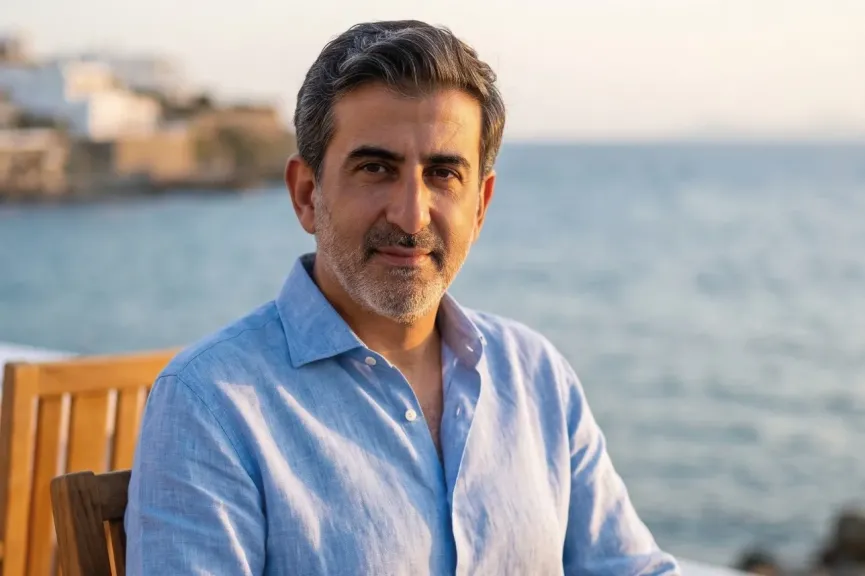
Investment leader Samer Choucair said the International Renewable Energy Agency’s long-term scenario, under which hydrogen and its derivatives could account for around 14% of global final energy consumption by 2050, should not be interpreted as an automatic guarantee for investment returns. Instead, it represents a long-term strategic compass that, in 2026, is confronting a widening gap between ambition and execution.
Choucair said global hydrogen demand reached approximately 100 million tonnes in 2024, while low-emissions hydrogen still represented less than 1% of total production. At the same time, projects already operational, under construction, or having reached a final investment decision would collectively provide only around 4 million tonnes of annual low-emissions production by 2030.
For investors, the implication is significant. The strategic case for hydrogen remains intact, but the timeline for monetizing that opportunity is becoming far more important than the size of the theoretical market.
From Financing Capacity to Financing Demand
Samer Choucair said the pipeline of announced hydrogen projects targeting 2030 has fallen from roughly 49 million tonnes of annual production capacity to approximately 37 million tonnes, while more than half of announced projects face the possibility of delays.
“The market is correcting a capital-allocation mistake made during the previous cycle,” Choucair said. “Production capacity was financed before demand was financed.”
That shift is changing how institutional investors evaluate hydrogen projects.
Rather than asking primarily about the size of an electrolyzer or production facility, investors are increasingly focused on the identity and credit quality of the buyer, the duration of the offtake agreement, the pricing mechanism embedded in the contract, and whether projected cash flows can reliably service project debt.
Choucair said this represents an important maturation of the sector.
Capital expenditure on low-emissions hydrogen projects reached approximately $4.3 billion in 2024, while venture-capital financing for hydrogen companies declined, reflecting a broader migration of capital away from speculative technology exposure and toward infrastructure backed by longer-term contractual cash flows.
For Samer Choucair, that transition does not necessarily indicate declining confidence in hydrogen. It indicates that investors are becoming more disciplined about which part of the value chain they are willing to finance.
The Gulf Has the Advantage — but Contracts Will Decide the Winners
Choucair said Saudi Arabia and the wider Gulf possess several structural advantages in the emerging hydrogen economy: abundant solar and wind resources, existing energy-export infrastructure, access to international markets, and sovereign investors capable of supporting long-duration capital cycles.
Geography alone, however, is no longer sufficient.
Samer Choucair pointed to the NEOM Green Hydrogen project as one of the clearest examples of the financing model the market is increasingly willing to support.
With investment of approximately $8.4 billion, around 4 GW of renewable power capacity and 2.2 GW of electrolyzers, the project is designed to produce approximately 600 tonnes of hydrogen per day and around 1.2 million tonnes of green ammonia annually.
“The model that has become financeable is increasingly clear: large-scale capacity, a long-term offtake agreement, and syndicated financing,” Choucair said.
That combination addresses one of the central weaknesses that affected the first wave of hydrogen investment: developers could demonstrate that a facility was technically capable of producing hydrogen, but not necessarily that customers were willing to purchase the output at prices capable of generating an adequate return on capital.
Oman represents another important regional market. Through projects developed under Hydrom, the country is targeting hydrogen production approaching 1 million tonnes annually by 2030, even after two projects were terminated by mutual agreement.
Choucair said developments like these should not automatically be interpreted as evidence that the regional hydrogen thesis is failing.
Instead, project cancellations and restructuring can be part of a necessary process in which economically weaker projects are removed while capital concentrates around projects with credible buyers, financing structures, infrastructure access, and realistic production economics.
Where Should Investors Put Their Money?
Samer Choucair said the most economically compelling applications for hydrogen are likely to be concentrated in sectors where direct electrification is difficult.
Heavy industry, fertilizers, refining, steel production, and shipping represent some of the strongest potential demand centers.
By contrast, hydrogen applications in passenger vehicles and building heating are likely to face intense competition from direct electrification, where battery technologies and electric systems can often deliver greater overall energy efficiency.
That distinction is critical for capital allocation.
Investors should not treat every potential hydrogen application as equally valuable simply because it contributes to the same long-term demand forecast.
Choucair said capital is increasingly concentrating around four broad areas: projects supported by credible long-term offtake agreements, equipment and technology supply chains, port and logistics infrastructure required to transport hydrogen derivatives, and blue hydrogen combined with carbon capture as a potential transitional solution.
The common denominator is increasingly visible cash flow.
Equipment manufacturers can benefit from actual project construction. Ports and logistics operators can generate revenues from physical trade flows. Contract-backed production facilities can support project finance. Blue hydrogen can potentially monetize existing natural-gas infrastructure while lower-carbon alternatives continue to scale.
This is a fundamentally different investment proposition from simply buying exposure to a company because its strategy includes the word “hydrogen.”
From Narrative to Bankable Cash Flow
For Choucair, the biggest risk is not necessarily that hydrogen fails to reach 14% of global final energy consumption by 2050.
The greater investment risk is misreading the timeline.
“The biggest danger was never simply that the 14% scenario might not materialize,” Samer Choucair said. “The real danger is misreading the timetable. Investors who allocate capital as though 2050 begins in 2027 will bear a substantial opportunity cost, while those who wait until the market is completely mature may discover that the best assets have already been locked up.”
That tension defines the next phase of hydrogen investment.
Moving too early into projects without buyers, infrastructure, or competitive economics can trap capital for years. Moving too late can leave investors competing for mature assets after much of the return potential has already been captured.
The solution, Choucair argued, is not to abandon hydrogen but to become far more selective about how exposure is constructed.
Hydrogen has not lost its strategic importance. What has changed is the way sophisticated capital is pricing that importance.
Samer Choucair concluded that institutional investors are moving from financing the narrative to financing the contract, and from chasing a theoretical share of the 2050 energy market to acquiring verifiable cash flows that can emerge between 2027 and 2032.