
Samer Choucair: Saudi Sukuk Reveal a Global Repricing of Risk as Yields Stay Under Pressure
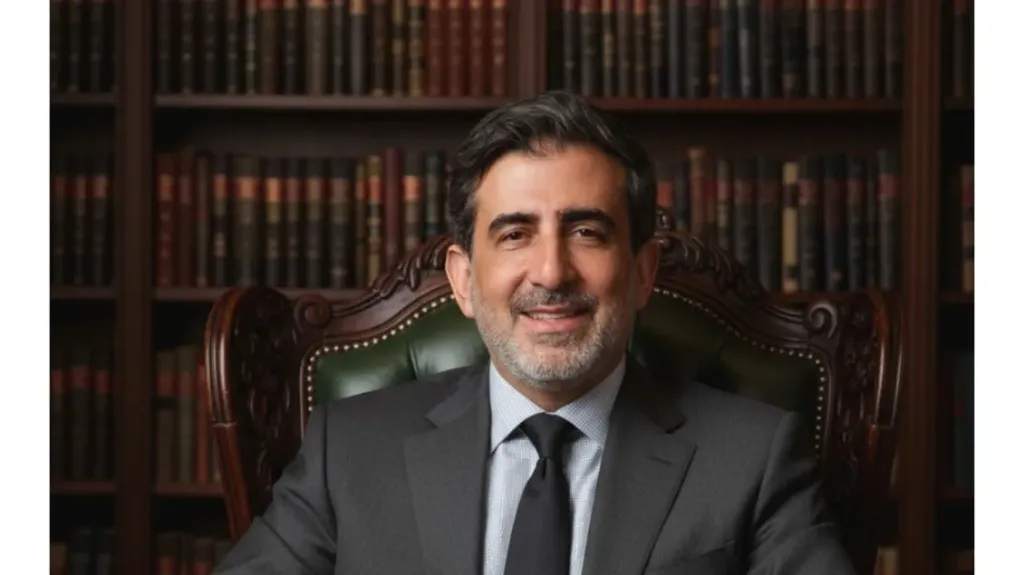
Investment pioneer Samer Choucair said global fixed-income markets have entered a new phase of repricing inflation, debt, and duration risk, as the U.S. 10-year Treasury yield climbed to around 4.81% and the 30-year yield approached 5.3%. At the same time, Japan’s 10-year government bond yield moved above 3% for the first time since 1996, German bond yields reached their highest levels since 2011, and UK government bonds recorded their highest yields since the global financial crisis.
Choucair said the move has been reinforced by rising energy prices, with Brent crude trading near $95 a barrel, U.S. federal debt exceeding $40 trillion, and a new wave of borrowing associated with the build-out of artificial intelligence and data-center infrastructure.
“The market is no longer pricing only the path of short-term interest rates,” Samer Choucair said. “It is pricing the value of time and the ability of governments and corporations to convert debt into genuine productivity.”
Saudi Sukuk Pass the Market Test
Samer Choucair said Saudi Arabia’s issuance of five- and 10-year U.S. dollar-denominated sukuk represented an important test of investor appetite for Gulf credit.
Orders reached approximately $13.5 billion to $16.5 billion, equivalent to roughly five times the $3.25 billion total issuance.
Saudi Arabia raised $1.25 billion through the five-year tranche and $2 billion through the 10-year tranche. Pricing tightened by around 30 basis points from initial guidance of 100 and 110 basis points over comparable U.S. Treasuries, eventually closing at spreads of 70 and 80 basis points, with coupons of 5.257% and 5.598%, respectively.
Choucair noted that Saudi Arabia’s 2026 borrowing plan stands at approximately SAR217 billion, including a targeted budget deficit of around SAR165 billion and principal repayments of approximately SAR52 billion. Around 25% to 30% of the funding requirement is expected to be raised in international markets.
For investors, he said the strength of demand demonstrates that high-quality Gulf sovereign credit can continue attracting substantial institutional capital even when global benchmark yields remain elevated.
The Dollar and Artificial Intelligence Are Redistributing Capital
Samer Choucair said the U.S. dollar, despite trading near 99.5 on the Dollar Index, has entered a more complicated phase in which interest-rate expectations, oil prices, and U.S. bond yields are interacting more directly.
That environment, he said, makes the management of reserves and dollar exposure increasingly important for Gulf investors, particularly as changing yield differentials influence both portfolio allocation and funding costs.
At the same time, Choucair said artificial-intelligence investment is beginning to reposition Saudi Arabia from a technology importer into a regional computing platform.
AMD has committed to an investment plan of as much as $10 billion with HUMAIN, including additional capacity of up to 250 megawatts beginning in 2027 and a target of reaching one gigawatt by 2030. The plans also include deploying MI355X systems and providing more than 10,000 central processing units during 2026.
“Artificial-intelligence infrastructure is no longer a temporary technology spending cycle,” Choucair said. “It is becoming a new sovereign asset class.”
From an investment perspective, that distinction is important. Data centers, advanced chips, energy capacity, and digital infrastructure are increasingly being treated not merely as technology expenditures but as productive assets capable of shaping national competitiveness, capital formation, and long-term economic growth.
Saudi Arabia Faces a Dual Investment Opportunity
Samer Choucair said sovereign wealth funds and institutional asset managers are increasingly evaluating the current environment through three broad capital-allocation themes: reducing duration exposure in heavily indebted markets, selectively increasing exposure to high-quality Gulf fixed-income instruments, and directing more capital toward energy, data centers, semiconductors, and digital infrastructure.
At the same time, he cautioned that the opportunity comes with substantial risks.
Persistently elevated term premiums could continue putting pressure on bond valuations, while rising energy prices may reinforce inflation and keep financing costs higher for longer. Geopolitical tensions and refinancing pressures also remain important considerations for both governments and corporations.
The rapid expansion of data-center infrastructure presents its own challenges, ranging from electricity availability and grid capacity to skilled labor, regulation, cooling requirements, and the economics of maintaining increasingly power-intensive computing systems.
For Choucair, the central question is therefore not whether capital remains available, but whether governments and companies can deploy that capital into assets that generate measurable productivity and sustainable cash flow.
“2026 is redefining what constitutes an investment safe haven,” Samer Choucair said. “The winner is not necessarily the borrower that secures the cheapest financing. It is the one capable of converting a higher cost of capital into productive assets and sustainable cash flows.”