
Samer Choucair: $1.65 Trillion Puts Saudi Arabia on the Map of the World’s Largest Economies
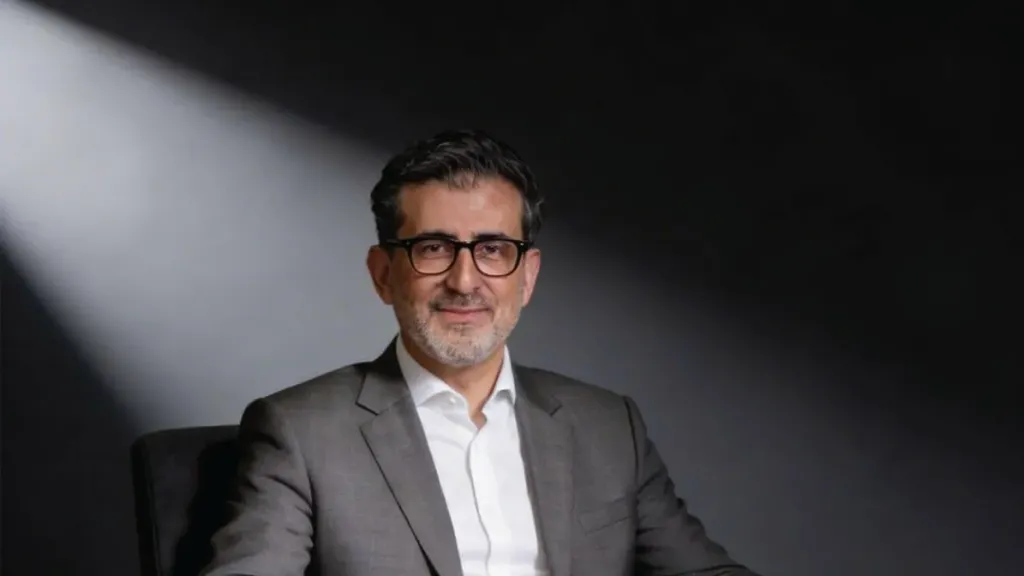
Investment entrepreneur Samer Choucair said the International Monetary Fund’s projections for Saudi Arabia’s GDP at current prices point to an opportunity for the Kingdom to reach a new level of global economic influence by 2030. With the IMF estimating Saudi GDP at approximately $1.65 trillion, the Kingdom is strengthening its position among the world’s largest economies while consolidating its status as the largest Arab economy.
Samer Choucair explained that the significance of the $1.65 trillion figure extends well beyond Saudi Arabia’s regional ranking. An economy of this scale can materially influence the decisions of global investors, asset managers, and sovereign wealth funds, as the Saudi market becomes increasingly capable of absorbing larger sovereign and quasi-sovereign issuances, public offerings, acquisitions, and infrastructure projects on a scale exceeding that of most regional markets.
Choucair added that the latest IMF assessment also requires investors to take a more measured view of the growth trajectory. Saudi Arabia’s economy grew by 4.6% in 2025, while the Fund expects growth to slow to 1.7% in 2026 before accelerating to 5.5% in 2027, with non-oil growth moderating to 2.6% in 2026.
According to Choucair, these figures demonstrate that reaching an economy of approximately $1.65 trillion will not follow a straight line. Investors must distinguish between Saudi Arabia’s long-term structural transformation and shorter-term cyclical fluctuations driven by oil markets, interest rates, and geopolitical developments.
The strength of the Saudi investment story is also closely connected to the role of the Public Investment Fund. Choucair noted that PIF’s assets under management exceeded $900 billion in 2025, while the fund generated approximately $120 billion in revenue and $17 billion in net profit. Its cumulative domestic investments have exceeded $199 billion since 2021, while its activities contributed more than $342 billion to real non-oil GDP over the same period.
For Samer Choucair, these numbers point to substantial investment opportunities across infrastructure, logistics, healthcare, technology, artificial intelligence, tourism, and energy. However, he cautioned that investors should not interpret the scale of Saudi Arabia’s transformation as an “open check.”
The ultimate investment return, Choucair argued, will depend on whether large-scale capital expenditure translates into higher private-sector productivity, a broader base of companies capable of generating independent and sustainable cash flows, and continued improvements in corporate governance and financial disclosure.
Saudi Arabia’s growing economic scale also has implications for capital markets. As the economy expands and financial markets deepen, the Kingdom could increasingly serve not simply as a destination for regional capital but as a major allocation within global emerging-market and institutional portfolios.
Samer Choucair concluded that Saudi Arabia is moving toward becoming a major capital-allocation hub in the Middle East, but investment strategy through 2030 should remain selective.
Oil prices, interest rates, and geopolitical developments may shape short-term performance, but the more important determinants of sustainable investment returns will be the diversification of the Saudi economy, improvements in private-sector productivity, and the continued deepening of the Kingdom’s financial markets.
For investors looking toward 2030, the significance of the $1.65 trillion milestone is therefore not simply the size of Saudi Arabia’s economy. The more consequential question is how effectively that economic scale can be converted into productive private capital, sustainable cash flows, and long-term investment returns.