
Samer Choucair: Time Has Become an Investment Asset Choosing the Wrong Horizon Can Cost Investors Their Returns
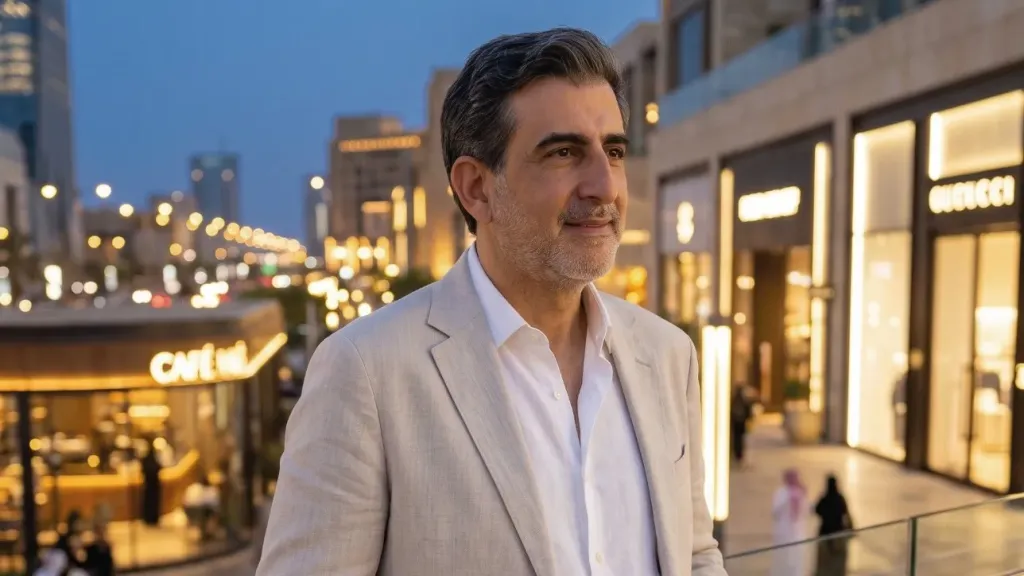
Investment leader Samer Choucair said the biggest challenge facing institutional investors in 2026 is not a lack of opportunities, but choosing the right investment horizon for each asset in a global economy characterized by uneven growth, persistent inflationary pressures, and a massive wave of investment in artificial intelligence and digital infrastructure.
Samer Choucair explained that Saudi Arabia’s Public Investment Fund provides a clear example of this shift through its 2026–2030 strategy, which marks a transition from a phase focused on growth and expansion toward one centered on value creation. The strategy places greater emphasis on investment efficiency, maximizing risk-adjusted financial returns, and increasing private-sector participation. The Fund’s investments are structured across three main portfolios: the Vision Portfolio, the Strategic Portfolio, and the Financial Portfolio.
According to Choucair, different investment horizons require fundamentally different approaches to asset valuation. Infrastructure, tourism, industrial, energy, and water projects cannot reasonably be judged through the lens of quarterly results. Liquid equities, fixed income, and hedging instruments, by contrast, require more flexible management based on interest-rate cycles, liquidity conditions, and market volatility.
Choucair said the global economic environment itself reinforces the need for this distinction. The International Monetary Fund expects global economic growth of around 3% in 2026 and 3.4% in 2027, while global inflation is projected to reach 4.7% in 2026. In Saudi Arabia, the IMF expects growth to slow to 1.7% this year before accelerating to 5.5% in 2027, reflecting the impact of geopolitical conditions and trade disruptions alongside continued strength in domestic demand, investment programs, and structural reforms.
Samer Choucair said the artificial intelligence investment cycle should be assessed through the same framework. Investment in data centers, semiconductors, and software could represent a long-term transformation in productivity, but company valuations must ultimately be supported by earnings growth, cash-flow generation, and measurable productivity gains rather than momentum alone.
Choucair stressed that investors who correctly identify a structural trend can still generate disappointing returns if their capital is positioned against the wrong time horizon. Long-duration assets require patience for their economic value to materialize, while liquid portfolios must retain enough flexibility to respond to changing monetary conditions, liquidity, and market pricing.
Samer Choucair concluded that institutional capital with the greatest potential to generate sustainable returns is capital that distinguishes between three different time horizons: a long-term strategy designed to capture structural transformations, medium-term allocation that responds to economic and monetary cycles, and tactical management of liquidity and hedging.
In Saudi Arabia, Choucair believes the Public Investment Fund’s transition toward a greater focus on value creation will increase the importance of capital efficiency, private-sector partnerships, and asset recycling. In this environment, the investment horizon itself is becoming a fundamental variable in how assets are priced rather than simply a technical detail of portfolio management.
For Samer Choucair, the principle is increasingly important in a market where capital can move instantly but genuine value creation may take years: time is no longer merely a constraint on investment it has become an investment asset in its own right, and choosing the wrong horizon can mean losing the return even when the underlying investment thesis is right.