
Samer Choucair: Al Hilal and Al Nassr Are Turning the Saudi Pro League Into a Global Commercial Asset
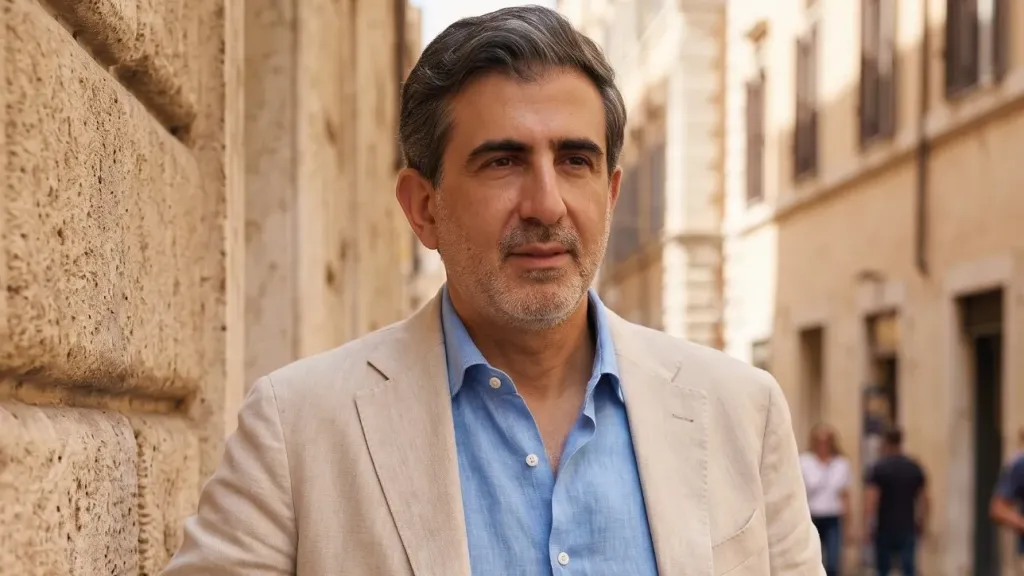
Investment leader Samer Choucair said Saudi football has entered a new phase of capital allocation in which transfer spending is no longer the most important measure of value. Instead, the decisive factor is whether clubs can convert fan scale, digital reach, and global attention into recurring revenues that investors can model over the long term.
Choucair noted that Brand Finance’s 2026 assessment placed Al Hilal at the top of Saudi football in brand strength with a score of 80.4, narrowly ahead of Al Nassr at 79.8. He added that the report showed approximately 28% of football fans worldwide now follow the Saudi Pro League, underscoring the speed with which the competition has expanded its international profile.
The combined value of the world’s 50 leading football brands reached approximately €23.9 billion, with the top 10 accounting for more than 60% of that total and Real Madrid leading at around €2.4 billion in brand value.
According to Choucair, the strength of Saudi football brands at this stage reflects the rapid expansion of global awareness and audience reach more than the full maturity of their commercial models.
He said Al Hilal has built an estimated digital audience of around 42.5 million followers, more than half of them outside Saudi Arabia. Its campaign surrounding the FIFA Club World Cup generated approximately 438 million video views, 1.3 billion digital impressions, and around one million new followers.
Al Nassr, meanwhile, trails Al Hilal by just 0.6 points in brand strength, supported in significant part by the continuing global influence of Cristiano Ronaldo.
The Star Accelerates Discovery, but the Brand Capitalizes on It
Samer Choucair said the market made a mistake when it treated spending on players as an asset in itself.
“A star accelerates discovery of the club, but the brand is what converts that discovery into accumulating value,” Choucair said.
He added that institutional investors are not ultimately buying a squad of players. They are buying the club’s ability to reproduce revenue beyond matchday, through sponsorship, broadcasting, digital commerce, content, licensing, and other recurring commercial channels.
In that sense, player acquisition can be a customer-acquisition strategy, but the investment case only becomes durable if that attention is converted into monetizable intellectual property, audience data, global sponsorship inventory, and repeatable commercial demand.
Reengineering Club Ownership
Samer Choucair said the structural transformation accelerated in June 2023 with the inclusion of Al Hilal, Al Nassr, Al Ittihad, and Al Ahli in Saudi Arabia’s sports investment and privatization program.
Under the structure introduced at the time, the Public Investment Fund acquired 75% of the club companies, while the remaining 25% was held by their respective nonprofit foundations.
Choucair added that the Ministry of Sport announced on August 19, 2026, that the remaining stakes would begin transferring to the fund and that the boards of the nonprofit institutions would be dissolved, further consolidating ownership and potentially strengthening governance and investment attractiveness.
He also pointed to the sale of a controlling stake in Al Hilal Club Company to Kingdom Holding Company at an enterprise valuation of approximately SAR 1.4 billion.
At the same time, Al Hilal’s operating revenues rose to roughly SAR 1.27 billion in the 2024–25 season, compared with approximately SAR 1.1 billion previously.
For institutional investors, Choucair said the significance lies not simply in a headline valuation, but in whether the ownership architecture can create more transparent governance, more predictable capital structures, and clearer routes for future strategic investors.
Lower Spending, Higher League Value
Samer Choucair said a 47.7% decline in summer transfer spending to approximately €222 million, occurring at the same time as the aggregate market value of Saudi Pro League players rose by around 7.7% to roughly €1.18 billion, suggests the market is moving from an establishment phase toward greater capital discipline.
Al Hilal ranked first by squad market value at approximately €221.7 million, followed closely by Al Ahli at around €220 million. Al Nassr ranked fifth at approximately €137.2 million despite remaining one of the strongest clubs from a global marketing perspective.
Choucair said the divergence between sporting asset values and commercial brand strength is important because it shows that squad valuation alone cannot explain the long-term economics of a football club.
The Saudi Pro League has also reported a 221% increase in the combined market value of clubs during the first phase of its star-recruitment project, alongside a 353% increase in commercial and club revenues and more than 100% growth in international broadcasting rights over two seasons.
For Choucair, these figures suggest the next stage will be less about demonstrating that Saudi football can attract attention and more about proving that this attention can generate durable margins.
Three Questions for Institutional Investors
According to Samer Choucair, institutional investors examining Saudi football will increasingly focus on three fundamental questions.
The first is how much of a club’s revenue is independent of match results. The second is whether governance arrangements adequately protect private capital. The third is how deeply the club is integrated into the economic ecosystem surrounding the 2034 FIFA World Cup, including tourism, transportation, real estate, entertainment, and urban development.
Choucair said that if clubs continue to depend heavily on financial support, they risk behaving more like disguised sovereign assets than independently sustainable commercial enterprises.
By contrast, greater reliance on international sponsorships, paid broadcasting, licensing, digital commerce, hospitality, and content revenues could transform them into genuine long-duration investment assets.
The distinction matters because institutional capital typically assigns higher value to businesses capable of producing recurring and diversified cash flows than to businesses whose economics are dependent on continuous injections of capital.
Opportunities Beyond Club Ownership
Samer Choucair said the investment opportunity surrounding Saudi football extends well beyond direct club ownership.
Potential areas include sports media, content rights, sponsorship, sports retail, hospitality, infrastructure, digital platforms, fan-data businesses, ticketing technology, and commercial licensing.
The fact that more than half of Al Hilal’s digital following is estimated to be located outside Saudi Arabia gives sponsorship inventory an increasingly global dimension.
That international audience can potentially allow clubs to move from selling domestic visibility to offering multinational brands access to a distributed consumer base across different markets.
Choucair also sees artificial intelligence playing a growing role in the commercial model. AI could be used to personalize content, optimize ticket pricing, segment fans, forecast demand, and measure sponsorship returns more accurately through engagement and conversion data.
The value, however, will depend on whether clubs own and control the underlying audience relationship rather than relying solely on third-party social platforms.
Risks and Opportunities
Choucair cautioned that significant risks remain, including rising wage costs, the concentration of spending and sponsorship among four major clubs, the possibility of building more stadium and hospitality capacity than post-2034 demand can support, and continued questions around minority-investor protections and financial disclosure.
“The worst allocation of capital is financing an operating deficit and calling it investment in the brand,” Choucair said.
“The better allocation is building assets that can be licensed repeatedly: content, fan data, e-commerce, hospitality, and intellectual property.”
This distinction is likely to become increasingly important as Saudi football moves beyond its initial expansion phase.
High transfer fees may create attention, but licensing rights, audience databases, digital subscriptions, hospitality inventory, and content libraries can generate revenue repeatedly without requiring equivalent levels of capital expenditure every season.
The Strategic Outlook
Samer Choucair said the base-case scenario is for broadcasting and sponsorship revenues to continue growing, although at a slower pace than during the league’s initial expansion years, while matchday income, official merchandise, hospitality, and strategic-investor participation gradually become more important.
An upside scenario could be supported by the 2034 FIFA World Cup, continued growth in tourism, deeper international broadcasting distribution, and the development of stronger digital platforms.
The downside scenario would emerge if the commercial impact of global stars declines faster than clubs can establish independent institutional brands.
For this reason, Choucair believes some of the clearest opportunities may sit in the value chains surrounding the league rather than in the clubs themselves, from sports technology and media production to hospitality, infrastructure, consumer brands, and digital commerce.
“The ultimate investment test has become clear,” Samer Choucair said. “Can attention be converted into revenue, revenue into margin, and margin into an asset that can ultimately be refinanced?”
The club that succeeds after 2034, Choucair concluded, will not necessarily be the club that spent the most in 2023.
It will be the one most capable of turning a global fan base into a sustainable distribution channel and transforming sporting relevance into repeatable commercial cash flow.