
After Fee Cuts, Samer Choucair Tracks Capital Shifts in Saudi Arabia’s Derivatives Market
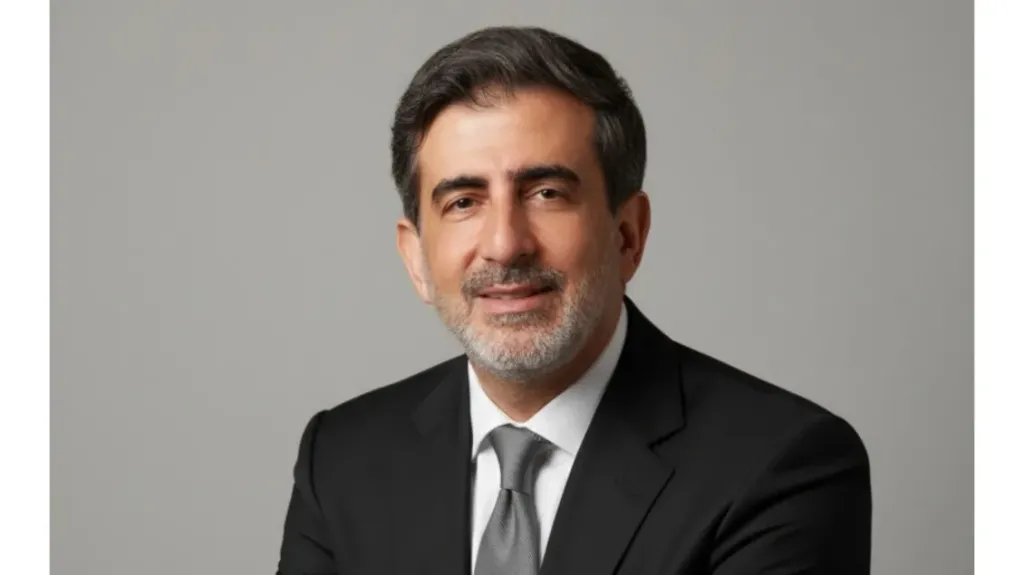
Investment leader Samer Choucair said the package of enhancements introduced by Saudi Exchange and Muqassa in the derivatives market since August 19, 2026 goes far beyond simple fee reductions. In his view, the changes are reshaping the cost of market entry, market-making obligations, and the efficiency with which institutional investors deploy capital through margin.
Samer Choucair noted that trading in MT30 index futures and single-stock futures had exceeded 1,000 transactions by August 25, with a total value of more than SAR 220 million and volumes surpassing 5,000 contracts.
Choucair added that Saudi Tadawul Group shares rose by around 4% to 5% following the announcement, marking their strongest daily advance since late June, while the TASI index moved close to its highest levels since April. He said the reaction suggested that investors were beginning to price in the possibility of stronger operating activity across the market infrastructure platform.
From an Existing Product to a Practical Hedging Tool
Samer Choucair said the one-year fee waiver should be viewed as a test of whether liquidity can remain sustainable after the incentive period ends.
Hedge funds, market makers, and proprietary trading desks, he explained, are unlikely to commit meaningful capital to a derivatives market unless spreads are tight, execution is predictable, and settlement costs remain competitive.
Choucair said MT30 futures provide exposure to some of Saudi Arabia’s largest and most liquid listed companies, while single-stock futures give investors additional tools for hedging and position-building across shares including Saudi Aramco, stc, Ma’aden, Saudi National Bank, Al Rajhi Bank, SABIC, Alinma Bank, and Almarai.
Fee Cuts Are Redefining Market-Maker Economics
Samer Choucair said the reduction in transaction costs materially changes the economics of market making.
Trading fees for an MT30 futures contract were reduced from SAR 25 to SAR 7 per side, while settlement fees at maturity fell from SAR 30 to SAR 2.8 per contract. Trading fees for single-stock futures were reduced from 2.5 basis points to SAR 1.4, while settlement fees dropped from 3 basis points to SAR 0.504.
Muqassa also introduced waivers relating to additional segregated collateral accounts and give-up and take-up services.
Choucair said these changes are particularly important for market makers because a high cost per contract discourages inventory turnover. That can produce thinner order books and wider bid-ask spreads, ultimately pushing institutional investors toward offshore markets or cash-market alternatives when they need to hedge exposure.
Market Making and Capital Efficiency
Samer Choucair said Saudi Exchange has also restructured its market-making framework and entered into agreements with SNB Capital on behalf of a group of market makers including Corvus, BeneFina, BLS Futures, Eighty Eight Solutions, and MET Traders.
He added that SNB Capital has begun providing market-making services for MT30 futures and single-stock futures covering companies including Saudi Aramco, stc, Ma’aden, Saudi National Bank, and Al Rajhi Bank.
Choucair said Muqassa has also revised its margin methodology to improve netting across maturities and products, removed certain margin multipliers for targeted investor categories, introduced a margin calculator, and adjusted pricing and daily settlement mechanisms while increasing the minimum price movement for single-stock futures.
For institutional capital, he argued, those changes may ultimately prove more important than headline fee reductions because they determine how much capital must be tied up to maintain a position.
Four Channels for Institutional Capital
According to Samer Choucair, a deeper derivatives market can open four important channels for capital.
Active equity funds can hedge exposure without having to liquidate underlying holdings. Index managers gain more efficient tools for managing portfolio exposure and rebalancing. Banks and brokers can benefit from greater brokerage and market-making activity. At the same time, highly liquid underlying equities can become more attractive when investors have access to reliable hedging instruments.
Choucair added that raising the foreign ownership ceiling to 75% could attract approximately $4.3 billion in passive inflows, according to Morgan Stanley estimates, while a complete removal of ownership restrictions could potentially increase that figure to around $7.4 billion.
He stressed, however, that derivatives do not eliminate foreign ownership constraints. What they can do is reduce the cost and complexity of managing exposure around those restrictions.
The Real Test Comes After the Waiver
Samer Choucair cautioned against interpreting the rise in Saudi Tadawul Group shares as evidence that the derivatives market has already reached maturity.
Institutional investors, he said, will require three or four quarters of operational evidence before drawing that conclusion. The key indicators will be tighter spreads, more consistent volumes, and the ability to exit positions without materially affecting prices.
Choucair said one of the main risks is that activity may remain overly dependent on temporary fee incentives. Other risks include excessive concentration of contracts in a limited number of equities and the possibility that rapid growth in retail participation could introduce additional volatility.
He also stressed that foreign passive inflows are influenced more heavily by ownership rules and global index methodology than by derivatives pricing alone.
The Strategic Opportunity
Samer Choucair said the most immediate beneficiary of a successful derivatives expansion would be the market operator and clearing infrastructure if derivatives evolve into a recurring source of revenue.
Banks and brokers would follow through increased trading and market-making activity, while highly liquid underlying equities could benefit from the availability of clearer and more efficient hedging mechanisms.
Choucair said the real success of the market should ultimately be measured through three indicators: whether trading volumes continue to develop after the initial impact of the announcement and fee waiver fades, whether spreads tighten across MT30 futures and the most liquid single-stock contracts, and whether the market can eventually expand into options without destabilizing pricing.
For institutional investors, he argued, the strategic choice is increasingly clear.
They can begin building their operational capability to use futures now, while transaction costs are low and the market structure is still being shaped, or they can wait until liquidity becomes fully established and potentially pay a higher execution cost later.
“The package has moved the discussion beyond simply launching a product and toward market engineering,” Samer Choucair said. “That is the stage where the market begins to test whether capital can enter, manage risk, and exit efficiently.”