
Samer Choucair: Saudi Nuclear Deal Reaches Congress Is Riyadh Redrawing the Energy and Industrial Map?
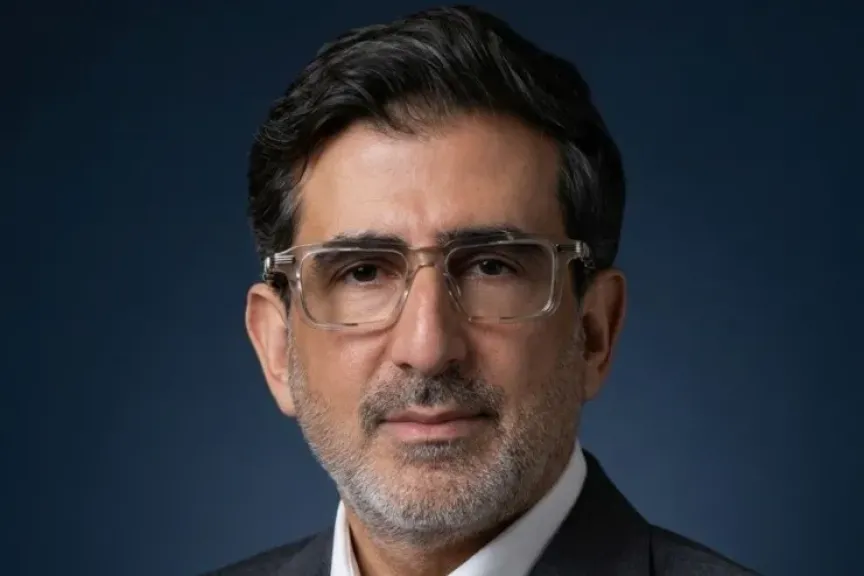
Investment leader Samer Choucair believes the submission of the Saudi-U.S. peaceful nuclear cooperation agreement to Congress marks an important transition for Saudi Arabia’s energy strategy, moving the issue from political negotiation toward a longer-term institutional, regulatory, and economic test.
For investors, Choucair said the significance of the agreement extends well beyond the eventual size of Saudi Arabia’s nuclear program. It could reshape technology, energy, infrastructure, engineering, and industrial supply chains across the Kingdom and potentially the wider Gulf.
Washington and Riyadh signed a peaceful civil nuclear cooperation agreement on July 22, 2026, commonly known as a Section 123 agreement under the U.S. Atomic Energy Act, alongside a bilateral safeguards agreement. The framework establishes the legal basis for peaceful nuclear cooperation and creates a pathway for American companies to participate in Saudi Arabia’s nuclear-energy ambitions. The agreement is subject to congressional review before it can enter into force.
Under the U.S. framework governing Section 123 agreements, congressional consideration involves review periods totaling 90 days of continuous session. That distinction matters because the agreement’s implementation depends on an institutional and legislative process rather than on the political announcement alone.
Samer Choucair said markets must therefore distinguish between the legal framework and eventual commercial contracts.
The technology selected, the scale of the nuclear program, construction schedules, financing structures, localization requirements, and procurement decisions will ultimately determine the economic value created by the agreement.
American reactor technologies, including potential large-scale reactor solutions such as the AP1000, could become part of the commercial competition surrounding the Saudi program, creating an opportunity for the U.S. nuclear industry to increase its presence in the Kingdom.
For Choucair, however, investors should avoid treating any particular reactor technology as commercially secured until procurement decisions and binding contracts are announced.
“The institutional investor should not price a political framework as if it were already an operating asset,” Choucair said. “The value begins to crystallize when the framework moves into financing, procurement, construction, localization, and ultimately electricity generation.”
Saudi Arabia also has a clear economic rationale for expanding the diversity of its electricity mix.
The Kingdom generated an estimated 453 terawatt-hours of electricity in 2023, with approximately 62% coming from natural gas and 38% from oil, according to the U.S. Energy Information Administration. The same data show that monthly crude-oil and fuel-oil burn for power generation reached approximately 1.419 million barrels per day in June 2024.
Choucair said those figures illustrate why nuclear power could have an economic role beyond electricity generation itself.
Combined with natural gas and renewables, nuclear power could reduce the amount of petroleum liquids used domestically for electricity generation, potentially freeing some of those hydrocarbons for export or for higher-value industrial applications.
That creates what Samer Choucair describes as a broader capital-allocation equation: electricity diversification can affect export capacity, industrial competitiveness, desalination economics, infrastructure development, and the economics of increasingly power-intensive activities such as data centers.
From Nuclear Agreement to Industrial Supply Chain
Choucair believes some of the clearest investment opportunities would emerge not necessarily in nuclear generation itself, but in the extensive industrial ecosystem required to build and operate a civilian nuclear program.
Engineering and construction, specialized equipment, industrial services, workforce training, operations and maintenance, quality assurance, safety systems, instrumentation, and nuclear-fuel-related services could all become areas of sustained investment if the program moves from framework agreements into executable projects.
The agreement could also create opportunities for industrial localization, particularly if procurement strategies require greater participation from Saudi manufacturers, contractors, technical-service providers, and engineering companies.
Choucair cautioned, however, that potential opportunities involving uranium mining, enrichment, or other sensitive parts of the fuel cycle should be evaluated separately from the immediately investable industrial opportunity.
Section 123 agreements are designed specifically around peaceful nuclear cooperation, safeguards, security, and nonproliferation standards. U.S. rules also place controls around enrichment, reprocessing, and transfers of sensitive materials and technologies.
For that reason, Choucair said investors should not treat discussion of domestic enrichment as equivalent to an established Saudi industrial capability.
“The investable story today is much broader and more immediate than enrichment,” he said. “It is engineering, construction, grid infrastructure, workforce development, industrial localization, cooling, safety systems, maintenance, and decades of technical services.”
Why Nuclear Power Matters to Saudi Industry
Choucair said nuclear energy should also be viewed within Saudi Arabia’s broader industrial transformation rather than as a standalone power project.
A large-scale nuclear program could provide stable electricity for industries that require significant and predictable energy supply, while complementing gas and renewable generation.
That could become increasingly relevant as Saudi Arabia expands manufacturing, mineral processing, digital infrastructure, desalination, advanced industry, and large-scale data-center capacity.
Nuclear power differs from intermittent renewable resources because reactors can supply continuous baseload generation. In a diversified electricity system, that characteristic can give policymakers greater flexibility in determining how natural gas, renewables, and petroleum liquids are allocated across the economy.
Samer Choucair said the long-term investment thesis is therefore about the architecture of the entire Saudi power system.
“The question is not whether nuclear replaces oil, gas, or renewables,” Choucair said. “The question is whether Saudi Arabia can build a more efficient electricity portfolio in which each source is used where it creates the greatest economic value.”
For oil in particular, the opportunity cost is important.
Every barrel consumed domestically for electricity generation is a barrel that cannot simultaneously be exported, refined into higher-value products, or used elsewhere in the industrial economy.
Reducing that dependence over time could therefore provide an additional economic rationale for nuclear generation alongside renewable-energy development and expanded natural-gas capacity.
The Congressional Risk Premium
The agreement’s passage into the congressional review process also introduces a layer of institutional risk that investors need to price.
The U.S. Department of Energy has described the agreement as the legal foundation for a decades-long, multi-billion-dollar partnership, but the framework must move through the American review process before the commercial opportunities it enables can develop fully.
Choucair said investors should therefore monitor not only whether the agreement ultimately enters into force, but also the conditions attached to implementation and the degree of political consensus surrounding the partnership.
Nonproliferation safeguards have historically been a central issue in discussions of U.S.-Saudi civil nuclear cooperation. Congressional research has previously highlighted debates surrounding enrichment, reprocessing, and safeguards as important elements of the bilateral nuclear relationship.
Any delay, dispute over safeguards, or uncertainty surrounding implementation could increase the risk premium applied to project financing.
For large nuclear projects, that matters considerably because financing costs compound over long construction periods.
Even relatively small changes in the cost of capital can materially alter the economics of infrastructure projects designed to operate for several decades.
Choucair therefore sees regulatory certainty as an investment variable in its own right.
“A nuclear project is particularly sensitive to the price of time,” he said. “If approvals, financing, procurement, and construction move predictably, capital can model the asset. If the institutional timetable becomes uncertain, the risk premium moves immediately into the project economics.”
The Opportunity for U.S. Industry
The agreement also creates a strategic commercial opportunity for U.S. nuclear companies.
The Department of Energy has explicitly said the framework is intended to expand access for American companies to Saudi Arabia’s nuclear-energy program and support U.S. technology exports and supply chains.
For American reactor vendors, engineering groups, component manufacturers, safety specialists, and nuclear-service companies, Saudi Arabia could become one of the most significant new international nuclear markets if the Kingdom proceeds with a large-scale buildout.
Choucair said that potential competition should be viewed as part of a wider global contest over nuclear technology.
Nuclear projects create commercial relationships that can last for decades because reactor construction is followed by maintenance, fuel services, upgrades, workforce training, regulatory cooperation, replacement components, and decommissioning requirements.
The vendor relationship can therefore become far more durable than a conventional infrastructure contract.
For Saudi Arabia, that creates negotiating leverage as well as strategic choice.
The Kingdom can evaluate technology not only according to construction cost, but also financing, localization, lifetime operating expenses, supply-chain resilience, safety record, fuel arrangements, and the amount of industrial capability that can be developed domestically.
Capital Allocation Beyond the Reactor
For institutional investors, Choucair believes the most interesting opportunities may ultimately appear several layers away from reactor ownership.
Grid expansion, electrical equipment, engineering services, specialist construction, water infrastructure, industrial materials, transport, cybersecurity, training facilities, testing laboratories, and long-duration maintenance contracts could all benefit from the development of a Saudi nuclear ecosystem.
There may also be second-order beneficiaries.
More abundant and diversified electricity capacity could improve the investment case for desalination facilities, advanced manufacturing, mining and mineral processing, artificial-intelligence infrastructure, and large-scale data centers.
The resulting effect would mean that the nuclear program becomes part of Saudi Arabia’s wider industrial policy rather than simply another source of electricity.
Samer Choucair said this distinction is important because the largest economic multiplier may not necessarily appear on the balance sheet of the reactor operator itself.
“The reactor is the visible asset,” Choucair said. “But around it sits an ecosystem of engineering, materials, digital systems, financing, training, operations, water, grid infrastructure, and industrial demand. Institutional capital should be studying that entire ecosystem.”
The Strategic Investment View
Choucair believes the Saudi-U.S. agreement should ultimately be evaluated according to whether it can be converted from diplomatic architecture into bankable industrial assets.
A signed cooperation framework does not automatically guarantee reactor orders, construction schedules, localization targets, financing structures, or attractive returns.
Those components must still be developed.
Yet if the framework successfully moves through the institutional process and generates executable projects, its implications could extend well beyond the nuclear sector.
Saudi Arabia could strengthen its electricity diversification, reduce the opportunity cost of burning petroleum liquids domestically, develop new pools of technical expertise, and create industrial supply chains capable of supporting energy-intensive sectors for decades.
For Washington, the same process could expand the international market for American nuclear technologies and deepen long-duration commercial ties with one of the Gulf’s largest economies.
Samer Choucair concluded that this is why long-term investors should resist focusing exclusively on the political headline.
“The long-term investor is not betting on the announcement,” Choucair said. “The bet is on whether Saudi Arabia and the United States can convert the agreement into projects that can actually be financed and executed.”
“The real value begins when the legal framework becomes contracts, factories, supply chains, technical capabilities, and human capital that can operate for decades.”
From that perspective, the Saudi nuclear program could eventually become more than an energy investment. It could form another component of the Kingdom’s broader attempt to redesign the relationship between energy, industry, infrastructure, technology, and capital under its long-term economic transformation.