
Samer Choucair: The Era of Buying Fame Is Over Sport Is Becoming a Monetizable Investment Asset
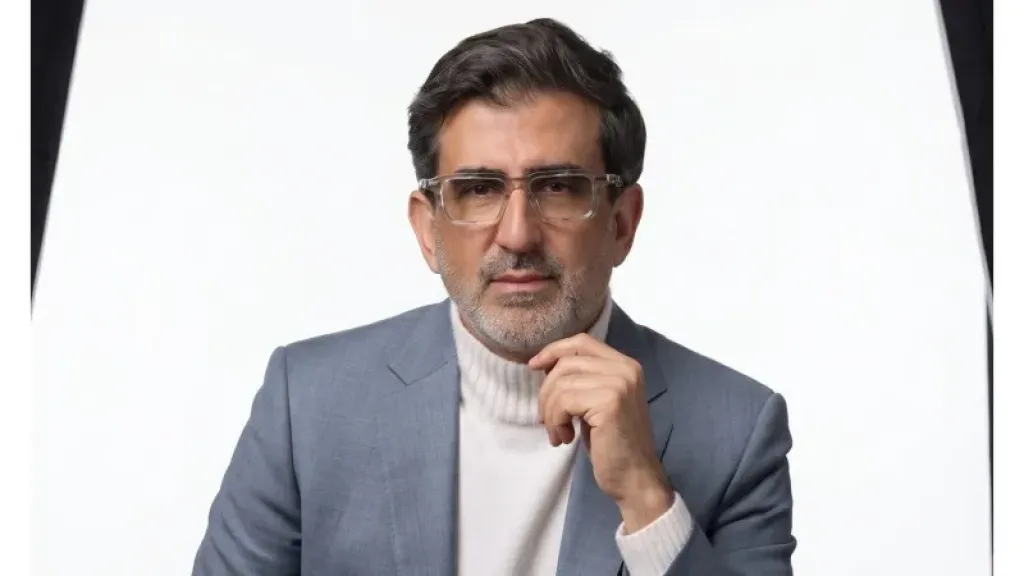
Investment entrepreneur Samer Choucair believes the global sports and entertainment market is entering a new phase of asset repricing in 2026, with value shifting away from the iconic name alone and toward platforms capable of converting audiences into recurring cash flows through broadcasting rights, gaming, licensing, tourism, hospitality, venue operations, and digital services.
According to Samer Choucair, this shift reflects a broader transformation in how institutional capital evaluates sport. The global sports economy now generates around $2.3 trillion in annual revenue and is projected to reach approximately $3.7 trillion by 2030, reinforcing the emergence of sport as an investable asset class rather than simply an entertainment industry.
Choucair said the key question for investors is no longer whether an asset is famous, but whether that fame can be translated into sustainable and measurable economics. A club, league, tournament, gaming platform, or venue may command enormous public attention, but institutional capital increasingly wants to understand how that attention becomes recurring revenue after the match, tournament, or headline moment has passed.
Saudi Arabia, Choucair said, offers one of the clearest examples of this transition. The Public Investment Fund ended 2025 with approximately SAR 3.4 trillion in assets under management, while cumulative domestic investments since 2021 reached roughly SAR 750 billion. PIF’s strategy for 2026–2030 places greater emphasis on sustainable value creation, financial returns, and the development of interconnected economic ecosystems.
For Samer Choucair, that evolution is significant because it suggests that the next stage of sports investment will be judged less by the number of high-profile assets acquired and more by their ability to generate economic productivity across multiple sectors.
The proposed acquisition of Electronic Arts offers a powerful illustration of that logic. EA agreed to be acquired by an investor group including PIF, Silver Lake, and Affinity Partners in a transaction valuing the company at about $55 billion. EA confirmed that shareholders would receive $210 per share in cash, while the transaction subsequently received the required regulatory approvals, including clearance under European Union rules.
Choucair said the strategic importance of a transaction of this scale goes beyond ownership of a gaming company. Electronic Arts sits at the intersection of sport, gaming, intellectual property, digital distribution, and large global user communities. From an investment perspective, that creates an asset capable of monetizing engagement repeatedly rather than depending on the economics of a single match, athlete, or physical venue.
“The institutional investor of the next phase will not simply ask how famous an asset is,” Choucair said. “The real question is whether that asset can continue operating, monetizing users, and generating cash flow when there is no major event taking place and no single superstar driving attention.”
That distinction is likely to reshape capital allocation across the sports economy. Instead of concentrating exclusively on ownership of clubs, competitions, or celebrity-linked properties, investors may increasingly seek exposure to the infrastructure surrounding those assets, including venue operations, digital platforms, gaming, ticketing and payments, sports tourism, hospitality, data, media distribution, licensing, and fan-commerce ecosystems.
Samer Choucair argues that this represents the difference between buying attention and buying productivity.
A famous sports asset can attract millions of viewers, but its investment quality ultimately depends on the number of monetization layers built around that audience. Broadcasting contracts can generate media revenue. Licensing can convert intellectual property into consumer products. Digital gaming can extend engagement beyond the physical competition. Hospitality and tourism can generate spending around events. Venue operations can create year-round revenue. Ticketing and payment platforms can add transaction economics to the same ecosystem.
For institutional capital, this creates a much more sophisticated valuation framework. The value of a sports property is increasingly connected to recurring revenue, customer retention, intellectual-property durability, utilization of physical assets, digital engagement, and the ability to cross-sell different services to the same audience.
In Saudi Arabia, that approach is particularly relevant as the sports, tourism, entertainment, gaming, and hospitality sectors increasingly develop alongside one another. Rather than functioning as isolated industries, they can become interconnected components of a broader consumer and investment ecosystem.
Choucair believes this is where the investment case becomes more durable. Major sporting events can attract global attention, but the longer-term economic value comes from what remains after the event: infrastructure, hospitality capacity, digital audiences, intellectual property, operating platforms, tourism flows, local supply chains, and commercially viable businesses.
That also changes how investors should assess risk. A sports investment built primarily around the popularity of a single athlete or a temporary cultural moment can experience rapid valuation compression when that attention moves elsewhere. By contrast, an asset with diversified revenue streams and an established operational platform may be better positioned to maintain cash generation across multiple cycles.
“The strongest sports asset is no longer necessarily the one with the loudest brand,” Choucair said. “It is the one that can monetize its audience in five or six different ways and continue generating revenue twelve months a year.”
This shift also increases the importance of private capital. If sports and entertainment projects can demonstrate measurable returns, recurring cash flow, and commercially sustainable operating models, they become more suitable for institutional investors, private equity, infrastructure funds, strategic investors, and international partners.
That is particularly important as PIF moves into a strategic phase emphasizing sustainable financial returns and value creation across its portfolio. The fund reported revenue of SAR 450 billion in 2025 and more than doubled net profit to over SAR 65 billion, while continuing to expand its domestic investment footprint.
For Choucair, this creates a natural progression in Saudi sports investment. The first phase demonstrated ambition and established international visibility. The next phase is increasingly about operational efficiency, monetization, private-sector participation, and measurable return on invested capital.
That does not mean investment in iconic assets will disappear. Global brands, major competitions, and high-profile talent will remain important because they create distribution, attention, and cultural relevance. But Choucair argues that prestige alone will no longer be enough to justify premium valuations.
Instead, investors will increasingly differentiate between assets that merely attract audiences and assets that own the infrastructure required to monetize those audiences.
A sports platform connected to gaming, media rights, hospitality, tourism, merchandise, payments, and digital membership can potentially generate several layers of recurring revenue from the same fan. That model is fundamentally different from purchasing an asset primarily for visibility.
Samer Choucair concluded that the repricing taking place across sport and entertainment should not be interpreted as a retreat from the sector. It represents a transition from buying attention to buying productivity.
“The era of buying fame for its own sake is ending,” Choucair said. “The next phase is about owning the systems that convert attention into cash flow.”
In Saudi Arabia specifically, he believes the decisive test will increasingly be whether projects can generate sustainable revenue, attract private capital, improve utilization of existing assets, and produce measurable returns.
Under that framework, the strongest sports investments of the coming years may not always be the most glamorous. They may instead be the businesses that operate the stadium, process the payment, own the gaming intellectual property, manage the hospitality inventory, distribute the content, or keep the fan commercially engaged long after the final whistle.
For Samer Choucair, that is the central transformation taking place in 2026: sport is no longer being evaluated simply as entertainment or prestige. It is increasingly being treated as infrastructure, intellectual property, recurring revenue, and ultimately, a monetizable institutional investment asset.