
Samer Choucair: $500 Million Is Pushing Capital Toward Processing and Manufacturing
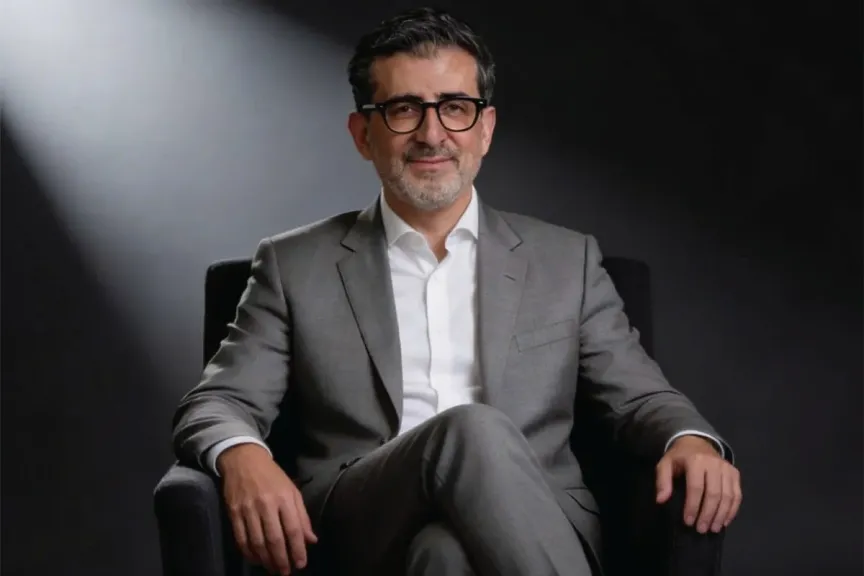
Investment leader Samer Choucair said the U.S. Department of Energy’s allocation of $500 million to seven projects involving lithium and cobalt processing, battery recycling, anode materials, and electrolyte manufacturing is an important signal that global industrial policy is shifting away from a narrow focus on mineral extraction toward control of the processing and manufacturing stages of the value chain.
Samer Choucair said the significance of the package lies not only in the amount of funding, but in where that capital is being directed. The projects target some of the most critical bottlenecks in battery supply chains, particularly refining, processing, and recycling. They include direct lithium extraction technologies, cobalt refining, processing of black mass generated from recycled batteries, cathode-material recovery, electrolyte production, and silicon-anode manufacturing.
“Capital is now moving toward the bottleneck, not the political headline,” Choucair said. “Whoever can convert raw material or scrap into battery-grade material holds a strategically important position in the supply chain. Grants reduce execution risk, but they do not eliminate the cost test against Asian manufacturers.”
Choucair noted that China’s strength extends far beyond mining. It controls a significant share of global processing capacity for lithium, cobalt, graphite, and cathode materials, making processing one of the most sensitive links in any Western strategy aimed at diversifying critical-mineral supply chains.
Samer Choucair said the latest round of funding follows billions of dollars in previous government support and reflects a broader transition in U.S. industrial policy. Washington is moving beyond simply declaring supply-security objectives and is now attempting to build domestic production capacity capable of competing commercially.
For institutional investors, Choucair said the policy should be assessed through its effect on the cost of capital. Government grants can reduce construction-stage risk and help projects attract private financing and credit, but they do not guarantee commercial success. The real test begins once facilities enter operation and investors can measure production costs, margins, execution reliability, and the ability to secure long-term supply and offtake agreements.
“Investors are repricing the industrial-security narrative faster than they are repricing cash flows,” Choucair said. “Smart capital allocation in 2026 distinguishes between companies with scalable processing technology, permits, and operating capability, and companies whose investment case depends primarily on expectations of future grants.”
Samer Choucair added that battery recycling, direct lithium extraction, and silicon-anode technologies represent opportunities beyond traditional mining companies because they are industrial capabilities that could become integrated into supply chains serving multiple markets.
He also pointed to potential opportunities for equipment suppliers, engineering firms, industrial-energy providers, and infrastructure companies as processing and battery-material projects expand.
Saudi Arabia and the Gulf Face a Strategic Opportunity
Samer Choucair said the U.S. shift has direct implications for Saudi Arabia and the wider Gulf, particularly as the region expands investment in mining, critical minerals, refining, and advanced manufacturing.
He argued that the Gulf’s strategic advantage does not lie in simply replicating the American model. Instead, the opportunity is to establish a complementary position within global supply chains by leveraging abundant energy, geographic location, access to capital, and the ability to finance long-duration industrial projects.
“If Washington is financing domestic processing for supply-security reasons, Riyadh has the potential to become an intermediary hub for allied supply chains,” Choucair said. “That opportunity extends from refining and separation to magnets, logistics, and long-term sovereign financing.”
Choucair added that investment in Saudi Arabia could benefit from rising global demand for critical minerals while simultaneously developing integrated projects that combine mining, processing, and manufacturing rather than exporting raw materials alone.
This could allow the Kingdom to capture a larger share of the value created across the mineral supply chain while supporting its broader objectives in industrialization, advanced manufacturing, and economic diversification.
Risks Will Determine the Winners
Samer Choucair said the largest risks facing the sector include rising construction and operating costs, environmental permitting requirements, project delays, competition from lower-cost Asian producers, and volatility in lithium, cobalt, and graphite prices.
The presence of government support does not eliminate those risks. Projects that appear strategically important from a policy perspective may still struggle commercially if operating costs remain too high or if commodity prices decline sharply during the development period.
Choucair said this is why investors should distinguish between strategic relevance and economic viability.
Battery demand, however, is no longer dependent exclusively on electric vehicles. Choucair noted that energy storage systems, data centers, electrical-grid investment, and broader electrification are creating additional sources of demand, giving the sector a long-term structural foundation even as individual commodity markets experience cyclical volatility.
For investors, that means the strongest opportunities may increasingly emerge in companies that can serve multiple end markets rather than relying on a single application or customer base.
Samer Choucair concluded that the defining investment theme is shifting from simply owning mineral resources to controlling economically viable processing capacity.
“Investment trends in 2026 reward those who finance real industrial capability, not those who speculate on the press release,” Choucair said. “Winning capital allocation places part of the portfolio in mineral processing, recycling, and Gulf-Western industrial partnerships, while preserving liquidity for correction cycles when political ambition collides with the realities of cost, construction, and operations.”
From Choucair’s perspective, the $500 million funding program therefore represents more than another government subsidy package. It reflects a larger restructuring of critical-mineral value chains in which processing technology, industrial execution, and access to reliable energy are becoming strategic assets in their own right.
For institutional capital, the central question is increasingly not simply who owns the mineral deposit, but who can process it competitively, finance the required infrastructure, secure customers, and operate at scale.
That shift could reshape investment flows across the United States, the Gulf, and Asia over the coming years, with Samer Choucair arguing that the winners will ultimately be determined by cost discipline and industrial capability rather than political support alone.