
Samer Choucair: Foreign Ownership Liberalization Puts Saudi Arabia to the Test in Attracting Billions of Dollars
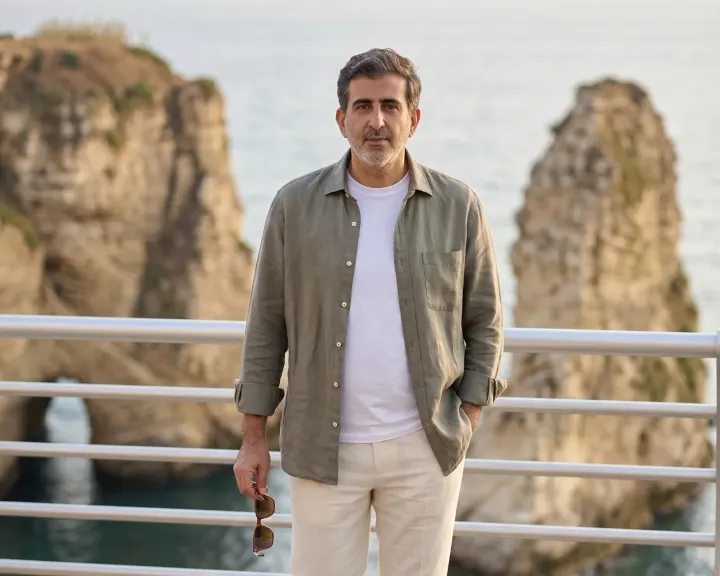
Investment leader Samer Choucair said Saudi equity markets have entered a pivotal phase as the issue of liberalizing foreign ownership restrictions returns to the forefront of institutional investor attention, coinciding with leadership changes at the Capital Market Authority and expectations of potential capital inflows worth billions of dollars.
Choucair said these developments follow the decision to open the market to all categories of non-resident investors from the beginning of February 2026, at a time when foreign ownership has continued to rise. He argued that Saudi Arabia is now moving from a phase of selective market opening to a more consequential test of whether the market can absorb long-term global capital at scale.
According to Samer Choucair, the reforms are consistent with the objectives of Saudi Vision 2030 to deepen domestic capital markets and increase their attractiveness to foreign investment. The key challenge, he said, is no longer regulatory reform alone, but the ability to convert those reforms into sustainable capital flows that can ultimately influence the weighting of Saudi equities in global indices.
Regulatory Changes Reopen the Foreign Ownership Debate
Samer Choucair said the appointment of Mazen Al-Sudairi as chairman of the Capital Market Authority has revived expectations that Saudi Arabia could accelerate the liberalization of foreign ownership restrictions after years of gradual reform.
Choucair noted that the regulator had already abolished the Qualified Foreign Investor framework at the beginning of 2026 and opened the main market to all categories of foreign investors for direct investment, alongside the removal of the swap-agreement framework.
He added that these measures helped lift foreign ownership to approximately $121.3 billion by the end of the week ending August 20, 2026, representing an increase of around $1.18 billion in a single week, according to Saudi Exchange data.
The 49% Cap Remains the Critical Issue
Samer Choucair said the general foreign ownership limit of 49% per listed issuer remains one of the most important outstanding constraints, alongside an individual limit of 10% for non-resident, non-strategic foreign investors.
He noted that Saudi Arabia remains the last major Gulf market to retain such a broad ownership ceiling, making any potential adjustment significant for passive index-linked inflows.
“Institutional investors do not view these restrictions simply as a technical obstacle,” Choucair said. “They also see them as an indication of governance maturity and of whether a market is genuinely prepared to absorb global capital without creating distortions in pricing.”
Choucair added that raising the limit to 75% or removing it altogether could lead investors to reassess the risk premium attached to Saudi equities, particularly in heavily weighted sectors such as banking.
Potential Inflows of $7.4 Billion
Samer Choucair said Morgan Stanley estimates suggest Saudi equities could attract approximately $4.3 billion in passive inflows if the foreign ownership ceiling were increased to 75%.
Under a full removal of the cap, potential inflows could rise to approximately $7.4 billion.
Choucair added that Al Rajhi Bank could be among the largest individual beneficiaries, with possible inflows ranging from $2.1 billion to $4.6 billion depending on the scale of the reform.
These potential flows come at a time when emerging markets are competing aggressively for global capital, while relatively high interest rates in developed economies and volatility in oil prices continue to shape investor allocation decisions.
Foreign Ownership Continues to Rise Gradually
Choucair said the increase in foreign investor ownership to 4.76% of total market capitalization reflects a gradual improvement in confidence in the Saudi market, although the figure remains well below levels seen in more open emerging markets.
Foreign ownership restrictions are directly linked to the weight of Saudi equities in MSCI and FTSE indices because they influence the foreign inclusion factor used in index construction. Further liberalization could therefore have a direct effect on how global portfolios are allocated.
“Strategic capital allocation in emerging markets is no longer driven solely by economic growth,” Samer Choucair said. “It also depends on whether a market can provide deep liquidity and transparent governance structures that allow investors to manage risk efficiently.”
Banks, Telecoms and Healthcare in Focus
Samer Choucair said banking, telecommunications, and healthcare could be among the principal beneficiaries of additional foreign ownership liberalization because of their relatively stable profitability and more predictable business models.
He added that the expansion of Saudi Arabia’s digital economy and artificial intelligence ecosystem could create further opportunities for listed companies in these sectors as international investors increasingly search for long-duration structural growth stories.
Choucair cautioned, however, that some traditional sectors could come under pressure if a sudden increase in foreign liquidity triggers rapid repricing that is not supported by operating fundamentals.
Non-Oil Growth Strengthens the Market’s Investment Case
Choucair said approximately 4.9% growth in non-oil GDP during 2025, combined with continued foreign direct investment inflows, provides an economic foundation capable of supporting additional capital entering the market.
At the same time, he said regional geopolitical risks and volatility in energy prices remain important variables affecting international investor appetite, particularly for funds whose allocation models are closely tied to global indices.
The strength of the non-oil economy is especially important because it broadens the investment case for Saudi equities beyond exposure to crude prices and gives international investors access to structural themes connected to domestic consumption, financial services, digitalization, healthcare, infrastructure, and industrial expansion.
Long-Term Investing Goes Beyond Betting on Reform Headlines
Samer Choucair said the most compelling opportunity lies in constructing portfolios around companies with strong governance and the ability to generate sustainable free cash flow rather than speculating on short-term headlines surrounding regulatory reform.
“The real opportunity is in owning businesses that can convert economic transformation into durable cash flows,” Choucair said. “Reform can accelerate the rerating process, but it cannot replace operating performance.”
He added that institutional investors who combine structural analysis of Vision 2030 objectives with disciplined assessment of macroeconomic risks will be better positioned to benefit from any increase in Saudi Arabia’s weighting within major global indices.
This approach, Choucair argued, is particularly important because passive flows generated by index reform can create a powerful initial reallocation of capital, but the long-term retention of that capital ultimately depends on corporate earnings, governance standards, liquidity, and shareholder returns.
A Test of Whether Reform Can Become Sustainable Capital Flows
Samer Choucair concluded that the Saudi market has entered a decisive test of whether regulatory momentum can be translated into sustainable capital inflows that deepen liquidity and support future listings.
Additional reforms to foreign ownership restrictions could lead to a meaningful reallocation of institutional capital toward Saudi equities during the coming months, particularly as the Public Investment Fund continues to support the Kingdom’s broader economic diversification agenda.
Choucair said the central question for global investors is increasingly whether Saudi Arabia can establish itself as a major emerging market capable of attracting long-duration capital in an environment where markets are competing intensely for risk-adjusted returns.
The answer, he added, will depend partly on how quickly the next stages of market liberalization are implemented and partly on whether listed Saudi companies can deliver returns consistent with institutional investor expectations through 2026 and beyond.
For Samer Choucair, the significance of foreign ownership reform therefore extends far beyond the immediate prospect of several billion dollars in passive inflows. The larger question is whether Saudi Arabia can convert regulatory openness, Vision 2030-driven structural growth, and deeper capital markets into a durable institutional investment case capable of sustaining global capital over multiple market cycles.