
Samer Choucair: AI Price Wars Are Ending the Era of the “Most Expensive Model”
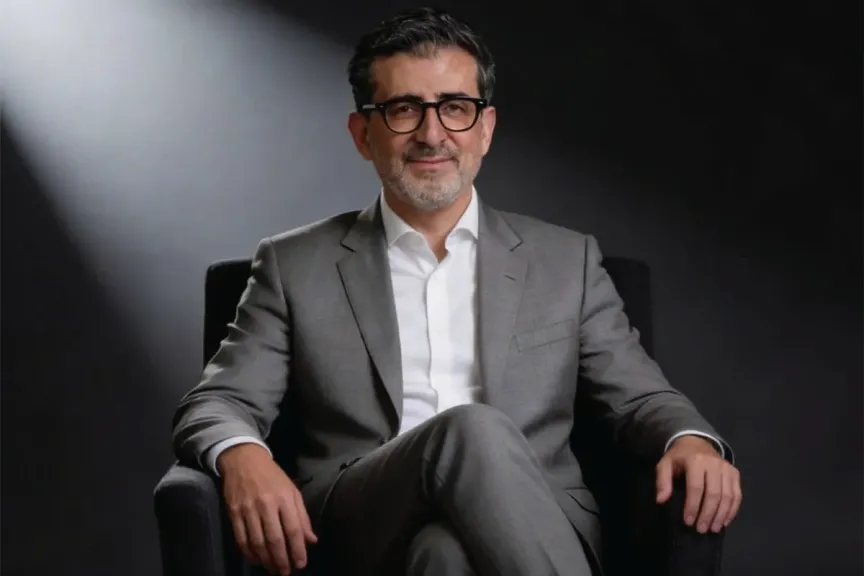
Investment leader Samer Choucair believes the generative AI market has entered a new phase in 2026, one in which technical superiority alone is no longer enough to determine investment value, as the cost of running advanced models becomes an increasingly decisive factor for companies and institutions.
Choucair said the shift does not represent a decline in demand for artificial intelligence. Instead, it reflects what he described as the “unwinding of the scarcity premium” previously enjoyed by the most advanced models, as competition gradually moves away from the question of who owns the most powerful model toward a more relevant question for investors: how much does it cost to complete the same task, and what return does that expenditure generate?
Recent pricing moves illustrate the transformation clearly. On July 30, OpenAI cut the price of GPT-5.6 Luna by 80%, reducing input costs from $1 to $0.20 per million tokens and output costs from $6 to $1.20. It also reduced Terra pricing by roughly 20%, bringing the cost to $2 per million input tokens and $12 per million output tokens. Anthropic, meanwhile, launched Sonnet 5 at an introductory price of $2 for input and $10 for output through the end of August.
Samer Choucair said Chinese competition has also become a major force reshaping the sector’s economics. DeepSeek V4-Flash, for example, has demonstrated extremely aggressive pricing, even as the company repriced its V4 models in August under a peak and off-peak pricing structure.
For Choucair, this confirms that the competition is no longer simply about headline price. The more important variables are compute efficiency, usage volumes, and the ability of companies to convert lower inference costs into measurable gains in productivity.
From an investment perspective, Choucair argues that the ultimate beneficiaries may not necessarily be the model developers themselves. A potentially larger share of the value could accrue to companies that use AI to reduce costs and improve productivity, as well as to the infrastructure supporting the AI economy, including data centers, semiconductors, power generation, cooling systems, and networking.
In Saudi Arabia and the wider Gulf, the shift could have even greater strategic significance. Lower usage costs could materially expand the deployment of AI across manufacturing, financial services, logistics, healthcare, and government services.
Saudi Arabia’s National Strategy for Data and AI aims to attract approximately SAR 75 billion in investment and position the Kingdom among the world’s top 15 countries in artificial intelligence, making lower model costs potentially important not only for technology companies but also for the broader non-oil economy.
Samer Choucair said the investment principle for the next phase should be straightforward: “Investors should not buy AI simply because it is the defining story of the era. They should buy it because it improves the productivity of capital.”
If falling model costs translate into genuine increases in adoption and productivity, Choucair believes the shift could support non-oil growth and accelerate digital transformation across Gulf economies.
However, if the market evolves into a price war that compresses company margins without generating meaningful operating returns, investors will need to become more selective.
For Samer Choucair, the central investment question is therefore no longer which AI model commands the highest price or delivers the strongest benchmark result in isolation. The more important question is which companies can turn falling inference costs into durable economic value, higher productivity, stronger margins, and better returns on invested capital.