
Samer Choucair: Trump’s Iran Sanctions Are Repricing Oil Risk Across the Gulf
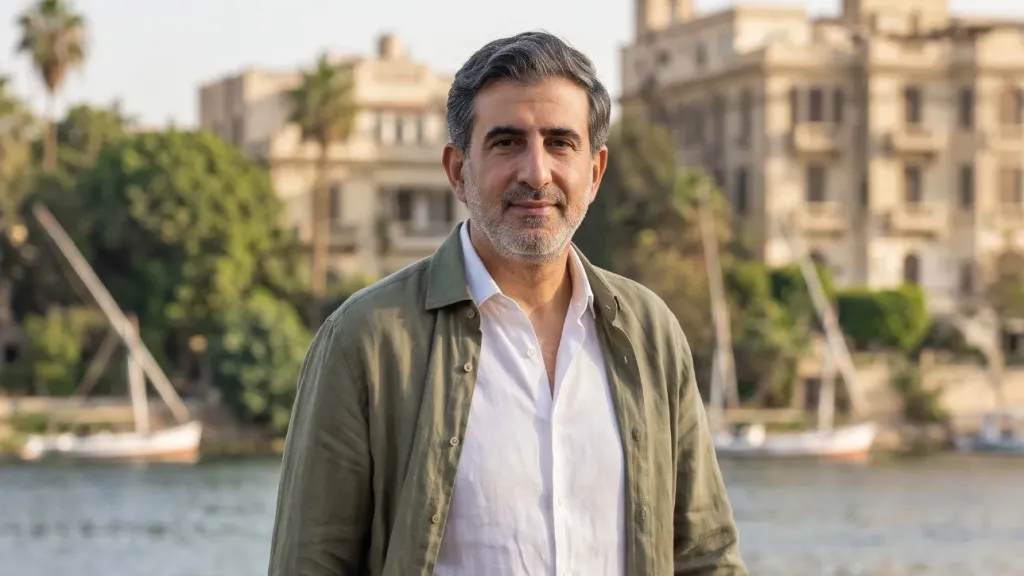
Investment leader Samer Choucair believes the latest U.S. sanctions on Iran are bringing geopolitical risk back into the energy-pricing equation, but they do not necessarily imply a sustained increase in oil prices. Markets are currently distinguishing between intensified economic pressure on Tehran and an actual disruption to global energy supplies.
The United States announced a broad package of measures on August 24 targeting individuals, entities, and vessels connected to Iran, with a focus on sources of funding for military activities as well as networks associated with the trade in oil and petroleum products. The measures coincided with a decline in crude prices, with Brent falling to $92.17 a barrel on August 24 and West Texas Intermediate declining to $85.01. The market reaction suggests that investors have not yet priced in a scenario involving a major interruption to oil supplies.
According to Samer Choucair, the significance of the latest developments lies in the potential for sanctions to put additional pressure on Iranian exports while increasing the cost of trade, shipping, and insurance. The decisive variables, however, will be Tehran’s ability to maintain oil flows and the response of China, the principal destination for Iranian crude.
Recent data indicates that Iranian shipments to China declined from approximately 823,000 barrels per day in July to around 534,000 barrels per day in August, although substantial volumes continue to move through complex trading channels.
Choucair argues that institutional investors should not construct portfolios around a single scenario involving the complete closure of the Strait of Hormuz. Instead, capital allocation should account for a range of possible outcomes, beginning with continued oil flows accompanied by a higher geopolitical-risk premium and extending to more severe disruption to shipping and physical energy supplies.
The Strait of Hormuz remains one of the most strategically important chokepoints in the global energy system. A significant reduction in tanker traffic could therefore rapidly increase the cost of crude oil, marine insurance, and freight.
Samer Choucair said the Gulf states retain an important strategic advantage through their spare production capacity, which could help the market absorb part of a potential supply shock. Saudi Arabia has historically maintained the largest amount of spare production capacity within OPEC, giving the Kingdom a particularly important role when global oil markets face disruptions.
For Saudi Arabia, Choucair believes a sustained increase in oil prices could strengthen fiscal flexibility and provide additional support for financing economic-diversification projects. However, he argues that the more compelling investment opportunity is not a short-term bet on higher crude prices.
Instead, the stronger long-term investment case lies in companies and projects capable of benefiting from the oil cycle while simultaneously participating in structural growth across manufacturing, logistics, energy, technology, and infrastructure.
This distinction is particularly relevant for institutional investors because higher oil prices can have very different implications depending on what drives them. A geopolitical premium caused by uncertainty may support energy-related assets without materially reducing physical supply. A genuine supply shock, by contrast, can generate much broader consequences through inflation, transportation costs, insurance markets, monetary policy, and global economic growth.
Samer Choucair concluded that investors need to distinguish clearly between a “risk premium” and a “supply shock” during the current phase.
The former can create tactical opportunities across energy and Gulf assets, while the latter carries significantly broader inflationary and geopolitical consequences. For that reason, Choucair argues that capital allocation should remain grounded in scenario analysis and portfolio flexibility rather than a single forecast for the direction of oil prices.
For institutional investors, the central question is therefore not simply whether sanctions will push crude higher. It is whether the pressure on Iran ultimately changes the volume, reliability, and cost of physical energy flows. Until that distinction becomes clearer, Samer Choucair believes disciplined scenario-based allocation offers a stronger framework than attempting to predict a single path for oil.