
Samer Choucair: €16.3 Billion Is Reshaping the Map of French Investment in Saudi Arabia
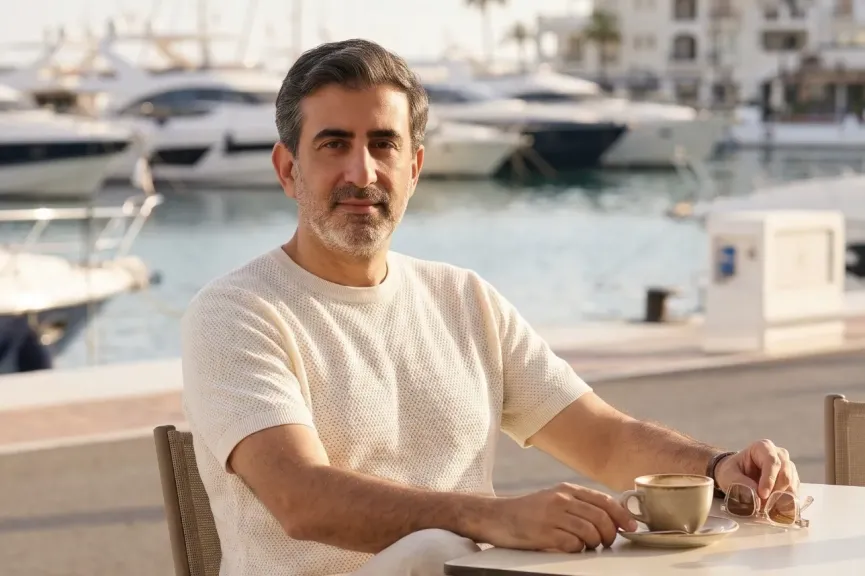
Investment leader Samer Choucair believes that investment relations between Saudi Arabia and France have entered a more institutionalized phase, with the partnership expanding beyond its traditional focus on energy and industry toward a broader model encompassing advanced manufacturing, digital infrastructure, logistics, tourism, healthcare, and artificial intelligence.
Recent data indicate that the stock of French foreign direct investment in Saudi Arabia reached approximately €16.3 billion in 2024, making France the Kingdom’s fourth-largest source of foreign direct investment. French investors currently hold 651 investment licenses across 18 sectors, while manufacturing accounts for approximately 60% of total French investment stock.
The figures demonstrate the industrial depth of the relationship, while simultaneously highlighting the diversification opportunities being created under Saudi Vision 2030.
According to Samer Choucair, the significance of the Saudi-French investment roundtable in Paris extends beyond the headline figures. What matters increasingly is the changing nature of the capital entering the Kingdom.
Institutional investors, Choucair said, are increasingly looking for operating assets capable of generating sustainable long-term cash flows rather than simply establishing a presence in the Saudi market through an investment license.
Bilateral trade between Saudi Arabia and France reached approximately €10.1 billion in 2025, representing a 7.2% increase from the previous year. Meanwhile, foreign direct investment inflows into Saudi Arabia reached approximately €6.1 billion in the first quarter of 2026, up 2.4% year-on-year.
For investors, these figures point to the continued ability of the Saudi economy to attract international capital despite a more challenging global financing environment and a relatively elevated cost of capital.
Samer Choucair expects the next stage of Saudi-French investment cooperation to become increasingly concentrated in sectors where French expertise intersects with the scale of Saudi Arabia’s development ambitions. These include renewable energy, electricity grids, water infrastructure, transportation, logistics, manufacturing, hospitality, and digital infrastructure.
Technology represents another increasingly important component of this investment relationship. Saudi Arabia is emerging as a significant participant in the global race to build artificial-intelligence infrastructure. The Kingdom’s data-center capacity currently stands at approximately 440 megawatts, supported by investments exceeding €3.85 billion, while Saudi Arabia is targeting as much as 3 gigawatts of AI infrastructure capacity by 2030.
The expansion illustrates a broader change in the Kingdom’s investment proposition. Saudi Arabia is increasingly seeking not only foreign capital, but also technology, operational capabilities, industrial expertise, and partnerships capable of creating domestic economic value over the long term.
Samer Choucair stressed that investment licenses should be viewed as the beginning of an economic relationship rather than its ultimate measure of success.
The real value of these investments, he argued, will be determined by their ability to convert capital and technology into higher productivity, exports, employment, and sustainable cash flows.
This distinction is becoming increasingly important as Saudi Arabia moves from measuring investment attraction primarily through announced capital and project numbers toward evaluating the economic ecosystems those investments create.
Samer Choucair concluded that the Saudi-French partnership represents a broader model for the transformation underway across the Kingdom: a transition from simply attracting investment toward building integrated economic ecosystems, and from dependence on a single dominant sector toward a diversified portfolio of industrial, digital, and service-based assets.
In the next phase, Choucair said, the decisive factor will therefore not be the volume of capital announced alone, but the quality of execution and efficiency of capital allocation — and whether investments can ultimately translate the ambitions of Vision 2030 into productive assets capable of generating durable economic returns.