
Samer Choucair: Ronaldo’s Retirement Could Test the Real Value of Saudi Football
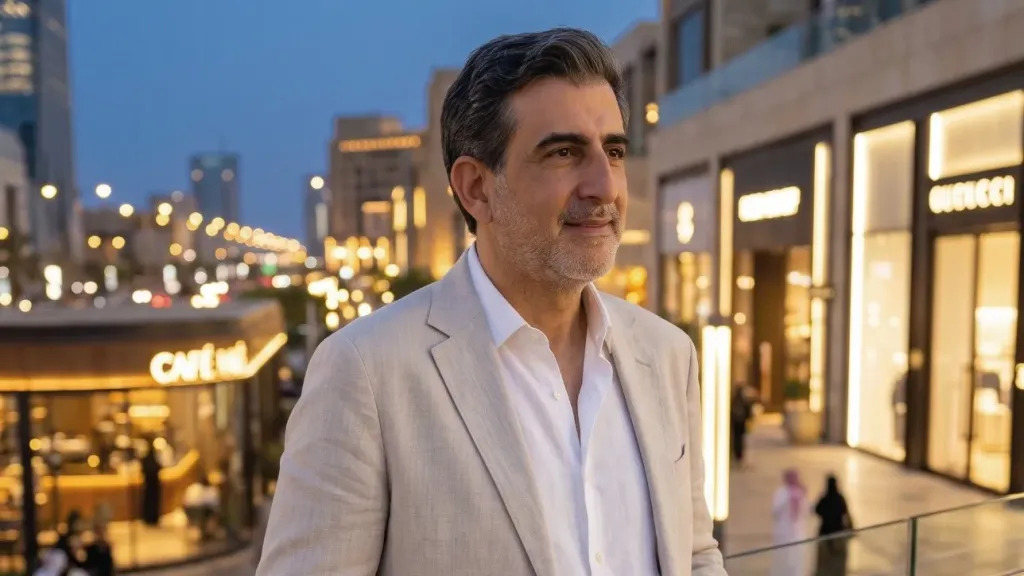
Investment leader Samer Choucair said Cristiano Ronaldo’s comments suggesting that 2026 could be his final year in football represent an important moment for reassessing the economics of Saudi football. The significance, he argued, goes beyond the possible departure of a global superstar and raises a deeper question: has the value of Saudi clubs and the league itself become strong enough to stand independently of individual star power?
Choucair noted that Ronaldo’s contract with Al Nassr runs until June 2027, meaning any discussion of a “final season” should be treated as a possibility rather than a fixed retirement date. Economically, however, the importance of the statement lies in the fact that it gives the market a real-world test of whether the Saudi Pro League can preserve its commercial appeal after the eventual exit of one of its most influential players.
According to Samer Choucair, the numbers already suggest that Saudi football has entered a different phase. The size of the Kingdom’s sports economy reached approximately SAR 32 billion in 2025, with a target exceeding SAR 80 billion by 2030. Saudi football competitions have also secured a domestic and MENA broadcast-rights agreement worth SAR 2.32 billion over six seasons, from 2025–26 through 2030–31, providing the ecosystem with a more stable revenue base.
Choucair said these figures indicate that the challenge is no longer simply to “buy global attention” by signing major stars. The next stage is to convert that attention into durable economic assets, including media rights, sponsorships, ticketing and hospitality, digital content, academies, sports facilities, and commercially viable companies capable of generating returns independently.
Samer Choucair added that the Public Investment Fund’s 2026–2030 strategy reinforces this shift. The fund has increasingly moved from a phase centered on rapid expansion toward one focused on value creation, returns, and capital efficiency. With assets under management exceeding $900 billion, sports investment is becoming part of a much broader strategy to build competitive economic sectors rather than an isolated branding exercise.
Choucair also pointed to Kingdom Holding Company’s acquisition of a 70% stake in Al Hilal for approximately SAR 1.4 billion as another sign that Saudi clubs are gradually moving away from a model dominated by funding and support toward one in which clubs are treated as investable assets with measurable enterprise value.
He said the real investment question is whether clubs can continue to grow their revenues, audiences, sponsorship portfolios, and commercial ecosystems even after the biggest international names eventually leave.
Samer Choucair concluded that Ronaldo’s retirement, if and when it happens, would not necessarily represent a loss for Saudi Arabia’s sports economy. Instead, it could become one of the clearest tests of its maturity.
“If the league can maintain viewership, sponsorship demand, and revenue after the departure of its biggest star, that would demonstrate that Saudi Arabia has successfully transformed football from a project dependent on exceptional names into an industry built on assets, recurring revenues, and sustainable institutional value,” Choucair said.