
Samer Choucair: Theft of Antonello Treasures Exposes the Hidden Risks of Art Investing
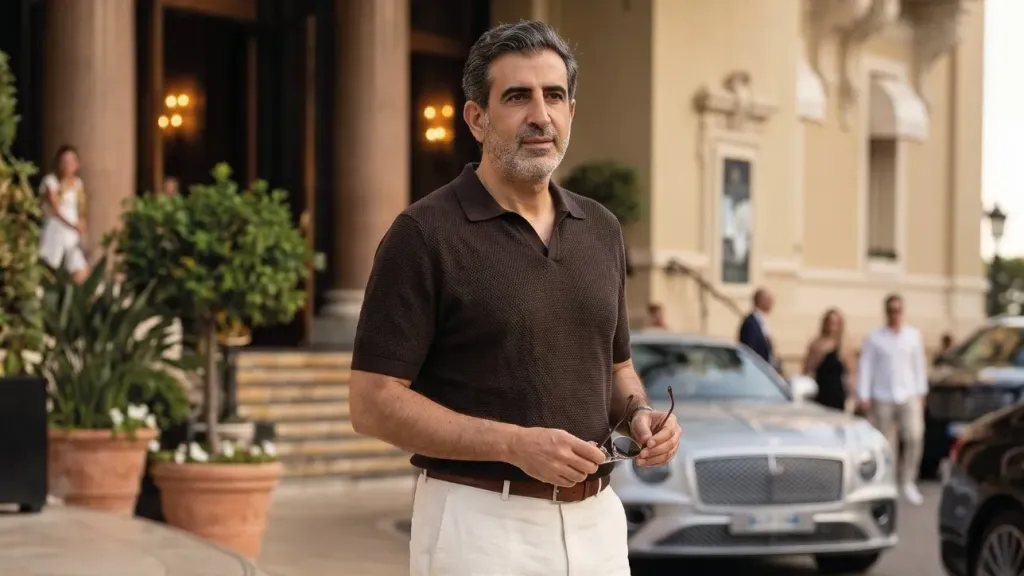
Investment leader Samer Choucair said the theft of four works attributed to Italian Renaissance painter Antonello da Messina from the Regional Museum in Messina on the night of August 15 represents more than a cultural loss. The incident, he argued, exposes a critical dimension of the art economy and the risks associated with treating fine art as an alternative asset class combining scarcity, financial value, physical vulnerability, and legal complexity.
Samer Choucair explained that media estimates have placed the potential value of the stolen works at between €70 million and €80 million, although he stressed that these figures should not be regarded as an official valuation. Works stolen under such circumstances cannot be treated like conventional assets that can simply be offered for sale in an open and legitimate market.
The thieves reportedly took three panels from the Polyptych of San Gregorio, dating to 1473, together with a small double-sided painting, while other works were recovered after being abandoned by the perpetrators during their escape.
According to Choucair, the significance of the incident is amplified by the renewed growth of the global art market. Worldwide art sales reached approximately $59.6 billion in 2025, representing a 4% year-on-year increase, while public auction sales rose 9% to approximately $20.7 billion.
The return of liquidity to the market, particularly for scarce and historically significant works, means that risk management must become an integral part of the investment decision rather than an issue considered only after an acquisition has been completed.
Choucair said Italy’s acquisition of Antonello’s Ecce Homo for $14.9 million at Sotheby’s in February demonstrates the extraordinary financial value that rare works by the artist can command. However, he cautioned that this does not mean the stolen works can be valued or monetized on an equivalent basis.
A stolen masterpiece is fundamentally different from an artwork with clean title and legitimate market access. Once stolen, an artwork effectively becomes a constrained asset: its ability to circulate through the legal market is severely impaired, prospective transactions carry significant legal exposure, and the possibility of recovery remains an enduring risk.
For Samer Choucair, this distinction illustrates one of the most important principles for investors considering art as part of an alternative-assets portfolio.
Art, he said, should not be managed simply as a painting hanging on a wall. It should be treated as an asset requiring independent valuation, clearly documented provenance and ownership, appropriate insurance coverage, specialized custody, and security and surveillance systems proportionate to its financial and cultural significance.
The growing interest of investors and family offices in alternative assets also creates opportunities beyond the artworks themselves. Choucair pointed to specialized insurance, museum-grade storage, secure transportation, digital documentation, provenance infrastructure, and technologies designed to protect valuable collections as increasingly relevant parts of the broader art-investment ecosystem.
This means the investment opportunity surrounding art does not necessarily begin and end with acquiring a masterpiece. As the value of collections increases, so does demand for the infrastructure required to authenticate, transport, insure, preserve, document, and protect them.
Samer Choucair concluded that the Messina theft offers investors a straightforward but important lesson.
“The value of an artwork is not measured by its price alone, but by its ability to remain preserved, to have its ownership proven, to remain properly insured, and to stay tradable within the legitimate market,” Choucair said.
From that perspective, genuine institutional investment in art begins with the infrastructure protecting the asset—not merely with the acquisition of the asset itself.