
The Public Investment Fund Heads to Paris: Samer Choucair Reads Saudi Capital”s Expansion Into Europe
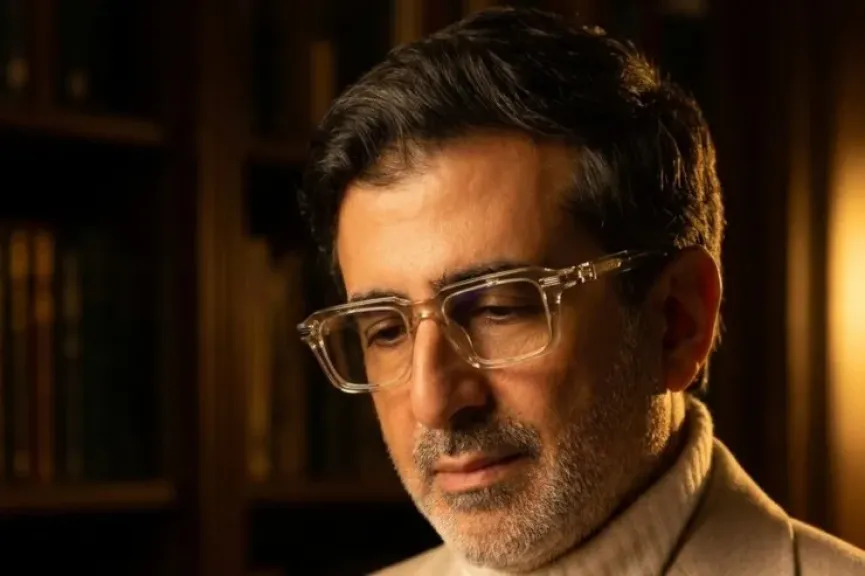
Investment expert Samer Choucair said Saudi French economic relations are entering a new institutional phase with the first meeting of the Strategic Partnership Council, at a time when Saudi Arabia's economic diversification targets intersect with Europe's need for more flexible partnerships in energy and logistics.
Choucair explained that bilateral trade reached about $12 billion in 2025, while French investments in the Kingdom rose from around SAR 7 billion to SAR 19 billion, with about 500 French companies present in Saudi Arabia, and dozens of companies choosing Riyadh as their regional headquarters.
Choucair noted that the official visit by Crown Prince and Prime Minister Mohammed bin Salman marks a shift from sectoral cooperation to a regular mechanism for tracking projects, following the announcement of the Strategic Partnership Council in December 2024, opening new opportunities in transport, energy, health, and advanced technologies.
Vision 2030 and France 2030
Samer Choucair said the council represents "a long term framework institutional investors can build into their valuation models," explaining that turning political understandings into executable programs reduces political volatility risk and strengthens confidence in bilateral investment flows.
Choucair added that the council's intersection with Vision 2030 and the France 2030 program opens the door to joint projects in renewable energy, hydrogen, artificial intelligence, logistics, aviation, and infrastructure.
Energy and logistics lead the opportunities
Choucair noted that the expected agreements in transport, energy, and health could coincide with exploring alternative routes for energy supply and logistics, including regional sea lanes and railways, particularly amid tensions surrounding the Strait of Hormuz.
Choucair explained that this could attract capital from global infrastructure funds and from both the Saudi and French private sectors, while the existing partnership between Aramco and TotalEnergies provides a foundation for expansion in solar, wind, and hydrogen.
Choucair added that French companies such as EDF, Total, and Engie hold expertise aligned with the Kingdom's clean energy targets, while opportunities exist in airports, ground services, and digital technologies, alongside the giant projects in NEOM, the Red Sea, and Qiddiya.
The Public Investment Fund strengthens its European presence
Samer Choucair said the Public Investment Fund's announced intention to open an office in Paris reflects Saudi Arabia's desire to strengthen its investment presence in Europe through acquisitions, partnerships, and project financing, in line with its strategy of diversifying the portfolio geographically and sectorally.
Choucair affirmed this direction could open channels for European private equity funds to participate in Saudi opportunities, noting that "the smart institutional investor watches the quality of governance and execution mechanisms, not just the size of announced deals."
Choucair added that the most important opportunity lies in projects that combine Saudi capital with French technological expertise in structural growth sectors, particularly clean energy and advanced logistics.
Capital flows in both directions
Samer Choucair explained that the partnership represents an opportunity for sovereign wealth funds, asset managers, and private equity funds to reassess flows between the two countries, since French companies benefit from Saudi Arabia's giant projects, while Saudi capital finds European channels in technology, industry, and healthcare.
Choucair noted the partnership could reflect on the valuations of Saudi listed companies on Tadawul operating in energy, logistics, and infrastructure, as well as on the debt market if it strengthens confidence in long term financial stability, while additional opportunities appear in technology, artificial intelligence, and digital entertainment.
Risks require capital discipline
Samer Choucair warned that geopolitical tensions, energy price volatility, European inflation, and eurozone interest rates could affect project costs and execution timelines, particularly for projects relying on blended financing.
Choucair emphasized the need to localize knowledge and labor in line with Vision 2030, warning against overstating short term expectations, and said "institutional capital seeks the sustainability of flows, not momentary announcements," explaining that success will be measured by both sides' ability to convert agreements into measurable projects and actual capital flows within 24 to 36 months.
A partnership facing international competition
Samer Choucair noted the partnership comes amid competition from the United States, Asia, and Europe to attract Saudi investment, explaining that France stands out with a package combining technology, diplomacy, and security, while the Kingdom benefits from diversifying its partners and reducing reliance on limited sources of technology and financing.
Choucair expects bilateral investment to increase with a focus on non oil sectors, which could strengthen the Kingdom's role as a logistics hub linking Asia, Europe, and Africa.
A more balanced asset allocation
Samer Choucair concluded that the Saudi French partnership opens a window for a more balanced redistribution of capital between Gulf and European assets, affirming that "investment success at this stage depends on reading structural trends, not daily events."
Choucair added that partnerships linking Saudi capital with European expertise in growth sectors will become one of the most prominent pillars of asset allocation in the coming years, provided there is commitment to governance, transparency, and flexibility in execution, positioning investors able to absorb this dynamic to better benefit from capital flow opportunities during the remainder of the current decade.