
Samer Choucair: Saudi Capital Reprices Red Sea Assets in Egypt
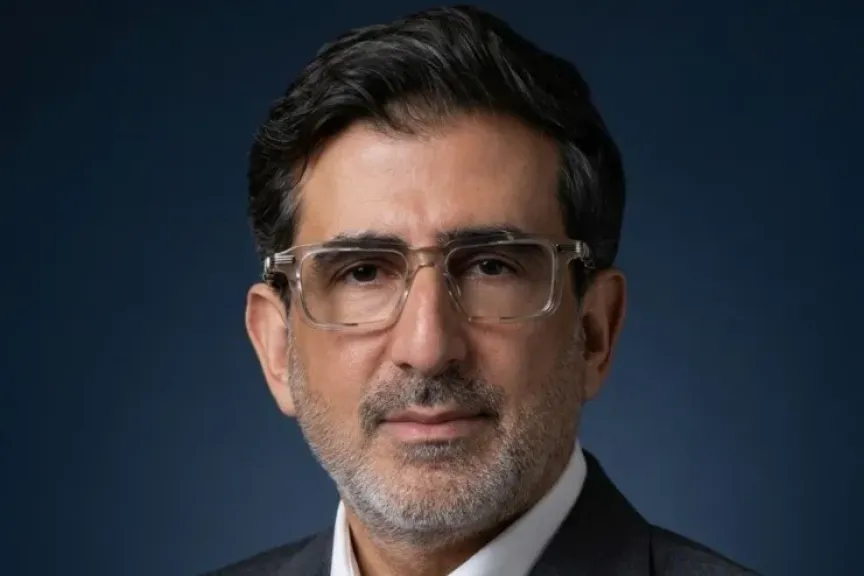
Marakez, the real estate development company owned by Saudi Arabia's Fawaz Alhokair Group, has contracted to develop a mixed use tourism project within Soma Bay on Egypt's Red Sea coast, spanning about 100 feddans, with targeted revenue reaching 40 billion Egyptian pounds according to information available on the deal. The project is being carried out under a partnership arrangement with Soma Bay for Tourism Development, in exchange for a share of revenue, with unit sales expected to launch before the end of 2026.
Investment expert Samer Choucair believes the significance of the deal isn't tied only to the scale of targeted revenue, but to the partnership structure, which reflects a growing trend of private Saudi capital moving toward Egyptian tourism assets capable of combining real estate development with hotel operations, retail, and services.
Samer Choucair said: "A serious investor isn't buying the tourism narrative, they're buying the ability to convert demand into contracted revenue without inflating the balance sheet beyond what the cash cycle can support."
Choucair explained that the partnership model reduces the developer's need to tie up large amounts of liquidity in purchasing land, and shifts part of the development risk to the partner that owns the destination, infrastructure, and services. In return, though, the return becomes tied to the pace of sales, execution quality, and the mix of residential, hotel, and commercial units.
The deal comes at a time when Egyptian tourism continues to grow, with Egypt having received about 19 million tourists during 2025, while visitor numbers reached around 9 million during the first half of 2026, as the state targets reaching 30 million tourists annually by 2030, reinforcing demand for hotel rooms and integrated tourism projects.
Samer Choucair said this growth is changing how coastal assets are valued, since a project's value is no longer measured only by land price or the number of units sold, but by its ability to convert tourism traffic into recurring revenue from accommodation, services, entertainment, and retail.
Choucair added: "Tourism demand in Egypt has become an economic factor that can be built on, but growing tourism doesn't automatically mean growing profitability. Capital creates real value when visitor numbers convert into hotel occupancy, recurring spending, and sustainable sales, not when they simply convert into real estate inventory."
Marakez's entry into Soma Bay represents an important expansion for the company beyond urban commercial and residential communities, testing its ability to manage an asset that combines the real estate cycle with tourism's operational cycle. Soma Bay also benefits from being an established destination with existing tourism infrastructure, services, facilities, and sports and entertainment activities, which reduces the risks of developing an entirely unequipped piece of land.
From an institutional investor's perspective, Samer Choucair sees the project offering three revenue channels: residential unit sales, recurring hotel revenue, and commercial and service activities within the destination.
Samer Choucair said: "Value in tourism assets doesn't come from the land alone. Land becomes an institutional investment when it's tied to infrastructure, operations, branding, and recurring demand."
Choucair cautioned against treating the targeted revenue of 40 billion pounds as guaranteed cash flow, explaining that achieving it depends on launch timing, price levels, sales rates, payment plans, construction costs, and collection speed, in addition to sustained tourism demand outside peak seasons.
Exchange rate risk also remains one of the most significant concerns for investors measuring their returns in dollars or riyals, alongside inflation, financing costs, building materials, and competition over the luxury tourism segment.
Samer Choucair said: "Incoming demand to Egypt is real, but capital can come under pressure when a project is priced at peak season levels and financed on the longest possible payment schedule. Value is created through discipline in the operating mix, how much revenue is recurring hotel income versus a one time unit sale."
Choucair believes the deal also reflects the broader expansion of private Saudi investment into regional tourism assets, running alongside the giant projects within the Kingdom itself, strengthening integration opportunities between Gulf and Egyptian markets.
Samer Choucair emphasized that governance will be a decisive factor in the success of the partnership model, particularly regarding revenue distribution, operating rights, handover, and exit mechanisms, saying: "Investment intelligence in 2026 isn't about chasing the biggest announced revenue figure, it's about choosing structures that tie capital to operations rather than to announcements."
Samer Choucair concluded that Marakez's project in Soma Bay could represent a model for a new phase of private Saudi investment in Egypt, one in which capital shifts from buying land to developing integrated tourism assets capable of generating cash flow from multiple sources, saying: "The story worth following isn't the 40 billion pound figure alone, it's the partnership model's ability to turn a coastal asset into disciplined, sustainable cash flow. That's where institutional investment is measured, and that's where capital's ability to create long term value, rather than settle for a real estate growth story, gets tested."