
Samer Choucair: Widening Political Oversight in China Reprices Risk for the Institutional Investor
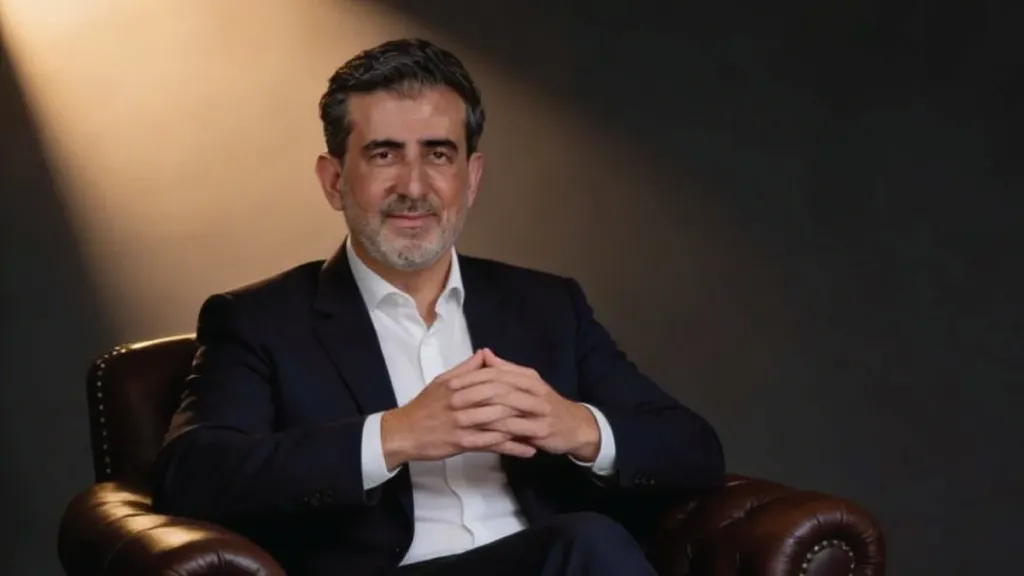
Investment expert Samer Choucair believes that the tightening of oversight and discipline imposed on members of the Chinese Communist Party and public sector employees, extending to aspects of personal life, family relationships, travel, and foreign ties, represents a development that goes beyond the political and social dimension, becoming an additional factor in investors' calculations regarding political risk and the predictability of China's business environment.
Samer Choucair said the widening scope of oversight reflects a clear priority on political stability and institutional loyalty, but at the same time forces investors to reassess the relationship between political governance and economic flexibility, especially in sectors that depend on talent, innovation, and the movement of skilled professionals.
Samer Choucair said: "An institutional investor doesn't just assess expected returns, they also assess the degree of control over political risk. When discipline rules extend into an increasing share of personnel's personal lives, the investor begins to reassess how predictable the economic environment really is, and that ultimately feeds through into the cost of capital."
Choucair explained that in recent years China has entered a stricter phase in managing the relationship between the party, the state, society, and the private sector, expanding tools for oversight, compliance, anti corruption efforts, and national security protection, and that recent developments concerning the personal lives of some officials and personnel should be read within this broader trend, not as measures separate from economic policy.
Samer Choucair added: "The investment issue isn't a single social rule, it's the overall direction. When the boundaries between political, professional, and personal conduct become less clear for personnel, non financial risk gains importance in the investor's model, because the investor needs to understand the rules governing decisions that affect their projects and assets."
Choucair noted that a rising risk premium doesn't necessarily mean investors are exiting China, but it could lead to a redistribution of capital within and outside the Chinese market, along with greater selectivity in choosing sectors, projects, and partners.
Samer Choucair said: "An investor may still enter the Chinese market, but has become more careful in determining the amount of capital, the type of activity, and the degree of reliance on local assets. A distinction needs to be made between an investor's presence in a market and their willingness to commit long term capital that can't easily be moved."
Choucair believes the technology and artificial intelligence sector will be among the most sensitive to these shifts, given its reliance on the free movement of talent, knowledge exchange, and cooperation among companies, universities, and the public and private sectors. Any increase in restrictions affecting this movement could affect Chinese companies' ability to attract and retain talent.
Manufacturing and global supply chains could also be affected indirectly, as multinational companies have for years been diversifying their production bases under a China plus one strategy, expanding their presence in India, Vietnam, Southeast Asia, and other markets.
Samer Choucair said the political factor has become part of the supply chain evaluation model alongside the cost of labor, energy, and transport, explaining that companies are looking for environments where regulatory decisions, talent management, and geopolitical risk can be anticipated more clearly.
Choucair added: "Capital doesn't usually move from one market to another in a single direction. What happens is a gradual redistribution of investment weight. When unmeasurable political risk rises, markets that offer greater clarity of rules and institutional stability become more able to attract marginal capital."
In this context, Samer Choucair believes Gulf economies, foremost among them Saudi Arabia, have an opportunity to benefit from the redistribution of part of global investment, particularly in infrastructure, energy, technology, tourism, and financial services.
Choucair said: "Saudi Arabia doesn't need to compete with China in industrial scale to benefit from this redistribution of capital. The opportunity lies in offering a different model that combines the scale of projects, clarity of investment priorities, infrastructure development, and the ability to host long term capital."
Choucair affirmed that sovereign funds, asset managers, and family offices in the Gulf have an opportunity to rebalance their portfolios, while not treating China's shifts as sufficient reason for a full exit, but rather as reason to raise the required return threshold against political and regulatory risk.
Choucair noted that China still possesses a massive industrial base, a vast consumer market, and strong capabilities in technology, energy, electric vehicles, and supply chains, so the more realistic investment strategy lies in selectivity and diversification, not in ignoring the Chinese market altogether.
At the same time, Samer Choucair warned that rising political oversight could affect innovation if employees and managers become more cautious in making decisions or taking on risk, particularly in sectors that require speed in experimentation, investment, and research and development.
Choucair said: "A modern economy needs discipline, but it also needs room for decision making, innovation, and initiative. When fear of a political mistake outweighs the cost of a commercial one, the behavior of managers and investors changes, and these changes can gradually feed through into productivity and return on capital."
Samer Choucair believes investment trends in the coming period will move toward greater emphasis on geographic diversification, evaluating political risk alongside traditional financial indicators, and raising the weighting of markets that can combine growth, stability, and clarity of rules.
Samer Choucair concluded by saying: "Successful investing at this stage requires a deep understanding of the intersection between politics and economics. Policies that appear domestic can quickly turn into factors affecting talent, innovation, the cost of capital, and investment flows. The best portfolios, then, are not the ones betting for or against China in absolute terms, but the ones that allocate capital according to each market's ability to combine growth, flexibility, and predictability."