
Samer Choucair: Saudi Arabia’s 4.9% Growth in 2027 Is Redrawing the Institutional Investment Map
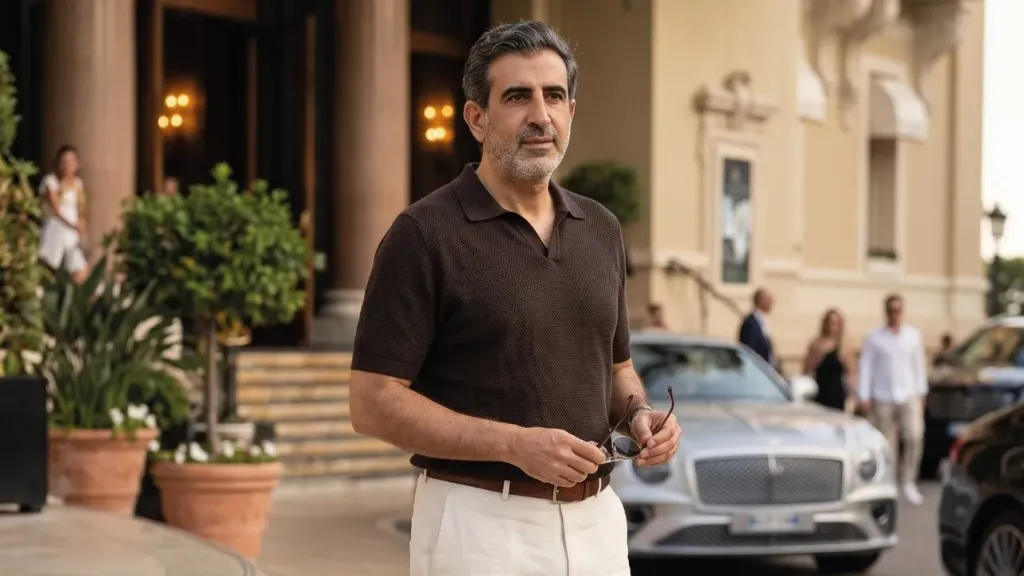
Investment leader Samer Choucair believes the World Bank’s outlook for Saudi Arabia’s economic growth in the coming years reflects a combination of cyclical recovery and the structural transformation driven by Vision 2030. He said this supports continued institutional investor interest in non-oil sectors and assets linked to long-term growth.
According to the World Bank’s latest projections, Saudi Arabia’s real GDP is expected to grow 3.1% in 2026, accelerate to 4.9% in 2027, and then moderate to 3.7% in 2028. These projections follow growth of 0.5% in 2023, 2.6% in 2024, and 4.5% in 2025.
Choucair said: “The expected acceleration from 3.1% growth in 2026 to 4.9% in 2027 gives institutional investors an important signal about Saudi Arabia’s ability to combine a recovery in oil activity with continued strength in the non-oil economy. For long-term capital, the more important question is how effectively this growth translates into sustainable cash flows and productivity.”
Choucair noted that the World Bank expects non-oil activities to continue expanding, supported by economic diversification efforts under Vision 2030. At the same time, the anticipated expansion in oil production as OPEC+ restrictions ease is expected to be one of the drivers of stronger overall growth.
The World Bank has highlighted the strong performance of the non-oil economy, with non-oil activities growing 4.8% in the first half of 2025.
Choucair added that Saudi Arabia’s investment environment offers opportunities across tourism, logistics, advanced manufacturing, technology, artificial intelligence, healthcare, and financial services. He emphasized that the next phase should involve a gradual shift from a primary focus on capital expenditure toward maximizing the operating returns generated by existing assets and projects.
Oil Remains Important—but Not the Whole Story
In the energy market, the World Bank projected in June that Brent crude would average around $94 per barrel in 2026, assuming a moderation in supply and shipping disruptions.
However, Choucair cautioned against treating elevated oil prices as a permanent guarantee of economic growth, noting that geopolitical scenarios can rapidly alter both the oil-price outlook and the broader growth trajectory.
He emphasized: “The best capital strategy is not to bet on oil alone, but to invest in an economy capable of converting revenues and investment support into higher productivity and diversified sources of growth.”
Choucair concluded: “The projected 4.9% growth for the Saudi economy in 2027 represents an opportunity, but the real investment value will be determined by the Kingdom’s ability to convert growth into sustainable earnings and cash flows. Governance, productivity, and revenue diversification will therefore remain critical factors in institutional investors’ decisions.”