
Samer Choucair: CXMT’s Rise Is Reshaping Investment Priorities in China
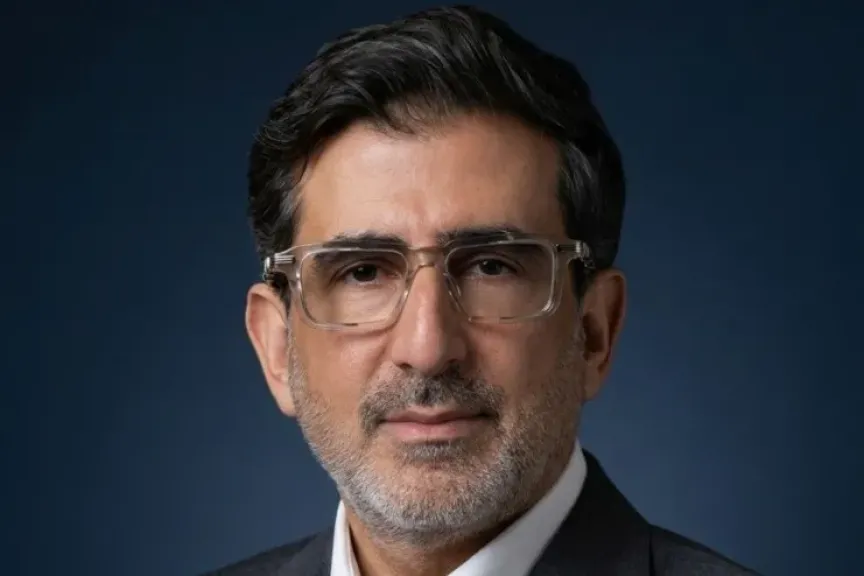
Investment strategist Samer Choucair said the strong rise of ChangXin Memory Technologies (CXMT) reflects a deeper shift in China’s investment landscape, as investors increasingly move their attention from software, internet, and consumer-platform companies toward businesses with industrial and technological assets directly linked to Beijing’s strategic priorities and the rapidly growing global demand for artificial-intelligence infrastructure.
Choucair explained that the growing prominence of semiconductor and memory manufacturers reflects a change in how investment value is defined within the Chinese economy. A company’s ability to generate strong consumer-driven growth is no longer the only factor determining its attractiveness. Its ability to build domestic manufacturing capabilities and reduce dependence on foreign supply chains has become increasingly important in investors’ assessments.
CXMT, Choucair noted, has become a symbol of this transformation. As one of China’s leading producers of dynamic random-access memory, or DRAM, the company is attracting significant market attention at a time when the global construction of AI-focused data centers is accelerating and demand is rising for the memory required to train and operate advanced models.
“The market is increasingly repricing Chinese assets according to their ability to serve the country’s strategic priorities, rather than solely on the basis of traditional consumer revenue growth,” Choucair said. “Memory chips are no longer simply an industrial component. They have become a geopolitical asset tied to supply-chain security, technological capabilities, and industrial sovereignty.”
Semiconductors Become Strategic Infrastructure
Choucair said the transformation of the global memory market has become particularly significant amid intensifying competition between the United States and China, as well as restrictions on Chinese companies’ access to certain advanced semiconductor technologies and manufacturing equipment.
For China, developing a domestic memory-production base has therefore become part of a broader strategy to reduce dependence on foreign suppliers.
However, Choucair stressed that investor interest in companies such as CXMT does not eliminate the associated risks. Instead, valuation models need to incorporate geopolitical exposure, technology risk, supply-chain vulnerabilities, and access to advanced manufacturing equipment.
Investors must also consider geographic concentration. CXMT’s exposure to the Chinese market may provide protection from foreign competition in certain areas, but it also makes the company more sensitive to changes in industrial policy, domestic demand, and international trade restrictions.
Valuation Requires a Margin of Safety
Choucair noted that CXMT’s elevated valuation already reflects optimistic expectations regarding its ability to expand production, sustain demand, and achieve further technological progress.
For investors, he said, the key question is therefore whether those expectations can be translated into actual operating performance.
The margin of safety requires a careful examination of the difference between the growth assumptions embedded in the stock price and the results the company can realistically deliver.
Choucair also argued that institutional investors increasingly need to view semiconductors as strategic infrastructure for the digital economy, rather than simply as a cyclical technology sector.
Chips are now directly connected to artificial intelligence, energy security, defense, telecommunications, and industrial supply chains.
AI Is Driving Capital Toward Hardware
This structural shift could support continued capital flows toward Chinese and Asian hardware companies, particularly those with strong domestic support and the ability to develop technologies that reduce reliance on foreign suppliers.
At the same time, Choucair cautioned that elevated valuations could make the semiconductor sector vulnerable to sharp volatility if expectations for AI demand change or new production capacity comes online faster than anticipated.
He said a more balanced investment strategy would involve diversified exposure across the semiconductor value chain, including memory manufacturers, semiconductor equipment, advanced packaging, energy, and data-center infrastructure, rather than relying on a single company or technology.
Diversification across the value chain allows investors to capture more of the structural growth generated by AI while reducing the risks associated with a single company failing to meet its technological or production targets.
Implications for Gulf Investors
Choucair said the rise of Chinese hardware companies also carries indirect significance for sovereign wealth funds and asset managers in the Gulf, particularly as regional economies accelerate efforts to diversify and invest in technology and artificial intelligence.
The global transition toward AI, he noted, will make access to memory, semiconductors, and manufacturing equipment an increasingly important factor in an economy’s ability to develop digital infrastructure.
This raises the strategic value of the semiconductor industry not only for investors, but also for policymakers.
For long-term investors, Choucair believes greater value may lie in companies that combine manufacturing capabilities with advanced-packaging innovation and the ability to serve export markets outside China. Diversifying revenue sources can help reduce the risks associated with dependence on the domestic market.
CXMT’s Next Test
Choucair said CXMT’s future will depend heavily on its ability to convert its current momentum into durable competitive advantages.
That will require progress toward more advanced products, greater manufacturing efficiency, stable relationships with customers, and the ability to navigate geopolitical and technological restrictions.
“Investing in Chinese semiconductor companies is ultimately a bet on Beijing’s ability to translate strategic ambition into sustainable commercial advantage,” Choucair said. “Government support can accelerate capacity building, but it cannot replace innovation, efficiency, and the ability to compete in global markets.”
Choucair concluded that CXMT’s rise is an important signal that part of global capital is moving beyond software and digital services toward the hardware and infrastructure underpinning the next industrial revolution.
The investors best positioned to benefit from the coming semiconductor and AI cycle, he argued, will be those capable of distinguishing companies with genuine technological and manufacturing capabilities from those benefiting primarily from speculative momentum.