
From Washington to the Gulf: Samer Choucair Tracks the New Shift in the Global Capital Map
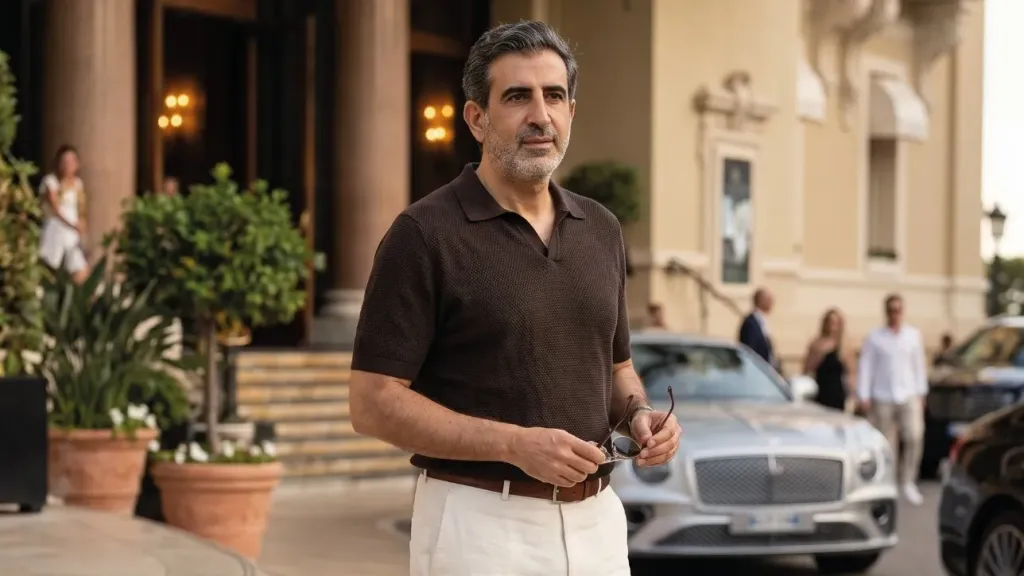
Investment strategist Samer Choucair said that growing political debate over the priorities of the current U.S. administration, combined with continued tensions with Iran and the depletion of oil and ammunition reserves, is raising new questions for institutional investors about the durability of economic and security policies.
Choucair explained that these developments reflect a shift in how markets price political-governance risk. Attention is moving beyond macroeconomic policies toward assessing a government’s ability to maintain consistency in strategic decision-making. Sovereign wealth funds and asset managers, he added, are increasingly reassessing capital allocations toward assets with stronger buffers against geopolitical volatility.
Military Strain Raises the Risk Premium
Choucair noted that recent congressional criticism has highlighted the challenges of managing presidential priorities amid prolonged military operations and debates over the use of public resources, while the conflict is also affecting defense supply chains and energy markets.
“The depletion of oil reserves could add pressure to global oil prices, while investors are watching these developments as indicators of executive focus and its potential impact on market confidence in the continuity of fiscal and monetary policies,” Choucair said.
He added that tensions with Iran have become a major factor in the 2026 investment landscape, particularly as extended naval deployments raise concerns over logistical sustainability and defense costs.
Declining oil reserves could also make energy markets more sensitive to any new signals regarding supply stability, potentially increasing risk premiums in commodity markets and affecting the budgets of both energy-exporting and energy-importing countries.
Elections Add Another Layer of Uncertainty
Choucair said the U.S. political environment is also coinciding with the approach of the midterm elections, increasing scrutiny of government spending and governance.
Markets, he argued, tend to translate political uncertainty into higher volatility in U.S. Treasury yields and in equities linked to energy and defense.
Institutional investors are increasingly viewing a government’s ability to separate personal political priorities from executive policymaking as an important component of long-term sovereign-risk assessment.
Capital Searches for Protection
Choucair said concerns over policy continuity could push global equity markets, in the short term, toward defensive sectors and traditional energy, while technology and real estate could face additional pressure if risk premiums rise and valuations become more sensitive to interest rates.
Any indications of resource depletion could also strengthen expectations of tighter fiscal policy, influencing the yield curve in fixed-income markets.
At the same time, Choucair believes emerging markets with strong exposure to energy—particularly Gulf economies—could benefit from a reallocation of part of global capital.
The Gulf Gains Strategic Appeal
Choucair said capital allocation is increasingly favoring economies capable of managing geopolitical volatility. Saudi Arabia’s Vision 2030, he argued, provides an attractive framework for long-term investment in economic diversification and infrastructure.
Institutional investors are reassessing their exposure to U.S. markets against opportunities in the Gulf, benefiting from relatively stable oil revenues alongside accelerating growth in non-oil sectors.
Choucair noted that developments in Washington also have direct implications for the Gulf Cooperation Council states, particularly given Qatar’s role in certain logistical arrangements and its regional relationship with Iran.
Recent reports of frustration among some Gulf allies over the U.S. administration’s handling of Iran diplomacy, he added, reinforce the need for more independent investment strategies across the region.
Vision 2030 as an Investment Shield
Choucair said the Saudi economy is emerging as a major destination for capital, supported by the Public Investment Fund and the National Investment Strategy, alongside accelerating foreign direct investment into projects involving NEOM, manufacturing, and renewable energy.
Political disruption in traditional global centers, he argued, is encouraging institutional capital to seek markets with clearer governance structures and long-term development agendas.
Gulf investments in artificial intelligence, the digital economy, and logistics infrastructure are therefore gaining additional importance as potential hedges against geopolitical risks.
Oil and Financing Remain Key Risks
Choucair warned that continued pressure on reserves could increase oil-price volatility, while financing costs could rise if political uncertainty leads to a repricing of U.S. sovereign debt.
The upcoming elections could also affect the stability of trade and tax policies, adding another variable to long-term investment decisions.
His base case is for markets to continue adapting gradually, with some capital potentially shifting toward real assets, defensive sectors, and energy, alongside opportunities in defense equities, highly rated emerging-market bonds, and private investments in Gulf infrastructure.
However, Choucair cautioned that excessive focus on short-term political noise could cause investors to overlook structural opportunities in economies that are building stronger buffers against global volatility.
Selective Capital Allocation
Choucair concluded that the next phase will require institutional investors and sovereign wealth funds to focus on structural fundamentals rather than short-term market reactions, with energy continuing to play a central role while Gulf economic diversification becomes increasingly important.
“The most effective approach is to balance protection against geopolitical risks with participation in the long-term growth of the digital economy and advanced manufacturing,” Choucair said, emphasizing that governance and executive stability have become essential factors in investment decisions.
He added that if current trends continue, global capital will remain in constant search of markets with clear strategic direction and consistent execution—strengthening the Gulf’s position as a strategic investment destination in an increasingly complex global environment.