
Samer Choucair: Trump-Xi Summit Opens a New Window for Capital Between Asia and the Gulf
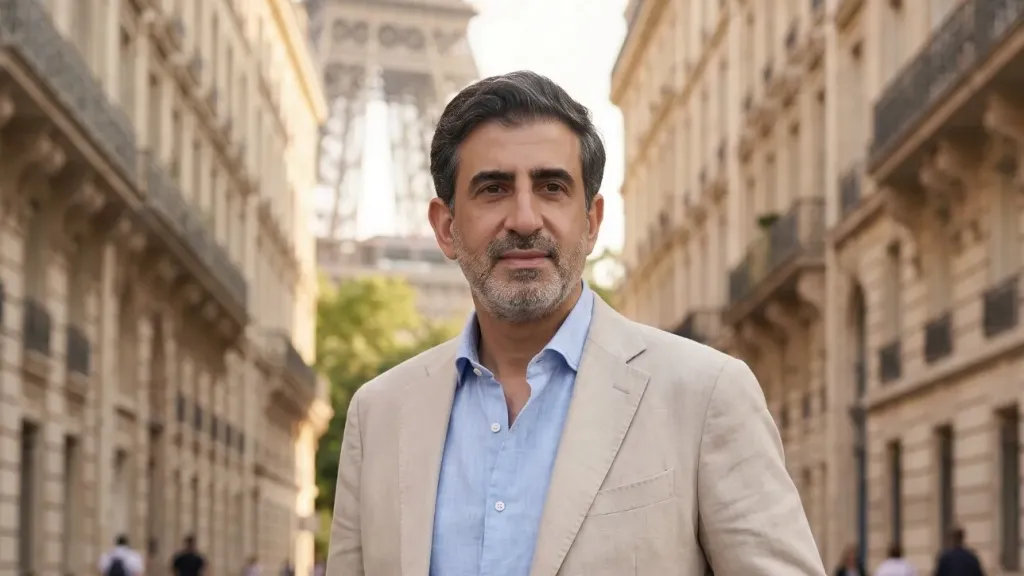
Investment strategist Samer Choucair said that Chinese President Xi Jinping’s expected visit to Washington on September 24 represents an important moment in managing relations between the world’s two largest economies—not because it will end U.S.-China competition, but because it could create an opportunity to reduce the risk of trade escalation and provide greater clarity for investors. President Donald Trump announced the date of the visit, saying discussions with Xi would include issues such as artificial intelligence.
Choucair explained that the May summit in Beijing provided a model for selective cooperation. The United States said China had initially agreed to purchase 200 Boeing aircraft, with the possibility of additional orders in the future, while also committing to purchase at least $17 billion of U.S. agricultural products annually during 2026, 2027, and 2028. The two sides also agreed to establish trade and investment councils to manage economic and investment issues, particularly in less-sensitive areas.
Choucair noted that these commitments do not signal the end of strategic competition or technological restrictions. However, they provide investors with signals that can be incorporated into assessments of trade and supply-chain risks. A sustained easing of tensions could therefore support sectors such as aviation, agriculture, logistics, and industrial goods, while advanced technology and semiconductors are likely to remain among the areas most exposed to U.S.-China tensions.
Investors Should Prepare for “Managed Stability”
Choucair believes institutional investors should not base their decisions on the prospect of a comprehensive reconciliation between Washington and Beijing. Instead, they should prepare for a scenario of “managed stability,” combining geographic and sectoral diversification with investments in companies capable of operating in an environment where trade and technology rules continue to evolve.
“The investment opportunity does not lie in betting on the end of U.S.-China competition, but in understanding how that competition will be managed,” Choucair said.
He added that emerging Asian economies could benefit from the continued redistribution of global supply chains, particularly countries with strong logistics positions and industrial bases capable of attracting companies seeking alternative production locations.
Asia-Gulf Capital Flows
Choucair said that, in the Gulf, any relative stabilization in U.S.-China relations could improve visibility around energy demand and global trade. At the same time, economic-diversification strategies in Saudi Arabia and across the region could create opportunities to attract investment linked to logistics, advanced manufacturing, energy, and digital technologies.
For Gulf investors, he argued, the opportunity extends beyond simply increasing exposure to Asian markets. The region can potentially position itself as a capital and infrastructure bridge connecting Asian manufacturing and technology with global markets.
This could create opportunities in logistics infrastructure, industrial facilities, energy systems, data centers, digital infrastructure, and other assets that benefit from the continued restructuring of global supply chains.
A Test of Whether De-escalation Can Become Investable
Choucair said the September summit will ultimately be a test of whether political signals and trade agreements can be translated into measurable implementation mechanisms.
For investors, that distinction is critical. Political statements can temporarily reduce risk premiums, but sustainable capital allocation requires evidence that agreements are being implemented, supply chains are becoming more predictable, and businesses can make long-term investment decisions with greater confidence.
Choucair concluded that the summit could provide a valuable window for capital if both sides demonstrate an ability to manage their strategic competition without allowing it to destabilize trade and investment flows.
The key question, he said, is whether the September meeting can turn a temporary reduction in geopolitical risk into a more durable investment environment—or whether it will simply create a brief window before tensions return.