
Samer Choucair: From a 1917 Soldier’s Letter to 2030 Investments… A Lesson in the Value of the Long Term
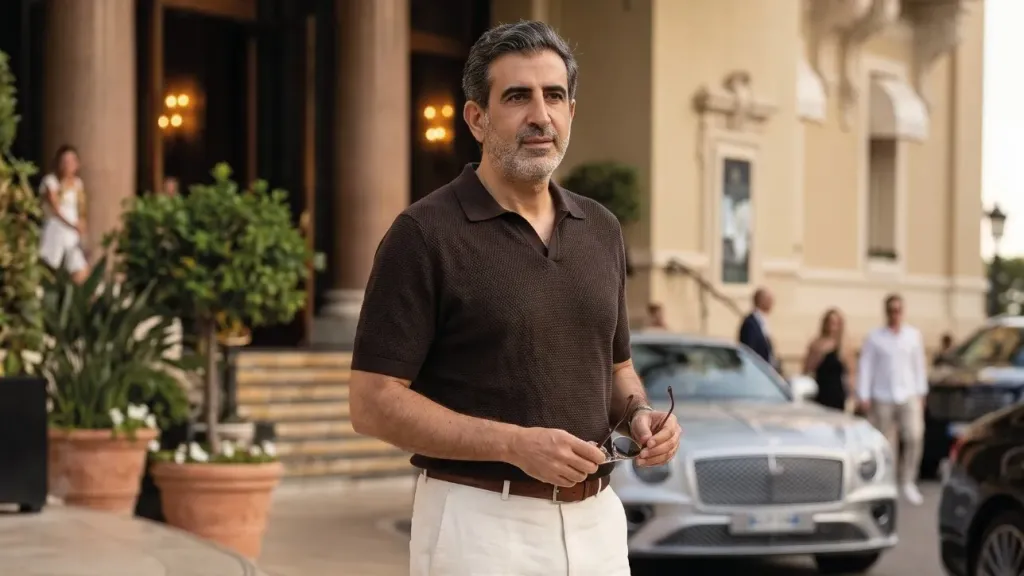
Investment leader Samer Choucair said that the discovery of a postcard written by an American soldier who served in World War I, more than a century after it was written, offers a lesson that extends beyond its historical value to the core principles of long-term capital building.
Choucair explained that the postcard, written by U.S. soldier Hugh H. Hoff of Oklahoma during officer training in Texas in 1917 and sent to a relative, remained buried for decades inside an abandoned building in Kansas that was slated for demolition. It eventually reached his great-great-grandchildren in August 2026 through a simple digital search.
Choucair noted that Hoff chose the rank of second lieutenant in the Regular Army rather than a higher rank in the Reserve, preferring active service over immediate gains. He argued that the story captures a dilemma facing institutional investors today: how to preserve assets with genuine long-term value amid the noise of short-term volatility.
Time as a Factor of Production
Samer Choucair said global markets in 2026 are experiencing a tension between the need for immediate liquidity and the requirements of sustainable returns. The cost of capital has risen in many developed economies following previous tightening cycles, while pension funds and sovereign wealth funds are seeking assets capable of generating cash flows over decades.
He added that the soldier’s decision more than a century ago carries a direct investment lesson: choosing a strategically valuable long-term position over a higher immediate return lies at the heart of rational capital allocation. An investor unwilling to sacrifice short-term margins to build a lasting competitive position may ultimately end up with a more fragile portfolio.
Choucair said this logic can be seen in private-equity strategies focused on industrial assets, logistics and infrastructure, where investment cycles can extend for 10, 15 years or longer. It is also reflected in the strategy of Saudi Arabia’s Public Investment Fund, which is building portfolios around projects extending beyond the 2030 horizon, based on the principle that compounding value requires an investment horizon that can outlast political and interest-rate cycles.
Documentation as Part of Risk Management
Samer Choucair noted that the postcard story also highlights the importance of digital archiving and documentary governance within families and institutions, particularly as family offices and family-owned investment structures become increasingly important.
He said family capital that fails to document its decisions across generations risks losing its ability to preserve and transfer its strategy. Undocumented value can disappear entirely, much as inadequately protected assets remain exposed to market risks.
At the broader economic level, Choucair said this awareness coincides with the growth of private credit into a multi-trillion-dollar global market and rising institutional interest in real assets capable of protecting purchasing power against inflation.
He added that these trends are particularly relevant in the Gulf, where efforts to diversify economies away from oil require patient capital capable of waiting for returns from manufacturing, tourism and renewable-energy projects.
Patient Capital Gains Ground
Samer Choucair said institutional investors increasingly view stories such as this one as a reminder of the importance of patient capital. In equity markets, companies capable of maintaining pricing power and strong margins have continued to attract capital, while businesses dependent on short-term growth have faced greater valuation pressure.
In fixed income, Choucair pointed to the continued appeal of long-duration and sovereign bonds linked to major development projects for institutions managing liabilities that extend over decades. He argued that markets tend to reward investors who build portfolios capable of surviving multiple cycles, while an allocation strategy focused solely on daily liquidity can miss structural opportunities whose value may not become apparent for decades.
In Saudi Arabia and the Gulf, he said this means increasing exposure to assets linked to Vision 2030, including infrastructure, technology and tourism, while maintaining strict discipline around governance and geopolitical risk.
Opportunities and Risks
Samer Choucair identified opportunities in assets that combine historical scarcity with enduring economic value, including strategic real estate, stakes in companies with sustainable competitive advantages, and private financing instruments supporting transformative projects.
At the same time, he warned against excessive focus on short-term narratives, neglecting documentation and governance within family portfolios, and misjudging opportunity costs by prioritizing immediate returns over the creation of a durable strategic position.
He said this translates in financial markets into a preference for companies with high returns on equity and the ability to reinvest capital at attractive rates, greater interest in funds with investment horizons of 10 years or more, and growing demand for wealth-management services that combine tax planning, family governance and digital archiving.
The Long-Term Horizon: A Rare Advantage
Samer Choucair concluded that the message that arrived 109 years later was more than a historical curiosity. It was a reminder that true value is measured by its ability to endure and be transferred across generations.
He said investors who incorporate the factor of time into their capital-allocation decisions will be better positioned to capture opportunities emerging as Vision 2030 cycles mature and the economy moves beyond them.
In an environment defined by volatile interest rates, geopolitical tensions and accelerating technological change, Choucair emphasized that a long-term horizon remains one of the rarest and most valuable competitive advantages in investing.