
Samer Choucair: Carstens’ Legacy Is Reshaping Global Finance While Tokenization Opens New Investment Opportunities
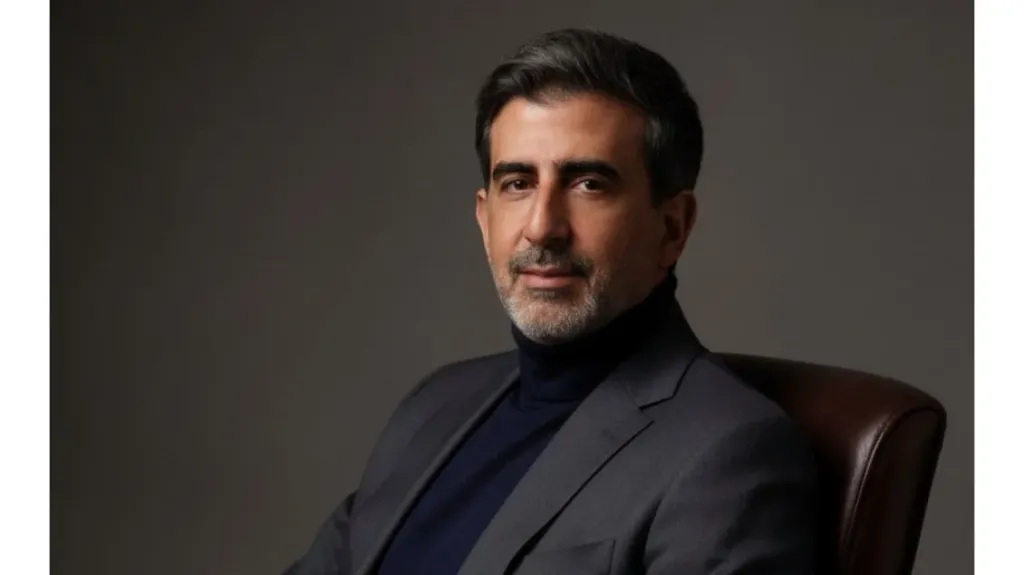
Investment strategist Samer Choucair said that the transformation of the Bank for International Settlements (BIS) during the tenure of Agustín Carstens, which ran from December 2017 to June 2025, helped establish fintech, central bank digital currencies (CBDCs), and tokenization as major topics in the debate over the future of the global monetary system.
Since July 2025, Pablo Hernández de Cos has served as the BIS General Manager for a five-year term.
Building the Infrastructure of a New Financial System
Choucair said the significance of this period does not lie in immediately replacing the traditional monetary system.
Rather, it lies in developing infrastructure capable of making payments and settlement faster, more efficient and programmable.
Through its Innovation Hub, the BIS has become an important platform for testing CBDCs, tokenization and new financial infrastructure. However, Choucair stressed that most of these initiatives remain experimental rather than fully developed global monetary systems.
mBridge: A Major Experiment in Cross-Border Payments
Choucair identified Project mBridge as one of the clearest examples of this transformation.
The project reached the minimum viable product stage in 2024 and tested the use of multiple central bank digital currencies for cross-border payments and foreign-exchange settlement.
An earlier 2022 trial involved 20 banks and processed 164 payment and foreign-exchange transactions worth more than $22 million.
In June 2024, the Saudi Central Bank (SAMA) joined the mBridge platform as a participant.
Choucair also noted that Saudi Arabia had previously undertaken an earlier, separate experiment through Project Aber with the UAE Central Bank. Launched in 2019, the project tested the use of a central bank digital currency for settlements between the two countries, preceding broader international initiatives such as mBridge.
Tokenization Creates a New Investment Layer
According to Choucair, tokenization could create significant investment opportunities across:
Payment infrastructure
Cybersecurity
Financial technology
Digital identity
Compliance systems
The opportunity arises as certain financial assets move toward programmable environments.
He pointed to Project Pine, developed by the BIS in collaboration with the Federal Reserve Bank of New York, as an example of how smart contracts can be used to test monetary-policy tools within tokenized financial markets.
Where Institutional Investors Should Look
Samer Choucair argued that institutional investors should not simply bet on how quickly digital currencies themselves will become widespread.
Instead, they should focus on the companies and infrastructure providers building the plumbing required for the transition.
That includes the technology connecting traditional financial institutions with tokenized markets, while taking into account regulatory, cybersecurity, liquidity and privacy risks.
The Gulf’s Strategic Opportunity
Choucair concluded that the most significant investment opportunity lies in the layers connecting the traditional financial system with the emerging digital financial infrastructure.
Gulf countries, he said, have an opportunity to establish a leading position in the emerging programmable financial economy, given their investments in digital payments and fintech.
But achieving that position will require more than technological innovation. It will depend on combining innovation, strong governance and integration with global financial networks.
The broader investment thesis, therefore, is not simply about replacing cash with digital currencies. It is about building the infrastructure that allows money and financial assets to move, settle and interact in fundamentally more programmable ways.