
Samer Choucair: The AI Revolution Is Reshaping Jobs and Opening New Investment Opportunities
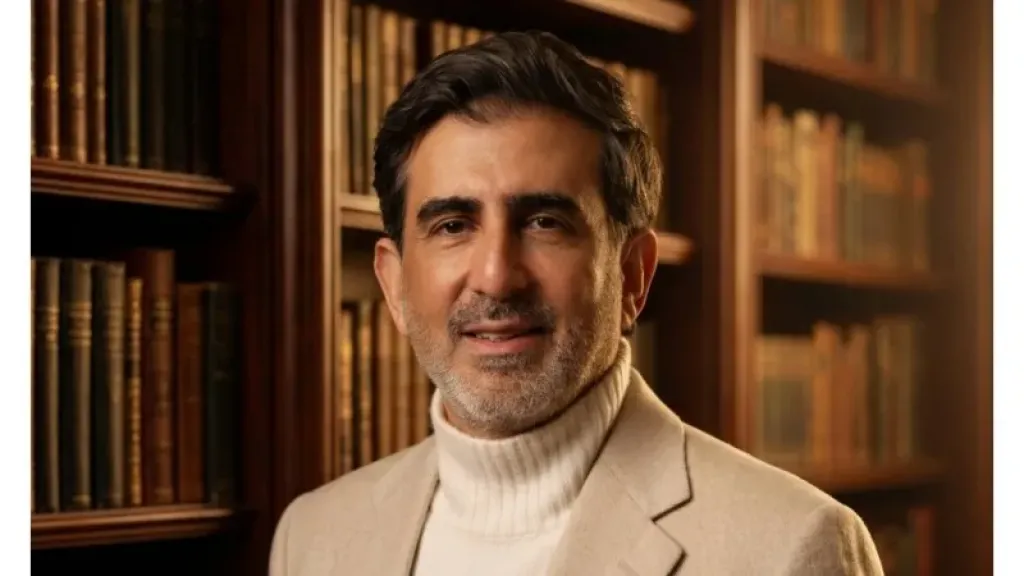
Investment leader Samer Choucair said artificial intelligence is driving a structural transformation in human resources, shifting the function from a traditional administrative role into a strategic engine for talent allocation and productivity improvement within organizations.
Choucair explained that this transformation is creating growing opportunities for institutional investors in HR technology, particularly across Gulf markets, where human-capital development is directly linked to economic-diversification agendas and the competitiveness of the workforce.
He added that capital-allocation trends point to increasing investment in platforms capable of combining predictive analytics and automation with human governance, while concerns over bias and trust remain among the factors that will determine long-term returns in the sector.
Billions of Dollars Behind the AI Revolution in Human Resources
Samer Choucair noted that the global economy has seen accelerating adoption of AI across HR functions, driven by productivity pressures, talent shortages, and rising labor costs in developed markets.
Specialized reports estimate that the global AI-in-HR market is already worth billions of dollars in 2026, with most estimates projecting compound annual growth rates above 15% through the end of the decade.
Choucair said this growth is not simply a reflection of automating routine tasks such as resume screening and interview scheduling. Instead, it is redefining HR as a function that owns workforce data and uses it for strategic planning, employee-retention forecasting, and improving hiring quality.
AI Is Redistributing Work Rather Than Eliminating It
Samer Choucair emphasized that the transformation in HR is closely connected to changes in global labor markets.
Companies that have invested heavily in AI-powered HR tools have recorded productivity gains and hiring-process acceleration of up to 40% in some cases, alongside improvements in skills matching.
Choucair said the data suggests that AI’s impact on overall employment levels has been neutral or positive within organizations that allocated sufficient capital to capture the technology’s benefits.
Administrative roles are increasingly evolving into analytical and strategic positions, supporting the view that AI is redistributing work within HR more than eliminating it.
Gulf HR Technology Market to Exceed $1.75 Billion
Across the Gulf markets, Samer Choucair identified HR technology as an increasingly promising area for investors.
Recent estimates put the GCC HR technology market at approximately $761 million in 2025, with projections indicating that it could exceed $1.75 billion by 2034, representing a compound annual growth rate of roughly 9.5%.
Choucair said growth is being driven by AI-powered systems for recruitment, performance management, workforce analytics, and employee retention, supported by government digital-transformation initiatives and programs aimed at supporting small and medium-sized businesses.
Saudi Arabia and the UAE account for the largest share of the market, while adoption is accelerating across the rest of the Gulf.
Saudi Arabia Pushes Toward a Talent- and AI-Driven Economy
Samer Choucair said the development is directly linked to Saudi Arabia’s Vision 2030 and National Investment Strategy.
He noted that the designation of 2026 as the Year of AI has accelerated investment in digital infrastructure and human-capital development, including large-scale training programs conducted in partnership with major technology companies.
Choucair explained that the Public Investment Fund and institutions responsible for data and artificial intelligence are encouraging the integration of these technologies across the public and private sectors.
This is creating growing institutional demand for HR solutions capable of supporting workforce localization and preparing employees for the digital economy.
He added that investment in talent analytics and risk-prediction platforms has become part of the broader toolkit for strengthening regional competitiveness.
HR Data Becomes an Investment Asset
From an institutional-investment perspective, Samer Choucair said capital allocation in HR technology should focus on companies capable of turning employee and workforce data into measurable strategic assets.
Investors who view HR technology merely as a means of improving efficiency may miss the larger opportunity, he argued.
The real value lies in platforms that combine AI with human decision-making governance to build sustainable competitive advantages in rapidly changing labor markets.
Choucair said this perspective has been reflected in venture-capital and private-equity flows toward workplace-technology companies, with significant investment in intelligent recruitment platforms and talent analytics over the past two years.
Workday, Oracle, SAP and ADP Race Toward Intelligent Agents
Samer Choucair noted that companies such as Workday, Oracle, SAP, and ADP have emerged as major competitors, supported by strategic acquisitions involving generative-AI tools and intelligent agents.
These companies are transforming traditional human-capital-management systems into agent-powered platforms capable of automating the employee lifecycle, from recruitment through development and retention.
Choucair added that specialized AI talent companies are simultaneously emerging as potential acquisition and early-stage investment targets, particularly those focused on reducing bias and improving recruitment quality.
Bias and Trust Threaten Long-Term Returns
Samer Choucair emphasized that the sector also faces significant structural risks, including a substantial trust gap between employers and candidates.
Although most large companies now use AI-powered recruitment tools, candidate confidence in the fairness of these systems has fallen to low levels.
Choucair said algorithmic bias, particularly against certain groups, represents a regulatory and legal concern that could affect market valuations if it is not addressed through strong governance frameworks.
He added that excessive reliance on automation without parallel investment in human skills could limit long-term returns.
Human Capital Remains as Important as Technology
Against this backdrop, Samer Choucair stressed the importance of maintaining a balance in capital allocation between technology and people.
He said the real investment opportunity in 2026 and beyond is not simply replacing administrative jobs, but building capabilities that are difficult for AI to replicate.
Analytical skills, judgment, and leadership within HR teams are what ultimately transform data into strategic decisions inside an organization.
Choucair said this view is consistent with broader labor-market trends, where roles requiring intensive human skills are growing faster than jobs that can be fully automated.
Private Equity and Venture Capital Pursue the Productivity Economy
In financial markets, Samer Choucair said the transformation is supporting capital flows toward digital-economy sectors and enterprise technology.
Private-equity and venture-capital funds see HR technology as an opportunity to generate returns by improving the efficiency of their own portfolio companies through workforce planning and employee-retention analytics.
Choucair added that this trend is particularly relevant in Gulf markets, where economic-diversification agendas increasingly make technology-enabled human-capital investment part of a broader strategy to increase non-oil productivity.
Higher Interest Rates Strengthen Demand for Productivity Solutions
Samer Choucair said the transformation also intersects with trends in interest rates, inflation, and economic growth across developed and emerging markets.
In a relatively high-interest-rate environment, companies tend to favor investments capable of delivering faster productivity returns.
AI-powered HR tools can provide such returns by reducing recruitment costs and improving employee retention.
The Gulf, meanwhile, offers a supportive environment for accelerated adoption, supported by sovereign resources and government investment in digital infrastructure.
Three Investment Categories Stand Out
From the perspective of institutional investors, Samer Choucair said opportunities are concentrated in three main categories:
1. Global platforms capable of expanding across emerging markets.
2. Specialized solutions focused on predictive analytics and employee retention.
3. Technologies that combine AI with local regulatory and compliance requirements.
Choucair said the main risks include tighter regulation around transparency and algorithmic bias, intense competition that could pressure margins, and the risk of excessive valuations for startups whose investment cases rely primarily on an AI narrative without proven operating results.
Human Resources Moves From Cost Center to Strategic Asset
Samer Choucair concluded that capital allocation in the AI era requires organizations to view human resources as a strategic asset rather than a cost center.
He said institutions and funds that recognize this transformation early will be better positioned to capture talent flows and productivity gains in the years ahead.
The coming years are likely to see faster integration of AI into HR systems, with the function becoming an increasingly important strategic partner in shaping corporate strategy.
Choucair emphasized that investors across Gulf and global markets have an opportunity to direct capital toward assets that combine technology with strong human governance, supporting long-term diversification and productivity objectives.
He concluded that the capital flowing into these platforms today could become a decisive factor in determining the competitive advantage of organizations in an economy increasingly dependent on talent quality and the speed of adaptation.