
Samer Choucair: Intel’s Offering Will Not Be Measured by the Size of Its Liquidity, but by Its Ability to Convert It into Productive Capacity
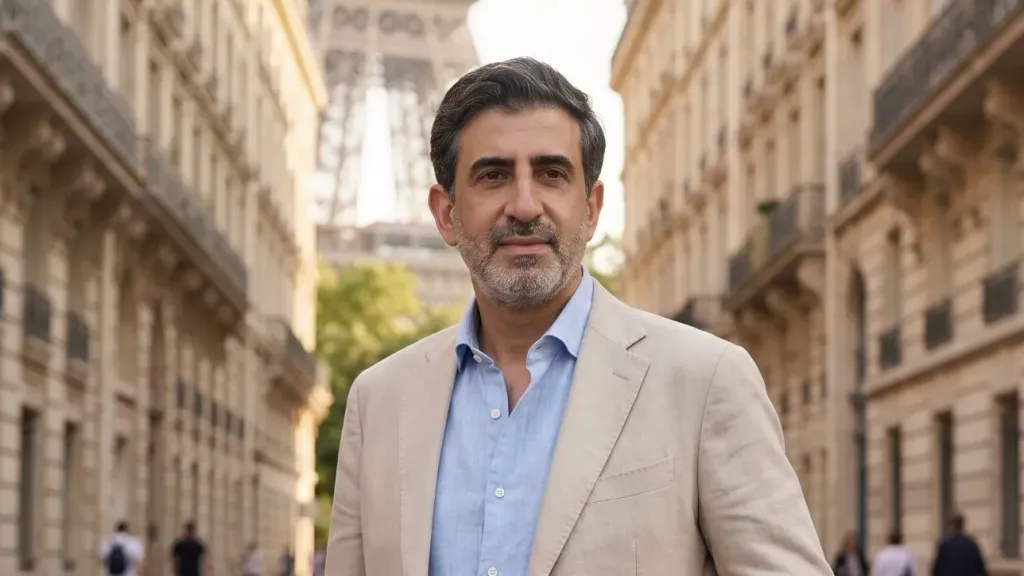
Investment leader Samer Choucair said Intel’s announcement of a $15 billion offering of common stock represents an important development in how AI-related industrial expansion is financed, reshaping the funding landscape for computing and semiconductor infrastructure at a time when the sector is experiencing unprecedented demand for computing capacity and investment in data centers and artificial intelligence.
Samer Choucair explained that Intel’s move reflects not only the company’s desire to capitalize on its higher share valuation, but also a broader shift in the industrial expansion financing model for semiconductor companies. It opens a discussion about capital allocation during a long-term investment cycle that could extend through the end of the decade.
Choucair noted that, for institutional investors, the transaction represents a test of the market’s ability to absorb equity dilution in exchange for financing future productive capacity in a sector that relies heavily on capital-intensive spending. The central question, he emphasized, is not how much money the company can raise, but whether it can convert that liquidity into assets and productive capacity capable of generating returns above its cost of capital.
Samer Choucair said Intel’s offering comes at the heart of a massive wave of capital spending on digital infrastructure. Market estimates indicate that capital expenditures by major technology companies on AI capabilities could exceed $765 billion this year, with expectations for even higher levels in 2027.
He explained that demand for computing capacity is no longer limited to specialized chips designed to accelerate AI applications. It has also expanded to traditional central processing units produced by Intel, driven by the growing adoption of AI agents and applications requiring a combination of general-purpose and specialized computing.
Choucair noted that this shift gives companies such as Intel an opportunity to reposition themselves within the emerging AI value chain, particularly as the range of applications relying on a mix of traditional and specialized processing capabilities continues to expand.
He said Intel views areas such as physical AI, purpose-built chips, advanced packaging, and contract semiconductor manufacturing as structural growth opportunities whose effects could extend over many years.
Choucair explained that these areas require long-term investment in foundry facilities. Such businesses are highly capital-intensive and characterized by long payback periods, making the ability to secure appropriate financing a key element of Intel’s strategy.
He added that the current offering gives Intel financial flexibility to pursue these opportunities without increasing leverage, at a time when the market has raised the company’s valuation to levels that allow it to raise capital through equity dilution at a relatively lower cost.
Samer Choucair said that, from a capital-allocation perspective, Intel’s offering represents a classic example of taking advantage of a favorable valuation window.
He explained that timing the offering after a significant increase in the share price reflects institutional awareness of capital-cycle management in a sector that is inherently cyclical. Companies requiring substantial financing for industrial expansion can use periods of elevated valuations to strengthen their balance sheets and fund long-term investments.
Choucair added that institutional investors view such transactions from two primary perspectives.
The first is the company’s ability to convert the new liquidity into productive capacity that generates returns above its cost of capital.
The second is the sustainability of demand over the medium term once the initial wave of infrastructure spending has ended.
Choucair noted that the expected equity dilution, estimated at roughly 3% at current price levels, could generally be acceptable if it is tied to clear plans to expand productive capacity in areas expected to generate higher margins in the future.
At the same time, he emphasized that markets remain sensitive to any signs of slowing commitments from external customers to Intel’s foundry business, particularly given plans for high-volume production using the 14A process by 2028.
Choucair explained that Intel’s ability to attract external customers to its foundries will remain a decisive factor in evaluating the viability of its capital expenditure, because expanding production capacity does not automatically create shareholder value unless it is supported by sustainable demand and commercial contracts capable of generating appropriate returns on invested capital.
Capital Flows and Opportunities in Artificial Intelligence
Choucair emphasized that Intel’s offering is part of a broader wave of financing activity in the AI sector through both equity and debt markets.
He explained that major companies are increasingly turning to capital markets to finance expansion, reducing pressure on balance sheets and distributing risk across a broader investor base.
For sovereign wealth funds and asset managers, he said, this dynamic creates new opportunities across semiconductor supply chains, ranging from manufacturing equipment to advanced packaging services and data centers.
Choucair added that investment in AI infrastructure is no longer limited to companies developing AI models or chips. It extends across a broad range of the value chain, including equipment, fabrication plants, advanced packaging, energy, data centers, and services supporting the operation of digital infrastructure.
From a geoeconomic perspective, Choucair said demand for domestic and regional manufacturing capacity is increasing the importance of supply-chain diversification strategies, particularly in semiconductors, which have become a strategic component of the global economy.
He noted that this trend intersects, within the Gulf economy and Saudi Arabia’s Vision 2030, with efforts to build capabilities in the digital economy and artificial intelligence.
Choucair explained that sovereign funds such as the Public Investment Fund are closely monitoring developments in the semiconductor sector as part of their strategies for investing in advanced technologies, whether through direct investments or partnerships in digital infrastructure.
Ultimately, Samer Choucair said Intel’s offering reflects a deeper transformation in how the digital industrial revolution is being financed. Spending on artificial intelligence, he explained, is no longer merely an internal matter for technology companies; it has become a driver of capital flows across global equity and debt markets.