
Samer Choucair: The Current Phase Marks a Turning Point in Capital Allocation Within Saudi Arabia’s Insurance Sector
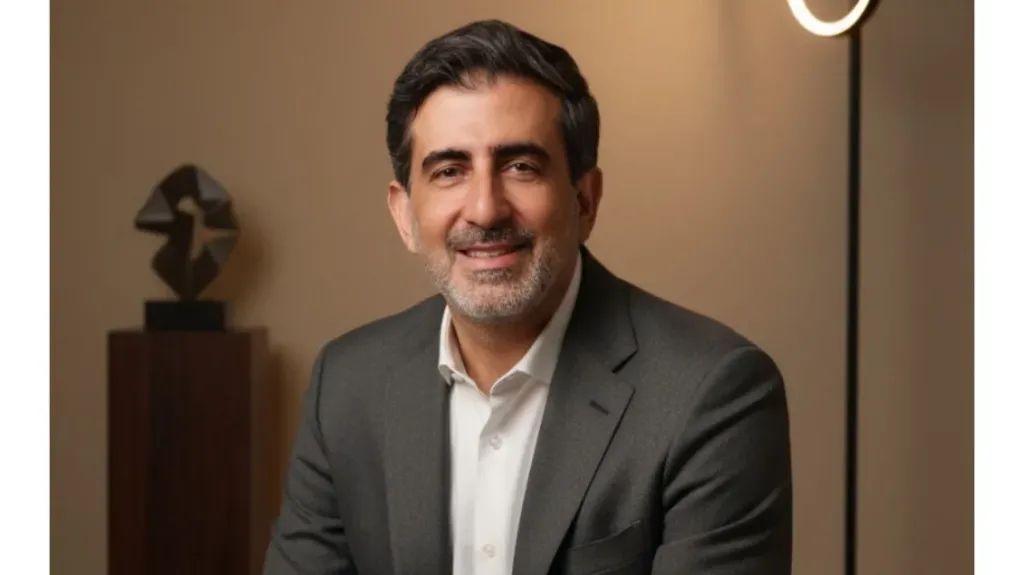
Investment leader Samer Choucair said that Saudi Arabia’s insurance market is entering a new phase of institutional maturity, in which the priority is shifting from rapid growth in premium volumes toward growth quality, sustainable profitability, capital strength, and risk-management capabilities. He noted that this transformation is reshaping capital allocation across the sector and creating an opportunity for institutional investors to reassess insurers based on their ability to generate sustainable returns, in line with the objectives of Vision 2030.
Samer Choucair explained that gross written premiums in Saudi Arabia reached approximately SAR 84.3 billion in 2025, representing growth of 10.7%, after the market doubled in size over four years.
Choucair emphasized that the relative slowdown in growth rates does not indicate weakness in the market, but rather represents a structural transition from rapid expansion to a more mature phase focused on growth quality, sustainable profitability, and capital solvency.
He noted that the Saudi insurance market recorded nominal growth rates exceeding 22% and 26% during the early years of the decade before growth stabilized at 10.7% in 2025, with total gross written premiums reaching SAR 84.3 billion.
Samer Choucair said that moving from a smaller base and rapid expansion to a larger and more stable market makes maintaining high growth rates increasingly difficult, prompting insurers and investors to reorder their priorities around underwriting quality, operating profitability, and balance-sheet strength.
He explained that this transformation coincides with the approaching mandatory implementation of the Risk-Based Capital framework beginning in January 2027, following a parallel implementation phase during 2026. This makes mergers, diversification, and portfolio restructuring increasingly important strategic options for insurers.
Choucair noted that health and motor insurance account for approximately 89% of Saudi Arabia’s total insurance portfolio, creating a structural concentration that exposes the sector to fluctuations in claims costs.
He explained that health insurance claims increased by more than 10% during 2025, driven by medical-cost inflation both globally and domestically, while motor insurance faces periodic pricing cycles that affect insurers’ margins. These pressures, he said, require companies to move beyond relying solely on volume expansion and instead improve risk management, control loss ratios, enhance pricing efficiency, and strengthen claims management.
Choucair added that growth in premium volume cannot serve as an independent measure of an insurer’s quality, particularly in a market where claims costs and risk-management capabilities are becoming increasingly important determinants of the final return on capital.
He said the development of Saudi Arabia’s insurance sector is closely linked to the National Insurance Strategy adopted under the objectives of Vision 2030, which seeks to increase insurance premiums’ contribution to non-oil GDP, expand health-insurance coverage to tens of millions of people, and increase the number of insured vehicles.
Choucair explained that the market’s current maturation coincides with a critical regulatory transition toward the Risk-Based Capital framework beginning in early 2027, following the parallel implementation phase during 2026.
He noted that the framework, inspired by international practices such as Solvency II while incorporating adjustments suited to the characteristics of the local market, will raise capital requirements and link them more closely to each company’s actual risk profile. Companies with smaller scale or weak underwriting profitability, he said, will face increasing pressure on solvency levels, making mergers and acquisitions a strategic necessity rather than merely an option.
The market has already witnessed several completed or proposed transactions, while larger insurers control more than half of total premiums, reinforcing the trend toward greater market concentration.
Choucair explained that the transition to risk-based capital is not merely a regulatory adjustment, but rather a natural mechanism for reallocating capital toward entities capable of managing risk more efficiently.
He added that institutional investors will seek companies with flexible balance sheets and the ability to absorb mergers without eroding returns on equity.
Samer Choucair emphasized that anticipated consolidation in Saudi Arabia’s insurance sector could play a pivotal role in reshaping the market by creating larger entities with economies of scale and greater capacity to distribute costs and invest in technology and risk management.
He explained that larger entities can also retain a greater portion of risks within the domestic market, reducing reliance on external reinsurance and improving profit margins, provided that mergers are based on clear strategic complementarities rather than simply increasing scale.
Institutional investors, he said, will assess mergers according to their ability to improve unit economics, increase operating efficiency, strengthen pricing capabilities, and enhance claims management—not simply according to the size of the entity created by the transaction.
Choucair added that the success of a merger cannot be measured merely by combining two balance sheets or portfolios, but by the new management’s ability to generate genuine efficiencies, improve portfolio quality, and increase returns on equity.
He noted that diversification beyond health and motor insurance has become essential to strengthening the sector’s long-term stability. Property, liability, protection and savings, and domestic reinsurance represent opportunities for more balanced growth, particularly as major Vision 2030 projects expand and demand increases for specialized coverage across infrastructure, energy, and tourism.
Choucair said the expansion of the non-oil economy and major projects in Saudi Arabia is creating a new set of insurance needs that require more specialized products and stronger capabilities to price risks associated with long-term projects and large-scale assets.
He added that pressure on underwriting margins is also encouraging insurers to invest in technology, claims management, and data, opening opportunities for digital-insurance solutions and improved operational efficiency.
Samer Choucair said that as the parallel implementation of the Risk-Based Capital framework continues throughout 2026, the pace of restructuring within the sector is likely to accelerate.
He explained that leading companies with significant market shares and stable profitability will remain in a favorable position, while mid-sized entities may find opportunities to merge in order to create larger and more competitive organizations.
Choucair added that companies with balanced business models, diversified portfolios, and strong risk-management capabilities will be better positioned to navigate the new regulatory environment.
Over the medium term, Choucair said that the expansion of mandatory insurance coverage, growth in the non-oil economy, and infrastructure projects across the Kingdom will support structural demand for insurance.
He explained that the growth of sectors such as tourism, energy, infrastructure, and logistics will create opportunities for insurers to develop new products and expand coverage beyond traditional segments.
Choucair added that the investment opportunity lies not only in the growth of the overall market, but also in insurers’ ability to capture this new demand while generating returns that are appropriate for the capital deployed.
Samer Choucair concluded by emphasizing that Saudi Arabia’s insurance sector has a historic opportunity to build a deeper, more diversified, and more efficient market. The success of the next phase, he said, will not be measured solely by the volume of premiums written, but by companies’ ability to manage risk efficiently, achieve sustainable profitability, maintain strong solvency levels, and allocate capital in ways that create long-term value for shareholders and the Saudi economy.