
Samer Choucair: Nearly 47,000 New Companies in Saudi Arabia Signal a Clear Reallocation of Capital Toward the Private Sector
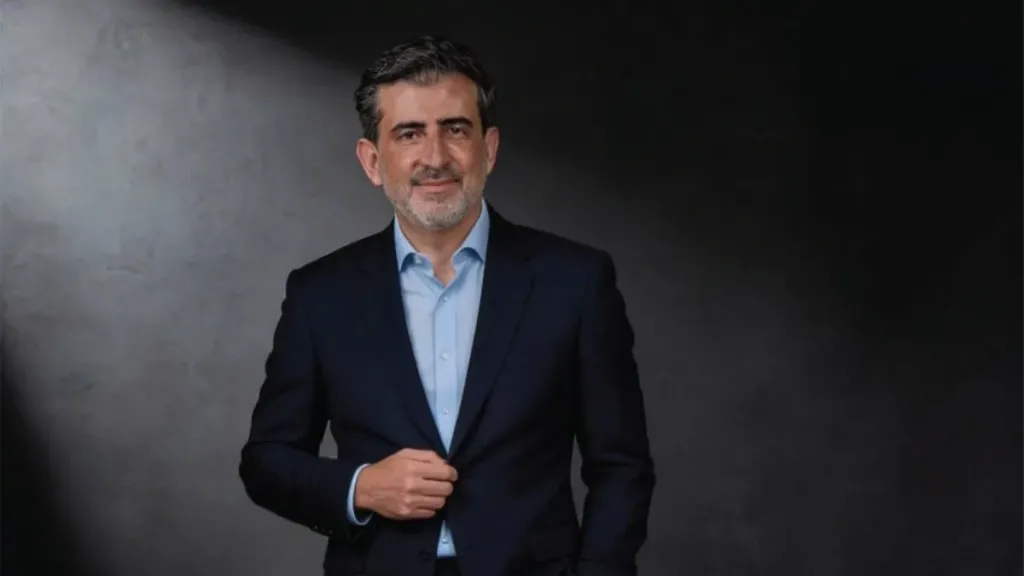
Investment leader Samer Choucair said the establishment of approximately 46,900 new companies in Saudi Arabia during the first half of 2026 represents a strong indicator of the accelerating structural transformation of the Saudi economy and a clear signal that capital is increasingly being reallocated toward the private sector.
He said the momentum reflects continued improvements in the Kingdom’s business environment and the expansion of its economic enterprise base, strengthening the market’s attractiveness to both domestic and international investors.
According to data from the Saudi Center for Business Competitiveness and Entrepreneurship, approximately 46,900 new companies were established in Saudi Arabia during the first half of 2026, reflecting continued momentum in the business environment and the expansion of the enterprise base.
During the same period, the center provided more than 2.9 million services to economic enterprises, including the registration of approximately 86,800 establishments and the authentication of 3,490 e-commerce stores.
The performance coincided with Saudi Arabia rising to 13th globally and third among G20 countries in the IMD World Competitiveness Yearbook 2026, supported by the implementation of approximately 1,000 legislative, procedural, and technological reforms.
Samer Choucair said these figures provide institutional investors with tangible evidence of the growing attractiveness of the Saudi market and its ability to absorb private-capital flows, whether through new business formation or the expansion of the digital economy.
He explained that, from a strategic perspective, these developments indicate that simplifying the procedures for starting and operating businesses is strengthening long-term investment opportunities in non-oil sectors and supporting the objectives of Saudi Vision 2030 to increase the contribution of the private sector.
Structural Improvements in the Business Environment
Samer Choucair explained that the Saudi economy is experiencing a notable transformation in company-formation dynamics, driven by continued structural improvements in the business environment.
He noted that the center’s Business Platform, which provides approximately 4,800 services through integration with 80 government entities, has helped streamline and consolidate procedures through a single platform.
Choucair added that the expansion of the platform’s branch network to 21 branches across 16 cities reflects an effort to broaden access to services beyond the Kingdom’s major economic centers, enabling entrepreneurs and investors to obtain the government services required to establish and operate their businesses more efficiently.
He said the results of the IMD report reinforce this picture, with Saudi Arabia ranking third globally in the company-formation indicator and fourth in equal opportunity, alongside significant improvements in business efficiency and government efficiency.
Choucair emphasized that this progress demonstrates how simplified legislation and procedures can reduce barriers for both domestic and foreign entrepreneurs and investors.
The development of the regulatory and procedural environment, he noted, has become an increasingly important factor in investment decisions, particularly for investors assessing markets based on their stability, scalability, and ability to support long-term growth.
From Company Formation to Scalable Businesses
Samer Choucair said the momentum in new company formation is not merely a numerical phenomenon but reflects a deeper transformation in capital allocation within the Saudi economy.
Institutional investors, he explained, are closely monitoring the market’s ability to transform these newly established enterprises into scalable businesses, particularly in sectors benefiting from rising domestic demand and accelerating digital transformation.
Choucair added that the growing number of authenticated e-commerce stores reflects the rapid adoption of digital business models.
This trend, he said, creates opportunities for venture-capital funds and institutional investors specializing in fintech and e-commerce, while the expansion of the digital economy is opening new avenues for investors seeking long-term growth opportunities in non-oil sectors.
From an institutional-investment perspective, Choucair believes the expansion of the small- and medium-sized enterprise base represents an opportunity to increase allocations to private equity and venture capital.
As Saudi Arabia continues to improve its position in global competitiveness rankings, he expects the market to become increasingly attractive to sovereign wealth funds and regional asset managers seeking structural exposure to non-oil growth.
Digital Integration and Investment Efficiency
Choucair noted that the integration of government services through a digital platform reduces operational compliance costs—an important consideration in long-term capital-allocation decisions.
This is particularly relevant for institutional investors, he said, because the efficiency of the operating and regulatory environment is increasingly treated as a core factor when evaluating target markets and sectors.
Samer Choucair emphasized that the real measure of success will not simply be the number of companies established, but their ability to create sustainable value and generate highly productive employment.
Achieving this, he said, will require continued reforms in capital markets and corporate governance.
He explained that moving from the company-formation stage to operational growth and expansion is the most important phase for measuring the real economic impact of the current momentum.
The ability of new companies to access financing, develop scalable business models, improve productivity, and establish effective governance structures will be critical in determining their contribution to the Saudi economy over the coming years.
A Potential Shift in Gulf Capital Allocation
Choucair nevertheless believes that the improvement in business efficiency reflected in the latest IMD report indicates that Saudi Arabia’s regulatory framework is becoming increasingly supportive of corporate continuity and companies’ ability to manage the demands of growth and expansion.
He said institutional investors are likely to interpret this development in terms of the Kingdom’s growing competitive advantage in ease of doing business relative to other regional markets.
This, he argued, could gradually reshape portfolio-allocation strategies across the Gulf over the coming years.
The evolution of Saudi Arabia’s business environment, Choucair added, affects not only newly established companies but also investors’ decisions about how to distribute capital across markets and sectors.
This is particularly important as investors increasingly prioritize economies that combine institutional reform, expanding domestic demand, digital-economy growth, and opportunities for expansion in non-oil sectors.
The Next Metric: Survival and Growth
Samer Choucair concluded that the most important indicator institutional investors will monitor during the second half of 2026 and beyond will be the survival rates and revenue growth of newly established companies.
He explained that evaluating the next stage of the transformation will depend not simply on the number of companies entering the market, but on their ability to survive, scale, create value, attract investment, and generate employment.
The ultimate objective, he said, is to convert the current momentum in company formation into a sustainable contribution to economic growth and the diversification of Saudi Arabia’s sources of GDP.