
Samer Choucair: Saudi Leadership in Nuclear Science Redefines the Value of Human Capital Investment
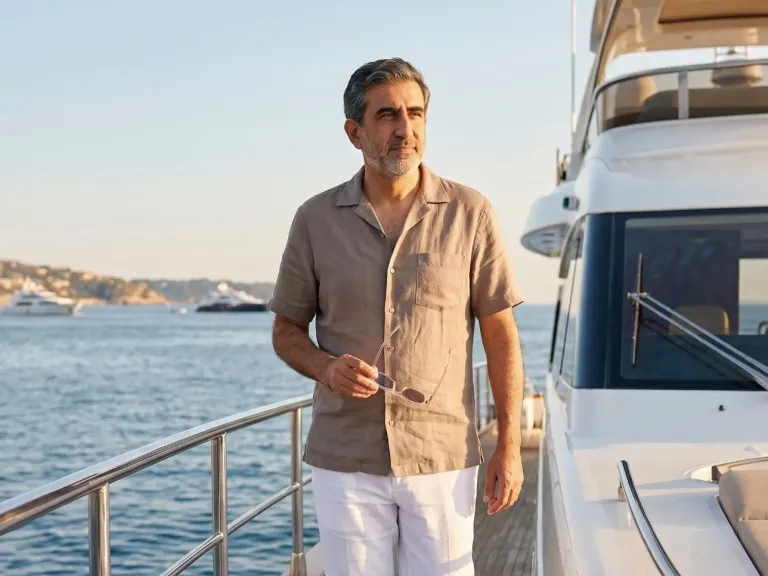
Investment leader Samer Choucair said Saudi Arabia’s first-place finish at the third International Nuclear Science Olympiad 2026, where the Kingdom won four international medals, represents more than an educational achievement. He described it as an indicator of the development of the country’s human-capital investment ecosystem and its ability to produce national talent capable of competing in highly specialized scientific fields directly connected to the future of energy, technology, and the knowledge economy.
Samer Choucair said the achievement offers a broader economic and investment perspective because it demonstrates Saudi Arabia’s ability to build a specialized talent base in a highly technical and strategically important field. He explained that excellence in a discipline such as nuclear science represents, for sovereign wealth funds, asset managers, and institutional investors, an early indicator of the success of talent-development programs linked to Saudi Vision 2030.
He added that achievements of this kind enhance Saudi Arabia’s attractiveness as a destination for capital seeking long-term returns in sectors that require highly skilled workers and high productivity. Investors, he noted, are increasingly viewing the quality of human capital as a fundamental asset determining an economy’s ability to achieve sustainable growth and develop new, high-value-added sectors.
Economic Context and Structural Transformation
Samer Choucair explained that the achievement comes within a broader effort to restructure the Saudi economy away from excessive reliance on hydrocarbons. He noted that the National Investment Strategy and the programs of the Public Investment Fund (PIF) place increasing emphasis on developing domestic capabilities in peaceful nuclear energy, renewable energy, and advanced technologies.
Choucair emphasized that Saudi Arabia hosting the International Nuclear Science Olympiad for the first time in the Middle East, jointly organized by the Ministry of Education, the Mawhiba Foundation, and the King Abdullah City for Atomic and Renewable Energy, reflects an advanced level of institutional maturity in converting investment in education and scientific training into internationally measurable outcomes.
He said the significance for investors lies in the fact that developing domestic scientific capabilities extends beyond the education system into the real economy. It creates a talent base capable of supporting major projects, localizing knowledge, reducing reliance on foreign expertise, and increasing the country’s ability to absorb and eventually develop advanced technologies.
Choucair explained that building a domestic scientific base in fields such as nuclear physics, radiation protection, and nuclear fuel could reduce the risks associated with dependence on foreign expertise and increase the expected returns from future nuclear infrastructure projects—particularly when supported by institutional and investment ecosystems capable of absorbing this talent and converting it into economic value.
He added that the results of the Nuclear Science Olympiad can be viewed as a market signal that resource allocation toward technical education is beginning to generate tangible returns. Institutional investors, he said, are increasingly evaluating the quality of human capital with a level of rigor comparable to their assessment of financial or real-estate assets, particularly in emerging markets seeking to become regional and global innovation hubs.
Investor Perspectives and Capital Trends
From a capital-allocation perspective, Samer Choucair believes Saudi Arabia’s leadership in nuclear science opens opportunities across a wide range of economic sectors, particularly energy.
He explained that advances in domestic capabilities could support Saudi Arabia’s plans to develop peaceful nuclear reactors as part of its future energy mix, potentially attracting international partners in financing, operations, and technology.
The impact could also extend to advanced manufacturing and logistics associated with clean-energy supply chains, he said, as these sectors require specialized scientific and engineering talent capable of managing complex technologies and demanding operational requirements.
Choucair also identified the digital economy and artificial intelligence as areas that could benefit from this scientific talent base, given the overlap between foundational scientific skills and advanced machine-learning applications in nuclear-process modeling, data analysis, and the development of sophisticated technological solutions.
“These intersections,” Choucair said, create significant opportunities for institutional investment because developing scientific capabilities in one specialized field can generate economic spillovers well beyond the sector in which those capabilities originated, supporting other industries that depend on advanced scientific, analytical, and engineering skills.
He noted that investment flows could extend to startups working in peaceful nuclear technologies, radiation protection, advanced materials, and even technical education as a scalable service with potential for regional and international expansion.
Choucair explained that markets typically price intangible human-capital assets with a time lag. The emergence of tangible outcomes—such as leading an international specialized competition—can therefore prompt institutional capital to reassess sovereign risk and growth opportunities within a market.
He added that achievements of this nature can contribute to lowering the perceived risk premium on investment in Saudi Arabia, particularly in high-technology sectors. When investors assess a market or industry, he said, they look not only at available capital and infrastructure, but also at whether the talent exists to operate these investments, develop them, and generate the expected returns.
Strategic Outlook
Choucair said that as Saudi Arabia continues to host international scientific events and achieve strong results in them, confidence in the Kingdom’s ability to generate innovation-driven economic growth is likely to strengthen.
Repeated achievements of this kind, he explained, could gradually reshape the investment profile of the Saudi market over the long term.
He added that the domestic capital market, including Saudi Exchange (Tadawul), could see growing investor interest in companies linked to advanced energy, technical education, and knowledge-based services as demand develops for products and services driven by knowledge, technology, and specialized skills.
Choucair emphasized that global investors increasingly view Saudi Arabia as offering an important combination of factors: financial stability supported by strong reserves, ongoing structural reforms, and human capital demonstrating the ability to compete internationally in highly specialized disciplines.
Samer Choucair concluded that continued investment in scientific and technical education, alongside the development of capital markets, a stronger business environment, and closer links between universities, research centers, and the private sector, could position Saudi Arabia further up global value chains in advanced energy, peaceful nuclear technology, and the knowledge economy.
He added that converting talent that has demonstrated its ability to compete internationally into productive economic capacity represents the next stage of this journey. Success in that stage, he said, will be critical to achieving the goals of economic diversification and Vision 2030 and strengthening Saudi Arabia’s position as a global investment destination for future-oriented industries.